Recreating the Cuban Missile Crisis
Transcript
Jamie Kimbrough: We start with World War II and then we’re supposed to come home and talk about the Civil Rights Movement and then Unit 7 is all of the Cold War from the end of World War II all the way up through the Berlin Wall falling. They read a briefing, a special report, that just gave them background on what the situation was in Cuba, what some of our options were, and then what possible Soviet responses were. I had them do that yesterday.
Jamie Kimbrough: When we’re thinking about the Cuban Missile Crisis we have to remember all the information we’ve learned so far about President Kennedy, harkening back to a quote from his inauguration, “We shall pay any price, bear any burden, meet any hardship, support any friend, oppose any foe in order to ensure the survival and success of liberty.” Keep that quote in mind as we deal with the Cuban Missile Crisis. So two days ago we talked about Bay of Pigs and how that’s affecting us and we have communism encroaching into our hemisphere now so we have to make sure that liberty and democracy survives in the Western hemisphere.
Jamie Kimbrough: First, I really like themes; and this is like the fifth theme lesson that I’ve done so far this school year, which has been pretty awesome. So I went with the spy theme today, so when they came in they had the music from Mission Impossible. They got to choose their own groups, and I know that they were really excited about that. And then the goal with this is to a) just to make it fun by creating the theme and then to walk them through step-by-step of the process that Kennedy had to go through to solve the Cuban Missile Crisis.
J
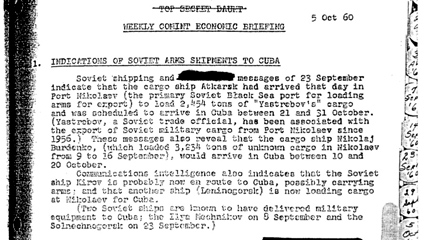
amie Kimbrough: Right, so, when you’re thinking about the primary sources, these actually are from top secret meetings and one of the maps actually has top secret crossed out and on one of the pictures you can see a part where they blacked out some of the information. These actually are documents that Kennedy looked at; these are things that Kennedy heard from his advisors. We’re going to go through each section one by one, what I’d like you to do with your groups first is take a look at the section where it’s asking you to look at the photos and the map.
*[*Group 1:]
Student 1: Oh, this is where the missiles can go.
Student 2: Their range. Because of it’s location, Cuba could strike almost anywhere within the U.S.
Student 1: And the smallest range is Savannah, which is Georgia. So that’s kind of far. And New Orleans, so those are two really big cities in the South.
[Group 2:]
Student 1: You guys, so if you live in Seattle you’re fine.
Student 2: Okay, but we would not be fine.
Student 3: Yeah, we’d be in trouble.
Student 4: So what’s our plan of action, guys?
Student 3: They could pretty much take out all of America.
Student 1: All of the United States could pretty much be gone.
Student 4: It has the range of pretty much the whole U.S. Minus like, that corner of the U.S. But all the major states and all that.
Jamie Kimbrough: The second step was to read quotes from actual EXCOMM advisors, and there were six of them, ranging from Robert McNamara to the Secretary of Treasury, CIA Director—just so that they could see what the options are, what the positives and the negatives are, and then that would help inform their opinion when their group made their particular choice.
Jamie Kimbrough: Take a look at the chart. It has the advisor’s name in the first column, and then in the second column it is asking you, “What policy does this person favor?” Which one do they think is the best, how should the U.S. handle this situation in Cuba? And then in the [third] column you need to say which option do they think is the worst, which one do they reject, and you must answer why.
[Group 1:]
Jamie Kimbrough: Well, looking at the first paragraph, what does he say?
Student 1: He thinks that doing nothing is not an option. And in the second paragraph he says–
Jamie Kimbrough: Well, it’s not just do nothing. Like here, “I believe any effort to negotiate–”
Student 1: So he just wants to attack.
Jamie Kimbrough: Is that what he says?
Student 1: That would be my inference.
Jamie Kimbrough: Let’s go back and just double check and make sure. It was a good inference, but–
Student 1: I think it’s like the warning.
Jamie Kimbrough: Warning. Okay, let’s look. So he doesn’t want to negotiate, so where is he on here? Right there. Options, is he a reject or favor?
Student 1: Rejects.
Jamie Kimbrough: Okay. And it might not be one of the options on here. But what is he telling President Kennedy to do?
Student 1: That they have to stop, they have to stop their building of missiles.
Jamie Kimbrough: Or?
Student 1: Or they will attack.
Jamie Kimbrough: Is it just an air strike? Or what is he saying?
Student 1: Attack.
Jamie Kimbrough: Attack like invade.
Student 1: Yeah.
Jamie Kimbrough: Okay, there we go.
[Group 2:]
Student 1: A small strike against Cuba was his personal favorite.
Student 2: Surprise or not?
Student 1: He’s against a blockade because it wouldn’t get rid of the missiles.
[Group 3:]
Student 1: Alright, what was he against?
Student 2: A sudden air strike because it had no support in law or morality.
Student 1: He said that he doesn’t think they should—
Jamie Kimbrough: He doesn’t think they should what?
Student 1: Attack.
Jamie Kimbrough: Okay, so he does not want what type of attack? Does he say specifically?
Student 1: A strike.
Jamie Kimbrough: Okay, he rejects air strikes. So then what does he prefer? What does he favor? Let’s read through. He says, “Now I do not think we have set in motion a chain of events that will eliminate this base. I don’t think we can sit still. The questioning becomes whether we do it by sudden, unannounced strike of some sort, or we build up the crisis to the point where the other side has to consider very seriously about giving in . . . . There are two other problems that we are concerned about [regarding an air strike]. If we strike these missiles, we would expect, I think, maximum Communist reaction in Latin America.” So remembering back to this map, are we only afraid for us? No, look, he can hit all of these people. Not just Canada, but we’re most concerned about Latin America. So we have to be worried about that. Is he going to want to have any type of strike at all? Is he going to want to invade the island? No. So is he going to want to respond with direct military action?
Student 2: No.
Jamie Kimbrough: Kennedy, Bobby, what does he reject?
Student 3: Doing nothing, but it doesn’t really say why. He just says it “would be unthinkable.”
Jamie Kimbrough: Okay, it’s unthinkable to do nothing. And what else does he reject?
Student 3: I think that was it. Oh, he said that they could also do an air strike, but he just kinda said blockade would be better.
Jamie Kimbrough: Okay. His option he prefers—
Student 3: Blockade.
Jamie Kimbrough: He references Pearl Harbor and how that would be the same thing; that if we do an unannounced attack on them it’s basically the same thing that happened to us.
[Group 4:]
Student 1: I don’t understand why he wanted the blockade, I know that he does but—it says “In the event that the Soviets continued to build up the missiles capability in Cuba, then we should inform the Russians that we will destroy the missiles.”
Jamie Kimbrough: Okay, and continue.
Student 1: “If the Russians do not halt the development of the missile capability then we can proceed to make an air strike.”
Jamie Kimbrough: Okay.
Student 1: The advantage of proceeding in this way is that we would get away from Pearl Harbor surprise attack aspect of the air strike.”
Jamie Kimbrough: So is he completely ruling out attacking ever?
Student 1: No.
Jamie Kimbrough: No, but he doesn’t want to just go the surprise route.
[Group 5:]
Student 1: Douglas Dillon, it’s Secretary of Treasury. He wants to order an air strike because we need to attack Cuba. He says that negotiations are not acceptable because that is what Khrushchev wants us to do. He wants us to negotiate with them. And he also says that a blockade would end up leading to negotiations so that wouldn’t work either.
Jamie Kimbrough: So then as a group they discuss the five options on the table—do nothing, negotiate, blockade, warning then air strike, or surprise air strike.
Jamie Kimbrough: What you’re going to have to do in your groups is to discuss each of the five options, whoever is in the majority wins. It doesn’t matter if your group is divided and two people choose five and one person chooses one and one chooses three, you guys, whoever in your group has the majority that’s what you’re going with, that’s what you’re presenting to the president, that’s what you’re going to write about on your paper. So choose one of the five and then explain why.
[Group 1]
Student 1: Set up a blockade.
Student 2: Send a warning, if they don’t respect the warning and they keep it up, bomb them.
Jamie Kimbrough: So you want both. But I don’t understand the warning part. If you’re doing the blockade then why are you going to do a warning?
Student 2: Just to give them a formal warning.
Jamie Kimbrough: What is it that would make them get to the point where you had to warn them?
Student 3: A certain amount of time.
Jamie Kimbrough: Okay, so if it doesn’t stop after two weeks of the blockade, then you warn them, then you—okay, I’ll take a three and four, that’s fine. That’s your suggestion to Kennedy.
[Group 2]
Student 1: Do you want five or four?
Student 2: Four.
Student 3: I like five better.
Student 1: I like five better, too. Because if we do five then they don’t know we’re coming, it’s going to be a lot more of an effect on Cuba if—
Student 2: The U.S. will be viewed as a bad nation.
Student 1: Well, Japan wasn’t viewed as a terrible nation just because—
Students 2 and 4: Yes, they were—
Student 1: We viewed them as a terrible nation. Just because we view them as a terrible nation doesn’t mean that everybody else does.
[Group 3]
Jamie Kimbrough: Why do you guys thing four is the best?
Student 1: Because if we give them a warning and they take away the missiles, there doesn’t have to be any violence. If they say no, then we can do an air strike.
Jamie Kimbrough: So you prefer it because you want to not have violence.
Student 1: Well, it’s just there will be less public outcry about it.
Jamie Kimbrough: Okay, so you want public support, very good opinion there.
[Whole-Class Discussion]
Jamie Kimbrough: How many groups chose option one? None, nobody wants to do nothing. How many groups chose option two—opening direct negotiations with Khrushchev? Three—blockade of Cuba. Two groups. He’s being told to put his hand down, no, that’s not what your group is doing. Four—warning then air strike, that has been the popular option all day. And then five—order an air strike against the missile sites without warning. Okay, so all of these groups want to start a nuclear war.
Jamie Kimbrough: You could see from the class that they typically chose option four, and that’s actually going through all of my classes. They like the warning then the air strike. Then they move to see what did Kennedy say; with each of the classes I try to debrief and say you guys really liked the air strike and I can understand why, but what is the Soviet Union going to do in response if there’s an air strike to get them thinking about the repercussions of their actions not just about being aggressive and looking strong.
[Whole-Class Discussion]
Jamie Kimbrough: What is their response going to be? How are they going to respond if we directly attack their missile sites? Yes?
Student 1: They’re going to directly attack us.
Jamie Kimbrough: They’re going to directly attack us. Remember what it said in the primary source, could we destroy all of their missile sites?
Student 2: No.
Jamie Kimbrough: No, we could not. Two thirds and then the rest could be used against us from mobile launchers. So is this the best, either one, possible option? No. So what I’d like you to do now is move to the next primary source. Kennedy knows that doing nothing is not an option, we don’t want to look weak; you don’t want to go straight to negotiations, you have to show that the behavior that they’re exhibiting is unacceptable. So what he decides to do is something different.
Jamie Kimbrough: So with that in mind I think they went into the Kennedy speech understanding where he came from.
[Group 1]
Student 1: You have all military cargo going—
Student 2: Yeah, and see if there’s anything found.
Student 3: And also not prevent them from getting food and stuff. He doesn’t want to seem all cruel.
Student 1: They don’t want to seem—they don’t want to do what the Soviets did.
[Group 2]
Student 1: So he first starts to do a blockade.
Student 2: Where are the options?
Student 3: And then he believes that the nation should decide if any nuclear missiles should—
Student 1: He’s going to regard the nuclear missiles. It’s a policy of this nation to regard any nuclear missiles…
Student 3: So we’re not going to attack Cuba with nuclear missiles.
Student 1: No.
Student 2: So if they attack first then—
Student 4: You attack back.
Student 1: Anything launched from Cuba against any nation.
[Group 3]
Jamie Kimbrough: He does a blockade, but does he call it a blockade?
Student 1: No.
Jamie Kimbrough: He calls it a . . . ?
Student 1: Quarantine.
Jamie Kimbrough: Quarantine. So he quarantines Cuba and then what’s the next decision. So he says that there’s going to be a quarantine of Cuba and then what’s going to happen?
Student 2: If they attack then we retaliate—
Jamie Kimbrough: Yeah.
Student 2: With missiles.
Jamie Kimbrough: Exactly.
Jamie Kimbrough: So then looking at Kennedy, reading what he said to the American people, answering those questions about Kennedy, and then reading the communication between Khrushchev and Kennedy to figure out how we actually resolved the Crisis.
[Group 4]
Jamie Kimbrough: They will get rid of the missiles in Cuba and we will also do what? There was a secret.
Student 1: The missiles in Turkey.
Jamie Kimbrough: Yes, the missiles in Turkey. What’s going to happen to them?
Student 1: Are we going to get rid of them?
Student 2: They didn’t really say it, did they?
Jamie Kimbrough: We’re going to go to Khrushchev, this is his proposal. “I therefore make this proposal. We are willing to remove from Cuba that which you regard as offensive,” which is?
Student 1: The missiles.
Jamie Kimbrough: The missiles. “We are willing to carry this out and make this pledge to the United Nations, your representatives will make a declaration to the effect that the United States will remove its analogous means from Turkey.” Meaning like an analogy, like similar or the same. The same missiles. Do they ever say missiles?
Students: No.
Jamie Kimbrough: No, but that’s what they mean.
[Group 5]
Jamie Kimbrough: He says here, “As I read your letter the key elements of your proposals, which seem generally acceptable as I understand them.” So he says that’s okay. But he has to agree to get rid of the missiles in Cuba.
Student 1: And here, which is our stuff—
Jamie Kimbrough: Right, that’s true; but he’s saying at the beginning part we think this is okay, but it’s most important to us that you get rid of the stuff in Cuba. Does that make sense?
Student 1: Yeah.
Jamie Kimbrough: Okay.
[Group 6]
Jamie Kimbrough: So that’s the big secret—they have missiles in Cuba, but we put missiles in Turkey. Remembering, Turkey shares a border with the Soviet Union.
Jamie Kimbrough, of Winston Churchill High School, MD, asked her students to stand in Kennedy’s shoes during the Cuban Missile Crisis. After establishing the context of the Crisis and reading opinions from EXCOMM advisers, students made their decisions. How did they compare to the actual decision made by President Kennedy in 1962?