Central Question: How did Revolutionary War contain multiple "wars" of independence?
Limits of Textbook Accounts
All U.S. History survey textbooks operate under a similar set of constraints. They have limited space, hew to a central narrative, and are expected to cover a predetermined set of topics, names, and key terms. These pressures often produce a flattened version of the past that smooths over a lot of complexity and unfortunately eliminates important perspectives. Teachers however can address this by communicating to the students that textbooks offer only one of many narratives and that is therefore incomplete. Students should be encouraged to ask: What part of the story am I missing? And how can I find it?
History textbooks’ treatment of the American Revolution is one example of this oversimplification. Native Americans appear only briefly in these accounts, if at all. In preceding textbook chapters, the French and Indian War describes various Native groups as key players and allies of the French, positioned within an imperial contest for control of North America. After that, they largely disappear from the story of the Revolution itself, only to reemerge in a short concluding note explaining that Native peoples were often worse off after American independence, as British constraints on colonial expansion vanished. This narrative framing reduces Native Americans to peripheral figures.
“Disappearing Indian” Trope
Such a portrayal is not only incomplete but also misleading. If Native Americans were significant actors in the decades leading up to the Revolution—and even referenced in foundational documents like the Declaration of Independence—it stands to reason that they played important roles during the Revolution itself. Yet textbook narratives rarely reflect this reality. Instead, they often reinforce what scholars have called the “disappearing Indian” trope: the tendency to bring Native Americans briefly onto the historical stage, only to remove them when the central narrative shifts to the development of the United States.
Contingency, Agency, and Complexity
Historians approach the past with different priorities than textbook authors. Rather than simplifying narratives, they seek to complicate them by incorporating multiple perspectives, expanding geographic frames of reference, and rethinking periodization. In the case of the American Revolution, this means looking beyond the thirteen colonies to consider the entire North American continent and the diverse peoples who inhabited it.
Two key concepts guide this approach: contingency and agency. Contingency emphasizes that historical events are not inevitable. The outcome of the American Revolution and its aftermath of westward expansion of the United States was not predetermined; it emerged from a series of choices, interactions, and unpredictable developments. Historians emphasize contingency where textbook narratives often present history as a linear sequence in which one event naturally leads to another, giving the impression that the way events unfolded was the only possible outcome.
Agency, meanwhile, highlights the capacity of individuals and groups to make meaningful choices and shape their own circumstances. Native Americans have often been denied this agency in traditional narratives, depicted instead as passive victims of colonial expansion. Historians challenge this view by reconstructing Indigenous perspectives and demonstrating how Native nations actively navigated the political, military, and economic upheavals of the eighteenth century.
Recent scholarship has done much to recenter Native Americans within the history of the Revolution. For example, Yale historian Ned Blackhawk (Te-Moak Tribe of Western Shoshone) argues for examining the contradictions particularly that colonists’ independence from Britain meant access to Native land thus robbing Native Americans of their independence. Including a fuller narrative disrupts the idea of a singular founding moment and instead reveals a contested and ongoing process. Blackhawk notes that thousands of Native Americans participated in the Revolutionary War, and many lost their lives — sometimes fighting alongside colonial forces. This includes, for example, Daniel Nimham, a Wappinger Indian and captain in the Continental Army, who was killed at the Battle of Kingsbridge in 1778.
Blackhawk notes too that the American Revolution had a variety of motivations, “In essence, their Revolution was not only for liberty but also for the ability to expand and to govern the lands and resources of Native nations—lands that they felt they and the Crown had “won” on the battlefield, and that they would soon win again by rejecting the Crown and declaring sovereignty.”
Other historians have further demonstrated the diversity and adaptability of Native American strategies during this period. Many historians have looked further back into the colonial period to show importance of contingency. Richard White, for example in his influential work on the “middle ground” of the Great Lakes region from the mid-1600s through the early 1800s, shows how Native groups skillfully navigated relationships with European empires, often playing the French and British against each other to maintain autonomy and secure advantages. This was not a story of passive survival but of strategic engagement.
Kathleen DuVal complicates this picture further in her work, employing the concept of a “Native ground” in her study of the Arkansas River Valley. There, she argues, Indigenous nations such as the Quapaw and Osage shaped regional politics and economics more than European powers did. Rather than adapting to imperial systems, these groups set the terms of interaction seeking advantages within a system of interdependence, even during periods of intense change.
Similarly, Brooke Bauer examines the Catawba Nation in the Carolina Piedmont, highlighting the crucial role of women in sustaining community identity and political cohesion. Through kinship networks and cultural continuity, Catawba women helped establish and maintain nationhood despite the disruptions of war, disease, and displacement. This work underscores that Indigenous agency operated not only on battlefields and diplomatic stages but also within families and communities.
Taken together, this scholarship challenges the notion that Native Americans were marginal to the Revolutionary era. Instead, it reveals a dynamic and complex landscape in which Indigenous peoples made diverse choices in response to rapidly changing circumstances. Some allied with the British, others with the Americans, and still others pursued independent strategies aimed at preserving sovereignty. These choices were shaped by local conditions, historical relationships, and strategic calculations—not by inevitability.
Reframing Narratives in the Classroom
For high school history teachers, the question becomes: how can we bring these insights into the classroom?
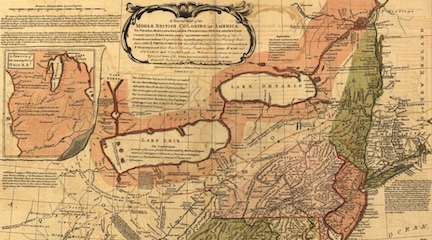
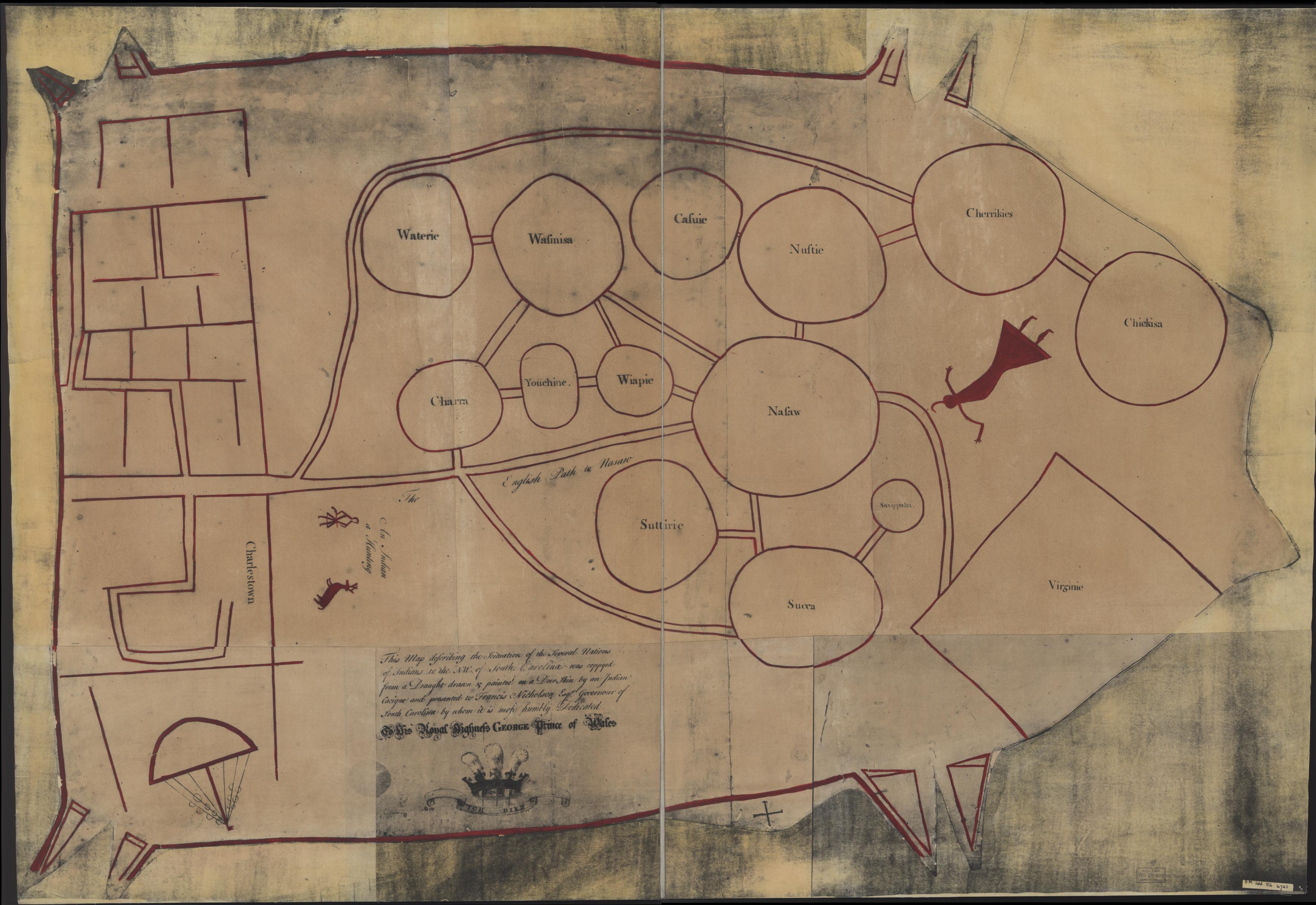
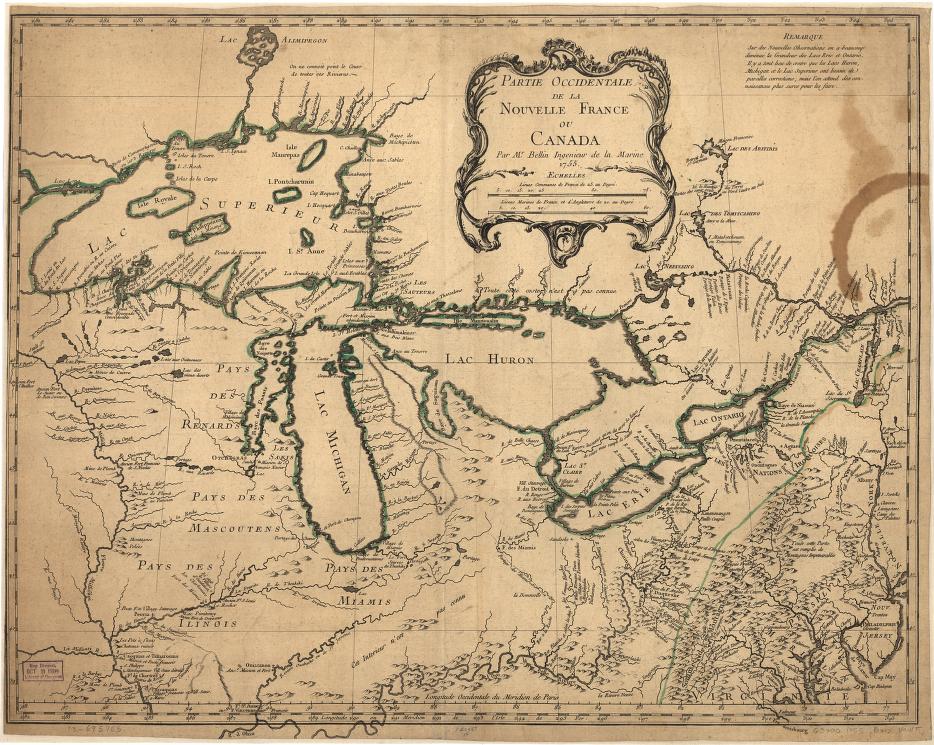
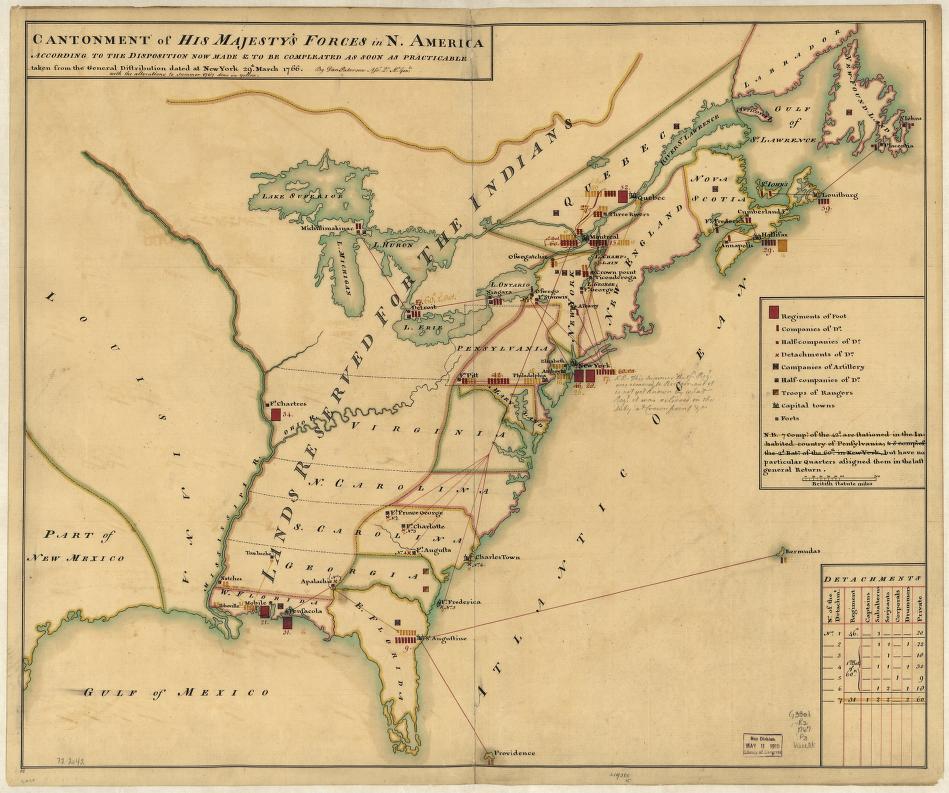
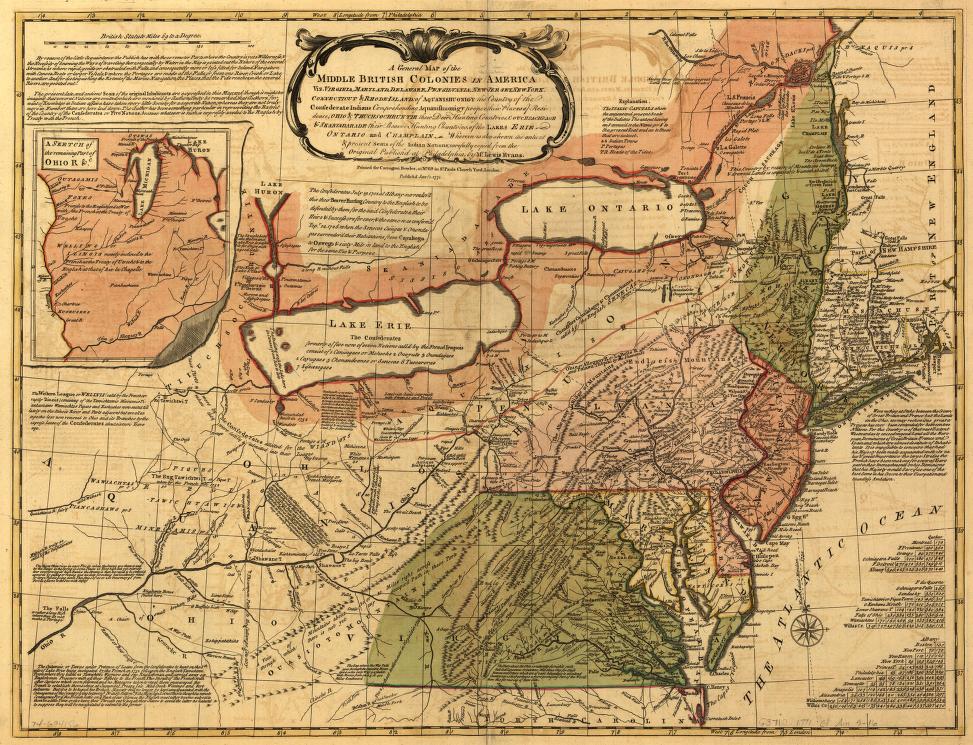
One important step is to encourage students to view the American Revolution from multiple perspectives. Maps can provide a great introduction to this concept. Period maps often reveal the extent to which Native Americans inhabited and controlled vast regions of North America while also hinting at imperial relationships and wordviews. For example, even maps produced by European or colonial sources frequently label Indigenous nations, reminding us that these groups were integral to the historical landscape.
Teachers should also wherever possible incorporate primary sources that reflect Native perspectives. While such sources are sometimes more difficult to find, they do exist—in the form of petitions, speeches, treaties, and second hand accounts recorded by observers. Engaging students with these materials helps counter the impression that Native Americans “disappeared” from history and reinforces their continued presence and influence.
At the same time, the relative scarcity of these sources offers an opportunity for critical reflection. Students can be encouraged to ask why some voices are more prominently preserved than others and what this tells us about power, memory, and historical narrative. This kind of inquiry not only deepens historical understanding but also builds historical thinking skills.
Finally, teachers can invite students to use informed imagination to reconstruct missing perspectives. While this must be done carefully and responsibly, it mirrors the work of historians who piece together fragmentary evidence to better understand the past. Asking students to consider how different groups might have experienced the same events can make history more engaging and more inclusive. For example, while studying the Revolutionary period students can examine the maps from 1750-1781 included with this guide to better understand how many of the events discussed in the textbook occurred on a small portion of the eastern part of the North American continent. From there students can think through how the Native people who populated the vast majority of the land might have been affected — or not — by the conflict between the colonists and the British.
Reframing the American Revolution in this way does not require abandoning the traditional narrative of independence. Rather, it involves expanding that narrative to include the many peoples who shaped—and were shaped by—the era. By centering Native American agency and emphasizing contingency, teachers can help students see the Revolution not as a predetermined story with a single outcome, but as a complex and contested process with multiple possibilities.
In doing so, we not only produce a more accurate account of the past but also model a more thoughtful and inclusive approach to history itself.
Primary Sources
Catawba Map (1721)
Citation
“Claims of Delaware Indians” (1910)
Senate 61st Congress 2d Session Document No. 483
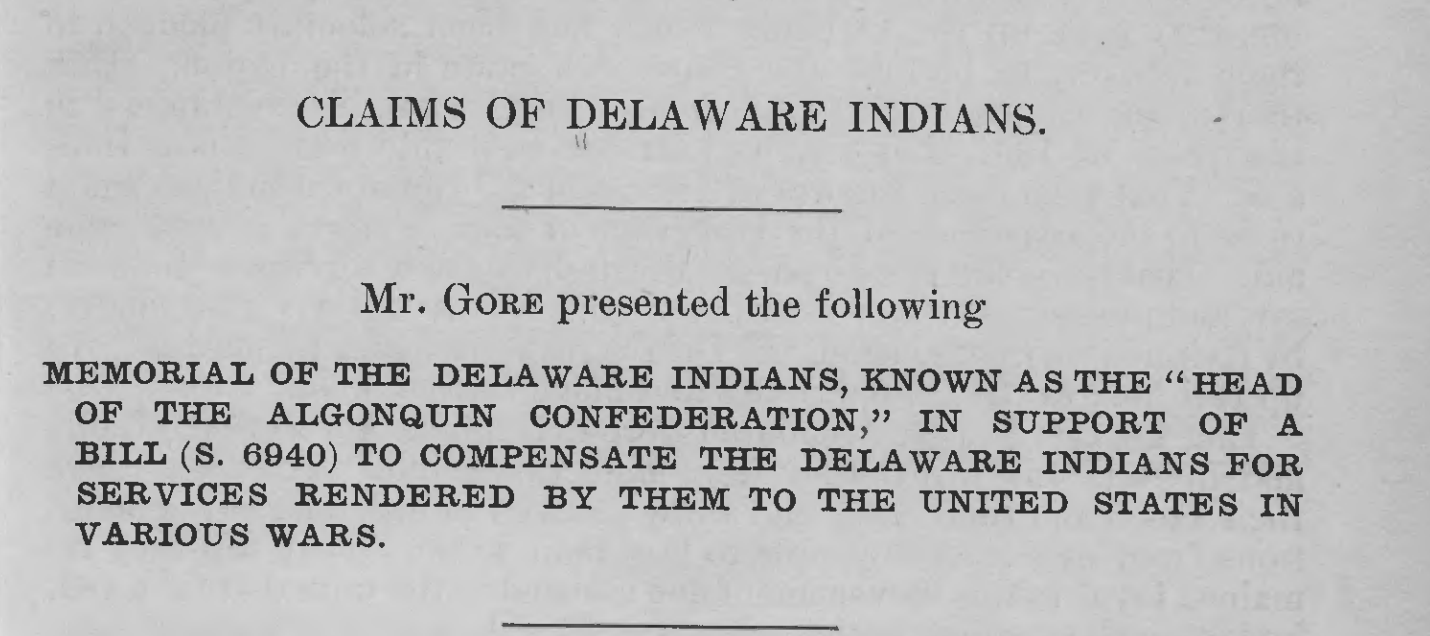
CLAIMS OF DELAWARE INDIANS
Mr. GORE presented the following MEMORIAL OF THE DELAWARE INDIANS, KNOWN AS THE " HEAD OF THE ALGONQUIN CONFEDERATION," IN SUPPORT OF A BILL (s. 6940) TO COMPENSATE THE DELAWARE INDIANS FOR SERVICES RENDERED BY THEM TO THE UNITED STATES IN VARIOUS WARS.
APRIL 11, 1910.—Referred to the Committee on Indian Affairs and ordered to be printed.
MEMORIAL OF THE DELAWARE INDIANS. [In re S. 6940 and H. R. 22069.]
To the Congress of the United States: The purpose of this bill is to compensate the Delaware Indians for services rendered by them to the United States in various wars. Your memorialists represent– That the Delaware Indians, known as the " head of the Algonquin Confederation," furnished, as soldiers and allies in the various wars prior to 1855, more than 1,500 warriors, and from smallpox contracted in the war of the Revolution and the war of 1812 lost .more than 15,000 of their people; smallpox was a disease unknown among Indians prior to the advent of the white man. That the Delaware Indians were the first people to come to the aid of the colonists in their struggle for independence. That the first treaty this Government made with any nation or people was made with the Delaware Indians. That in that treaty the Delawares, as a nation, formed an offensive and defensive alliance with this Government.
That they were to be recognized as the head of an Indian State with representation in Congress as part of their compensation. That the Delaware Indians carried out their part of these treaty obligations, did furnish warriors and use their influence with other tribes in the interests of the United States, did give free access across their territory to the Revolutionary troops, did consent to have farts built on their property, did assist in the building of these forts, lid act as spies and scouts and guides and furnish information to the Government as to the strength, position, and purpose of the enemy, and did receive nothing in return therefor. That few, if any, of the promises made to them by the Government have ever been fulfilled. That when their assistance was no longer needed they were insulted and outraged. That finally, to avoid trouble, they gave up the territory which had been solemnly pledged to them forever , to become the fourteenth State in the Union. That thereupon, relying on this Government and its promises contained in’ the treaty of 1804, they removed farther west into what is now Indiana. That then came the war of 1812, and the Delaware Indians again came to the assistance of the Government and rendered it invaluable aid. That the soldiers who passed through this new territory (Indiana) saw and praised the value of this new land and coveted it. That finally, by coercion and persuasion, the Delawares were again induced to give up this land to the United States and move farther west. That the services they rendered were in conflicts that were not theirs and in wars for which they were not responsible. That they gave their blood and their land and were reduced in less than two generations from over 20,000 people to less than 4,000. That still they remained loyal to this Government and assisted in the wars that followed, including the various Indian wars, the Florida war, the Mexican war, and the civil war.
That the services they rendered and the promises made to them entitled them to expect the friendship, consideration, and gratitude of this Government. That all of these services have been rendered with- out compensation or pay. That not even a statue has been erected to them or to any of their warriors who fell in the cause of this Government. That, as Indian Commissioner Manypenny says’ no people, State, or community has ever done so much or submitted to such injustice and ingratitude without revolt. That the French allies’ who had a great grievance against the English and who were really fighting on their own account and for their own ends were liberally rewarded by this Government. That all other soldiers who have served this Government in its early wars received pay and bounties under laws made to meet their ,cases, but which are inapplicable to these Indians. That the Delawares have now been stripped of practically all of their lands and are now reduced to less than 1,500 people.
That they how make claim for the bounties to the same amount and to tit4 same extent as under existing laws would be given to other soldiers in like circumstances, the only difference being that inasmuch as the Delawares furnished their warriors as a tribe they ask that the bounties be issued to them as a tribe to be distributed by them in accordance with their traditional customs. That the Delawares are justly entitled to many times the compensation they are seeking to obtain by H. R. 22069, as will more fully appear herein.
Citation
"Map of New France" 1755
Citation
“Map of British Forces in North America” (1766)
Citation
“Map of the middle British colonies in America” (1771)
Citation
Annotated Bibliography
Secondary Sources
Fred Anderson, The War That Made America: A Short History of the French and Indian War (2005)
A short scholarly book on the French and Indian war that provides excellent context to the conditions that precipitated the American Revolution.
Brooke Bauer, Becoming Catawba: Catawba Indian Women and Nation-Building, 1540–1840 (2022)
Bauer (Catawba) focuses on the Native people of the Carolina Piedmont over from Catawba speaking groups to the formation of a Catawba nation. In particular, Bauer explores the work Catawba Women did to maintain the kinship networks that formed the nation and held it together. Women were crucial in responding to the war, disease, and poverty brought about by the War for Independence and its aftermath.
Ned Blackhawk, “How Native Nations Shaped the Revolution,” The Atlantic (October 9, 2025)
In this article, historian Ned Blackhawk (Te-Moak Tribe of Western Shoshone) uses the 250th anniversary of the Declaration to note how Native peoples are often left out of standard narratives about the Revolution and argues for a reframing that puts them at the center.
Colin G. Calloway, The American Revolution in Indian Country: Crisis and Diversity (1995)
A key early scholarly effort to reframe the role of Native Americans during the Revolutionary Era. Calloway looks at eight communities and shows how initially these groups pursued a tack of neutrality, but all eventually decided to shift to taking sides as the conflict spread west.
Vine Deloria, Jr., “The American Revolution and the American Indian: Problems in the Recovery of a Usable Past.” In Spirit & Reason: The Vine Deloria, Jr. Reader. Edited by Vine Deloria Jr., 206–222. (1999)
Native scholar Deloria’s landmark critique of the whitewashing of U.S. history and exclusion of Native voices.
Kathleen DuVal, Independence Lost: Lives on the Edge of the American Revolution (2016)
DuVal examines a variety of actors in the Revolutionary Era who pursued goals that ranged from “independence” to “advantageous interdependence” arrangements that often involved the dependence of other groups. Under this framework, the British North American colonists rebelled and coalesced into a constitutional order that laid the groundwork to dominate the nineteenth-century west.
Elizabeth Ellis, The Great Power of Small Nations: Indigenous Diplomacy in the Gulf South (2022)
Samuel Fisher, “Fit Instruments in a Howling Wilderness: Colonists, Indians, and the Origin of the American Revolution.” William and Mary Quarterly 73.4 (2016): 647–680.
Revolutionary era historiography overview.
Maeve Kane, Shirts Powdered Red: Haudenosaunee Gender, Trade, and Exchange across Three Centuries (2023)
Fullagar, Kate, and Michael McDonnell, eds. Facing Empire: Indigenous Experiences in a Revolutionary Age (2018)
A global look at the Revolution that emphasizes Indigenous agency in exploiting the changes of the era to push for their own independence.
Michael A. McDonnell, Masters of Empire: Great Lakes Indians and the Making of America (2015)
Jane T. Merritt, “Native Peoples in the Revolutionary War,” in Oxford Handbook of the American Revolution (2012) edited by Edward G. Gray and Jane Kamensky pp. 250–70. DOI: 10.1093/oxfordhb/9780199746705.013.0015
Brief but highly useful overview of Native perspective on the Revolution.
Kristofer Ray, “The Indigenous Roots of the American Revolution.” In The Oxford Research Encyclopedia of American History. Edited by Jon Butler and Angela Hudson (2020)
Greg O’Brien, Choctaws in a Revolutionary Age, 1750-1830 (Indians of the Southeast) (2005)
Claudio Saunt, West of the Revolution: An Uncommon History of 1776 (2014)
Ethan Schmidt, Native Americans in the American Revolution: How the War Divided, Devastated, and Transformed the Early American Indian World (2014)
Alan Taylor, American Revolutions: A Continental History, 1750–1804 (2016)
Karim M. Tiro, The People of the Standing Stone: The Oneida Nation from the Revolution through the Era of Removal (2011)