What Events Led to Lincoln's Assassination?
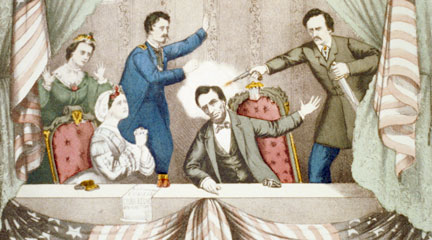
The best thing about this lesson is the primary account of the crime by an eyewitness observer. This account may prove difficult for most 4th graders to read, however and teachers will need to review the materials carefully before they teach the lesson. Very likely they will need to scaffold the reading of the sources. Despite this challenge, we feel that the eyewitness account is direct, dramatic, and engaging, and worth the effort to read carefully. This primary source is supplemented by a timeline linked to evocative images and an ephemera gallery that teachers can use to support student understanding. Using these primary sources along with textbooks, encyclopedias, and trade books, students are asked to “think like journalists” and determine the facts about Lincoln’s assassination. Teachers will want to be thoughtful in selecting supplemental sources as many of the sources on the website reflect responses to the assassination rather than causes of the assassination. Students then write a brief report about the assassination, and discuss whether or not it was avoidable. To conclude, students construct a list of questions about what else they would need to know about Lincoln’s assassination to more accurately determine if it was avoidable and where they could look to find the answers. While the lesson does not specifically address the concept of sourcing, it provides a great starting point for teachers to approach issues of sourcing and the reliability of evidence with their students.
Notes
Teachinghistory.org Lesson Plan Rubric
| Field | Criteria | Comments |
|---|---|---|
| Historical Content | Is historically accurate? | Yes. From the Library of Congress and Gilder Lehrman Institute. |
| Historical Content | Includes historical background? | Yes. Brief introduction plus links to extensive Lincoln materials. |
| Historical Content | Requires students to read and write? | Yes. Multiple sources; students write a report about assassination events. |
| Analytic Thinking | Requires analysis/construction of interpretations using evidence? | Yes. Students consult multiple sources and consider what additional evidence might be needed. |
| Analytic Thinking | Requires close reading and attention to source information? | Yes. Multiple sources read but focus more on information gathering. |
| Scaffolding | Appropriate for stated audience? | Yes. Elementary students need assistance with difficult texts. |
| Scaffolding | Includes scaffolding materials and strategies? | No. No scaffolds presented; text modifications and guided reading would help. |
| Lesson Structure | Includes assessment criteria focused on historical understanding? | Yes. Prompts provided but no evaluation criteria. |
| Lesson Structure | Defines clear learning goals and progresses logically? | Yes. Objectives, essential question, and logical procedures included. |
| Lesson Structure | Includes clear directions; realistic for classrooms? | Yes |