Welcome to Best Practices

Spotlight on Elementary Education

Oral histories and interviews are a unique form of historical documentation. This guide by Linda Shopes offers an overview of the various ways oral history can be integrated into classroom discussions. Though some of the techniques will have to be adapted for elementary students, the ideas Shopes presents are extremely useful. FIND OUT MORE »

Example of Historical Thinking

Scholars, students, and teachers model historical thinking
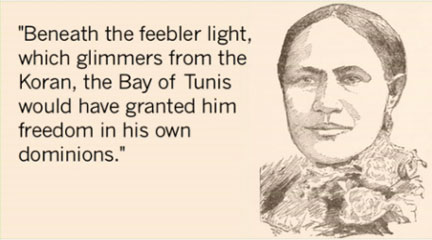
Women's Suffrage Cartoon

How does a political cartoon use popular beliefs about women to make its [...] »

Ford's Theatre: Lincoln's Second Inaugural Address

Ford's Theatre Society's Sarah Jencks leads teachers through Abraham Lincoln [...] »

Daily Objects, 19th-century America

With the advent of industry and western expansion, U.S. businesses mass [...] »

Narratives of Slavery

One institution, two very different perspectives. An expert contrasts [...] »

Japanese American Internment: Executive Order 9066

How did the World War II internment of Japanese Americans happen? Historian [...] »

Teaching in Action

Teachers demonstrate promising teaching practices
Using Maps as Primary Sources

A 4th-grade teacher shows strategies for encouraging and supporting student [...] »

Causes of World War I

Did two bullets begin WWI? Explore causation in your classroom.

[...] »

Using Primary Sources

Strategies for analyzing primary sources
SCIM-C: Historical Source Analysis
Photo, ". . . Texas-New Mexico Pipeline Company. . . ," 1972, Hiser, Flickr

Virginia Tech’s short video shows how to analyze primary sources and put [...] »

Reading Like a Historian
Photo, We <3 Students Who <3 Reading, Mar. 9, 2010, Enokson, Flickr

Use the Stanford History Education Group's curriculum to teach historical [...] »

Teaching with Textbooks
Techniques for promoting historical inquiry
Opening Up the Textbook
Negative, "Schoolroom. Concho, Arizona," Russell Lee, Oct. 1940, LoC

Make the most of your textbook—engage students in close reading and analysis [...] »

Questioning Textbook Authority
Marginalia, CHNM

Show your students how to challenge the authority gap between the textbook [...] »

The Grammar of History Textbooks Part II: Questioning the Text
Marginalia, CHNM

Turn your textbook into a conversation by scanning its language for biases [...] »

Building a Conversation between Textbooks, Students, and Teachers

Class discussion and personal inquiry builds an interactive relationship [...] »

Children’s Voices from the Civil War
Negative, "Sgt. John Clem, U.S.A.," 1855-1865, Library of Congress

Help students identify with the past via children who lived through the [...] »