Welcome to Best Practices


Spotlight on Elementary Education
Example of Historical Thinking

Whitman Ridgway outlines some of the context in which the Bill of Rights was [...] »
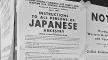
How did the World War II internment of Japanese Americans happen? Historian [...] »
![Photo, [Old hermit Roy Ozmer. . . ], 1957, Flickr Commons](/sites/default/files/styles/splash_thumb_images/public/Reading-and-Thinking.jpg?itok=f7GCc3Xk "Photo, [Old hermit Roy Ozmer reading a book at his house : Pelican Key, Florida], December 1957, State Library and Archives of Florida, Flickr Commons")
Watch this flash movie for a peek at how historians read and question [...] »
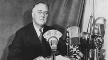
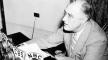
Historian Allida Black analyzes FDR's April 28, 1935 Fireside Chat. What [...] »
Ford's Theatre Society's Sarah Jencks leads teachers through Abraham Lincoln [...] »
Teaching in Action
High school teacher Joe Jelen combines roleplaying and critical analysis—by [...] »
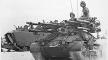
High school students use primary sources to question their textbook's [...] »
Using Primary Sources

Virginia Tech’s short video shows how to analyze primary sources and put [...] »
Work with oral history interviews as historical evidence.
[...] »Teaching with Textbooks
Turn your textbook into a conversation by scanning its language for biases [...] »
Make the most of your textbook—engage students in close reading and analysis [...] »
Class discussion and personal inquiry builds an interactive relationship [...] »
Help students identify with the past via children who lived through the [...] »

The language of history textbooks challenges English language learners and [...] »