West Virginia: 10th-Grade Standards

Article Body

Tenth Grade: United States Studies to 1900

The tenth grade program of study examines the evolution of the Constitution as a living document and the role of participatory democracy in the development of a rapidly changing technological society. This study of the United States is an examination of the formative years from the Pre-Columbian civilizations to its transformation as a dominant political and economic influence in the world. Special emphasis is placed on how the challenges of settling expansive and diverse physical environments were met by a culturally diverse population. The West Virginia Standards for 21st Century Learning include the following components: 21st Century Content Standards and Objectives and 21st Century Learning Skills and Technology Tools. All West Virginia teachers are responsible for classroom instruction that integrates learning skills, technology tools and content standards and objectives.

Social Studies Standard 1: Citizenship

SS.S.10.01 / Students will:

  • characterize and model good citizenship by building social networks of reciprocity and trustworthiness (Civic Dispositions).
  • model a respect for symbols, ideas and concepts of the United States and analyze the roles of significant individuals
    (Respect For People, Events, and Symbols).
  • develop and employ the civic skills necessary for effective citizenship by using criteria to make judgments, arrive at and defend positions and evaluate the validity of the positions or data (Evaluation Skills).
  • develop the participatory skills of interacting, monitoring and influencing that are essential for informed, effective and responsible citizenship, including participation in civic life to shape public policy (Participatory Skills).
  • recognize and communicate the responsibilities, privileges and rights of United States citizens (Civic Life).
  • SS.PD.10.1 / Performance Descriptors

    • Novice:
      • examine government actions and identify citizen influences and responses;
      • identify citizen rights and responsibilities and their importance, examine situations when they are in conflict and select reasons for peaceful conflict resolution;
      • discuss positions on naturalization and identify sources on public policy issues; and conflict, and defend peaceful conflict resolution;
      • compare/contrast positions on naturalization and sources on public policy issues; and
      • select and participate in a volunteer service project.
    • Partial Mastery:
      • list government actions and explain how citizens can influence and respond ;
      • list citizen rights and responsibilities, discuss their importance, identify situations when they are in conflict, and defend peaceful conflict resolution;
      • compare/contrast positions on naturalization and sources on public policy issues; and
      • select and participate in a volunteer service project.
    • Mastery:
      • debate government actions and compare/contrast citizen influences and responses;
      • summarize citizen rights and responsibilities, appraise their importance, defend positions when they are in conflict, and evaluate peaceful conflict resolution;
      • evaluate positions on naturalization and sources of information on public policy issues; and
      • participate in a volunteer service project and provide rationale.
    • Above Mastery:
      • research and debate government actions and evaluate citizen influences and responses;
      • compare/contrast citizen rights and responsibilities, defend their importance, justify positions when they are in conflict, and evaluate peaceful conflict resolution;
      • debate positions on naturalization and the validity of sources of information on public policy issues; and
      • research various volunteer service projects, participate in one, and provide rationale for participation.
    • Distinguished:
      • research and debate potential government actions and anticipate citizen responses
      • research citizen rights and responsibilities, debate their importance, create new positions when existing ideas are in conflict, and hypothesize peaceful conflict resolution;
      • prioritize positions on naturalization and justify the validity of sources of information on public policy issues; and
      • research a community need, organize and lead a volunteer service project to provide help for the need.
  • Objectives / Students will:

    • SS.O.10.01.01: compare and contrast various citizens’ responses to controversial government actions and debate decisions as to what the government should and should not do.
    • SS.O.10.01.02: appraise the importance of the fundamental democratic values and principles of the United States constitutional democracy upon individuals, communities and nations.
    • SS.O.10.01.03: explain how the interactions of citizens with one another help monitor and influence government. policy.
    • SS.O.10.01.04: evaluate ways conflicts can be resolved in a cooperative, peaceful manner which respects individual rights and promotes the common good.
    • SS.O.10.01.05: evaluate, take and defend positions on issues in which fundamental democratic values and principles are in conflict (e.g., liberty and equality, individual rights and the common good, majority rule, minority rights).
    • SS.O.10.01.06: summarize the characteristics of United States citizenship and evaluate responsibilities, duties, privileges and rights of United States citizens.
    • SS.O.10.01.07: evaluate, take and defend positions on issues regarding the criteria used for naturalization.
    • SS.O.10.01.08: evaluate sources of information related to public policy issues.
    • SS.O.10.01.09: examine, select and participate in a volunteer service or project and explain the reason for your selection.

Social Studies Standard 2: Civics/Government

SS.S.10.02 / Students will:

  • examine and analyze the purpose and basic principles of the United States government (Purposes of Government).
  • outline and evaluate and analyze the origins and meanings of the principles, ideals, and core democratic values expressed in
    the foundational documents of the United States (Ideals of United States Democracy).
  • examine and distinguish the structure, function, and responsibilities of governments and the allocation of power at the local, state and national levels (United States Government and Politics).
  • analyze how the world is organized politically and compare the role and relationship of the United States to other nations and to world affairs (United States Government and World Affairs).
  • SS.PD.10.2 / Performance Descriptors

    • Novice:
      • use paraphrases or summaries of primary sources to identify some key principles and philosophies in core documents and relate them to major events;
      • recognize the basic elements of a federalist system and the American Constitution.;
      • connect key democratic ideals to public behaviors; and
      • name some ways the American Revolution and George Washington’s farewell address influenced people/ nations.
    • Partial Mastery:
      • use basic primary sources to identify key principles and philosophies in core documents and relate them to major periods and events;
      • describe the basic elements of a federalist system and the American Constitution;
      • analyze democratic ideals that are reflected in public behaviors; and
      • draw conclusions about the influence of the American Revolution and George Washington’s farewell address.
    • Mastery:
      • use primary sources to identify and describe principles and compare philosophies found in core documents and relate them to historical periods and events;
      • analyze government powers in a federalist system and the American Constitution;
      • evaluate how democratic ideals are reflected in public behaviors; and
      • evaluate the influence of the American Revolution and George Washington’s farewell address.
    • Above Mastery:
      • analyze primary sources to explain and compare principles and philosophies found in core documents and draw conclusions about their influence on historical periods and events;
      • compare the powers in a federalist and an anti- federalist system and the American Constitution; and
      • differentiate how democratic and non-democratic ideals are reflected in public behaviors.; and
      • debate the influence of the American Revolution and George Washington’s farewell address.
    • Distinguished:
      • analyze sophisticated primary sources to evaluate and compare principles and philosophies found in core documents and evaluate their influence on historical periods and events;
      • debate and defend the distribution of power in a federalist system and the American Constitution;
      • research and debate how democratic and non- democratic ideals are reflected in public behaviors; and
      • investigate positive and negative influences of the American Revolution and George Washington’s farewell address on the international perceptions of the United States and summarize results
  • Objectives / Students will:

    • SS.O.10.02.01 identify and describe the fundamental democratic principles and values in the nation’s core American documents, relate them to the subsequent periods in U.S. history, and identify the discrepancies between the expressed ideals and realities.
    • SS.O.10.02.02: identify fundamental American democratic principles using primary sources and significant political speeches and writings.
    • SS.O.10.02.03: explain the purpose of the United States government and analyze how its powers are acquired, used and justified.
    • SS.O.10.02.04: compare and contrast documents and philosophies that are the basis for representative democracy in the United States (e.g., Greek, Roman, John Locke, Magna Carta, English Bill of Rights).)
    • SS.O.10.02.05: explain the purpose, organization and functions of the legislative, executive and judicial branches, and analyze the separation of powers, checks and balances.
    • SS.O.10.02.06: summarize the U.S. Constitution and Amendments then justify the steps required to amend the United States Constitution.
    • SS.O.10.02.07: analyze the presidential election process, the continued use of the Electoral College and the order of presidential succession.
    • SS.O.10.02.08: evaluate federalism and give examples of shared, delegated, reserved and implied powers.
    • SS.O.10.02.09: evaluate the degree to which public policies and citizen behaviors reflect or foster the stated ideals of a democratic republican form of government.
    • SS.O.10.02.10: evaluate, take and defend positions about the functions of political leadership and the importance of public service in American democracy.
    • SS.O.10.02.11: evaluate and defend how the American Revolution and the establishment of the United States as a constitutional democracy influenced people in other nations and reshaped their image of America.
    • SS.O.10.02.12: assess the significance of George Washington’s farewell address.

Social Studies Standard 3: Economics

SS.S.10.03 / Students will:

  • analyze the role of economic choices in scarcity, supply and demand, resource allocation, decision-making, voluntary exchange and trade-offs (Choices).
  • research, critique and evaluate the roles of private and public institutions in the economy (Institutions).
  • compare and contrast various economic systems and analyze their impact on individual citizens (Economic Systems).
  • illustrate how the factors of production impact the United States economic system (Factors of Production).
  • analyze the elements of competition and how they impact the economy (Competition).
  • examine and evaluate the interdependence of global economies (Global Economies).
  • SS.PD.10.3 / Performance Descriptors

    • Novice:
      • identify effects of the American Revolution and other factors in the development of the U. S. economic system.
      • list key points in the creation and operation of U.S. fiscal policy.
      • define the various economic systems; and
      • list the key issues in the Hamilton-Jefferson debate.
    • Partial Mastery:
      • discuss the effect of the American Revolution and explain other factors that led to the development of the U. S. economic system;
      • explain the creation and operation of U.S. fiscal policy;
      • identify key aspects of various economic systems; and
      • analyze the causes/ effects of the Hamilton-Jefferson debate.
    • Mastery:
      • explain the effect of the American Revolution and analyze other factors that led to the development of the U. S. economic system;
      • analyze the creation and operation U.S. fiscal policy;
      • explain the various economic systems; and
      • evaluate the causes/ effects of the Hamilton-Jefferson debate.
    • Above Mastery:
      • analyze the effects of the American Revolution and assess other factors that led to the development of the U. S. economic system;
      • debate key issues in the creation and operation of U.S. fiscal policy;
      • compare and contrast various economic systems; and
      • summarize the causes/ effects of the Hamilton-Jefferson debate and explain the outcome.
    • Distinguished:
      • evaluate the effects of the American Revolution and other factors that led to the development of the U. S. economic system and critique their interaction;
      • hypothesize how changes in the creation and operation of U.S. fiscal policy would affect the country;
      • analyze how different economic systems have affected international relations; and
      • evaluate the outcome of the Hamilton-Jefferson debate and its influence on today’s economy.
  • Objectives / Students will:

    • SS.O.10.03.01: determine the relationship between the law of supply/demand and production/consumption.
    • SS.O.10.03.02: recognize and discuss the effects of the American Revolution on economic development and construct the steps involved in the change of the United States economic system from mercantilism to free enterprise capitalism.
    • SS.O.10.03.03: differentiate between various types of taxes and relate them to taxation controversies in the United States during their era.
    • SS.O.10.03.04: critique the cause and effect relationship between the labor movement and industrialization in the United States.
    • SS.O.12.03.05: explain the concept of capitalism and compare the basic components to those of socialism and communism.
    • SS.O.12.03.06: identify and analyze the role of market factors in the settlement of the United States and the development of the free enterprise system.
    • SS.O.12.03.07: analyze the effects of foreign trade and tariff policies on the United States.
    • SS.O.10.03.08: explain and judge the ideas, values, and practices that caused the Hamilton-Jefferson debate, and evaluate the effects of the debate on the formation and direction of the nation’s economy.

Social Studies Standard 4: Geography

SS.S.10.04 / Students will:

  • interpret, and choose maps, globes and other geographic tools to categorize and organize information about personal
    directions, people, places and environments (The World in Spatial Terms).
  • examine the physical and human characteristics of place and explain how the lives of people are rooted in places and regions (Places and Regions).
  • analyze the physical processes that shape the earth’s surface and create, sustain and modify the cultural and natural environment (Physical Systems).
  • analyze and illustrate how the earth is shaped by the movement of people and their activities (Human Systems).
  • analyze the interaction of society with the environment (Environment and Society).
  • point out geographic perspective and tools and assess techniques available for geographic study (Uses of Geography).
  • SS.PD.10.4 / Performance Descriptors

    • Novice:
      • use basic geographic tools and vocabulary to identify spatial information;
      • examine the effects of geographic features on settlement, movement, and economic development;
      • list some effects of diverse cultural characteristics on the development of American cultural;
      • identify some of the effects of interaction between humans and the environment.
    • Partial Mastery:
      • use basic geographic tools and vocabulary to explain spatial information;
      • give examples of the effects of geographic features on settlement, movement, and economic development;
      • compare/contrast the effects of diverse cultural characteristics on the development of American culture; and
      • examine the effects of interaction between humans and the environment.
    • Mastery:
      • apply geographic tools and vocabulary to analyze and illustrate spatial information;
      • assess the effects of geographic features on settlement, movement, and economic development;
      • analyze the effects of diverse cultural characteristics on the development of American culture; and
      • analyze the effects of interaction between humans and the environment.
    • Above Mastery:
      • apply advanced geographic tools and vocabulary analyze and explain spatial information.
      • construct models to show the effects of geographic features on settlement, movement, and economic development;
      • evaluate the effects of diverse cultural characteristics on the development of American culture; and
      • categorize the effects of interaction between humans and the environment.
    • Distinguished:
      • select and apply advanced geographic tools and vocabulary to interpret spatial information;
      • collect data and predict effects of geographic features on settlement, movement, and economic development;
      • research and debate the effects of diverse cultural characteristics on the development of American culture and ; and
      • debate the positive/negative effects of interaction between humans and the environment.
  • Objectives / Students will:

    • SS.O.10.04.01: apply correct vocabulary and geographic tools to determine and illustrate:
      • major meridians of longitude and parallels of latitude.
      • landforms
      • bodies of water
      • states and their capitals
      • cities
      • climatic regions
      • relative and exact location of selected designations
    • SS.O.10.04.02: analyze the role of mental maps in the movement of people across the United States.
    • SS.O.10.04.03: evaluate the effects of population growth on urbanization.
    • SS.O.10.04.04: determine the most appropriate maps and graphics in an atlas to examine and assess geographic issues regarding the growth and development of the United States (e.g., topography, transportation routes, settlement patterns, growth of service centers and cities).
    • SS.O.10.04.05: interpret how people express attachment to places and regions (e.g., by reference to essays, novels, poems, short stories, feature films, traditional musical compositions such as “God Bless America” and “America the Beautiful”).
    • SS.O.10.04.06: evaluate the impact of health and cultural considerations on the quality of life over different historical time periods. (e.g., Jamestown, Plymouth, Gold Rush, Smallpox, urbanization, epidemics))
    • SS.O.10.04.07: Analyze the characteristics, traits, religions, traditions and contributions of Native Americans, African Americans, Hispanics and all immigrants such as Germans, Italians, and Irish to the new American culture.
    • SS.O.10.04.08: evaluate the geographic differences that contributed to economic development and regionalism prior to the Civil War.
    • SS.O.10.04.09: analyze the impact of the environment, including the location of natural resources, on immigration and settlement patterns.
    • SS.O.10.04.10: compare and contrast the socioeconomic changes that occur in regions that experience population change.
    • SS.O.10.04.11: evaluate the human impact on the environment throughout the American experience.
    • SS.O.10.04.12: analyze the ways in which physical and human factors have influenced the evolution of significant historic events and movements.

Social Studies Standard 5: History

SS.S.K.05 / Students will:

  • organize, analyze and compare historical events, distinguish cause-effect relationships, theorize alternative actions and outcomes, and anticipate future application (Chronology).
  • use the processes and resources of historical inquiry to develop appropriate questions, gather and examine evidence, compare, analyze and interpret historical data (Skills and Application).
  • examine, analyze and synthesize historical knowledge of major events, individuals, cultures and the humanities in West Virginia, the United States, and the world (Culture and Humanities).
  • use historical knowledge to analyze local, state, national and global interdependence (Interpretation and Evaluation).
  • examine political institutions and theories that have developed and changed over time; and research and cite reasons for development and change (Political Institutions).
  • SS.PD.K.5 / Performance Descriptors

    • Novice:
      • recognize the significance of key people, places, groups, documents, and events on U.S. history;
      • describe the creation of the federal government and identify the key components of its operation;
      • trace events contributing to expansion, sectionalism, conflict, and international involvement; and
      • demonstrate limited skills in discussion, debate, and persuasive writing.
    • Partial Mastery:
      • identify and summarize the accomplishments or significance of key people, places, groups, documents and events;
      • describe the creation of the federal government, give examples of its functions, and make connections to social, economic, and political changes;
      • summarize examples of expansion, sectionalism, conflict, and international involvement; and
      • demonstrate basic skills in discussion, debate, and persuasive writing.
    • Mastery:
      • analyze key people, places, groups, documents, and events and judge their impacts on historical interpretation;
      • explain the creation and operation of the federal government and assess how the government has impacted social, economic, and political changes;
      • analyze the causes/effects of exploration, colonization, expansion, sectionalism, conflict, technology, civil rights, and international involvement; and
      • demonstrate proficient skills in discussion, debate, and persuasive writing.
    • Above Mastery:
      • critique the contributions or significance of key people, places, groups, documents and events and propose connections to contemporary and/or future events;
      • research alternative systems of government, comparing how each has impacted social, economic, and political change;
      • formulate reasons for expansion, sectionalism, conflict, and international involvement and investigate other courses of action; and
      • demonstrate advanced skills in discussion, debate, and persuasive writing.
    • Distinguished:
      • evaluate and debate the historical impact of key people, places, groups, documents, and events;
      • validate the bases of government policies, devise alternative actions, and predict outcomes;
      • critique reasons for and effects of expansion, sectionalism, conflict, and international involvement; and
      • choose best resources to provide justification and exceptional skills in discussion, debate, and persuasive writing.
  • Objectives / Students will:

    • SS.O.10.05.01: relate life in America before the 17th century to life today.
    • SS.O.10.05.02: analyze and explain the contacts that occurred between Native Americans and European settlers during the age of discovery.
    • SS.O.10.05.03: trace the roots and evaluate early explorations of America and describe and analyze the attraction of the New World to Europeans (religious, social, political, economic).
    • SS.O.10.05.04: justify how the effects of European empire building led to the American Revolution
    • SS.O.10.05.05: prioritize the problems that existed between the British government and the American colonies and defend first the American viewpoint and then the British viewpoint (e.g., sovereignty of Parliament, taxation, trade restrictions).
    • SS.O.10.05.06: describe and analyze the content of the Declaration of Independence and explain the factors and events which led to its creation.
    • SS.O.10.05.07: analyze, explain and sequence major events and ideas of the Revolutionary War.
    • SS.O.10.05.08: analyze and evaluate the United States Constitution and the Bill of Rights; describe and measure the challenges faced by the new United States government.
    • SS.O.10.05.09: differentiate then summarize the parts of the Constitution that responded to the political, economic and social conditions that existed after the American Revolution.
    • SS.O.10.05.10: explain the major challenges faced by the framers of the Constitution, and describe the compromises reached at the Constitutional Convention.
    • SS.O.10.05.11: evaluate the effects of nationalism on the constitutional, political, economic and foreign policy issues faced by the United States in its formative years. (e.g., Monroe Doctrine, Manifest Destiny, Washington’s Farewell Address, War of 1812)
    • SS.O.10.05.12: identify and explain the impact of United States Supreme Court decisions (e.g., Marbury v. Madison, McCollough v. Maryland, Dred Scott, Plessy v. Ferguson).
    • SS.O.10.05.13: identify and explain the factors that led to exploration, settlement and expansion across the United States and analyze how the expansion changed the United States (e.g., Louisiana Purchase, Lewis and Clark Exploration, Erie Canal, Missouri Compromise)
    • SS.O.10.05.14: assess the effects of United States policies on Native Americans and recommend alternative actions.
    • SS.O.10.05.15: research the institution of slavery and its effect on the political, economic and social development of the United States and summarize their findings.
    • SS.O.10.05.16: compare and contrast the political, economic and social conditions in the United States before and after the Civil War.
    • SS.O.10.05.18: outline the effects of technological change on the United States (e.g., agriculture, transportation, industry, labor, society).
    • SS.O.10.05.19: critique the goals and actions of reformers and reform movements (e.g., women’s rights, minorities, temperance, prison, hospitals, schools, religion) and assume the role of reformer to explain the goals and actions or the movement.
    • SS.O.10.05.20: debate the influence and impact of diverse cultures on United States society and explain the process of their assimilation into American life.
    • SS.O.10.05.21: explain the development of representative democracy in the United States.
    • SS.O.10.05.22: research, analyze and interpret primary sources (e.g., artifacts, diaries, letters, photographs, art, documents, newspapers, major political debates) and compare to contemporary media (e.g., television, movies, computer information systems) to better understand events and life in the United States to 1900.
    • SS.O.10.05.23: construct various timelines of American history from pre-Columbian times to 1900 highlighting landmark dates, events, technological changes, major political and military events and major historical figures and connect these to the political, economic and social movements the periods.
    • SS.O.10.05.24: develop skills in discussion, debate and persuasive writing by analyzing historical situations and events to 1900.
    • SS.O.10.05.25: analyze and explain the positions of the political parties and their leaders then choose and support a position on the following:
      • economic development
      • territorial expansion
      • political participation
      • individual rights
      • states’ rights
      • slavery
      • social reforms.
    • SS.O.10.05.26: examine the leaders, ideas and events behind the Monroe Doctrine, Manifest Destiny and other movements (i.e., revolutionary movements in the Caribbean and Latin America) and explain the effects of these movements on the United States.

Social Studies Standard 6: Reading

SS.S.10.06 / Students will:

  • use the dimensions of reading (phonemic awareness, phonics, background knowledge/vocabulary, high frequency word/fluency, comprehension, and writing) in their acquisition of social studies knowledge, insuring a foundation of college readiness in this genre.
  • recognize main ideas and supporting details to locate basic facts (e.g. names, dates, events).
  • distinguish relationships among people, ideas, and events.
  • recognize cause-effect relationships in content passages.
  • outline sequences of events
  • summarize events and ideas.
  • Infer main idea or purpose of content.
  • draw generalizations and conclusions about people, ideas and events.
  • write and edit organized texts of various genres to insure that information is clearly understood.

Elizabeth Schaefer on Facebook in the Classroom

Date Published
Image
Photo, Facebook, Jan. 26, 2010, Colevito Mambembe, Flickr
Article Body

Many teenagers spend much of their free time in a virtual world, and the school world can be peripheral to the connections they make through TV or a computer screen. As our society becomes more and more driven by social media, Facebook opens a door to meet students where they are and to create informal educational connections outside of the classroom.

Why did we become history teachers? For me it was because I love exploring this country and its past. I take great joy in visiting museums and historic sites to learn about hidden pieces of our past. I spend time every year experiencing different states and growing my understanding of how geography and regional culture shaped past events and affect politics today.

Unfortunately, all of those verbs—"exploring," "visiting," and "experiencing"—have limitations in the school system, so as teachers we need to look for new and creative tools that are within our reach. Since I began teaching, my students have been on my mind during my adventures, especially those within my own city—Washington, DC. I wish that they could have the experiences that I have, or at least be aware that these experiences exist. It was somewhere along this line of thought that I realized my guilty pleasure, Facebook, could actually be a useful academic tool. I started a project to learn more about Facebook's potential to engage and nurture lifelong historians.

Utilizing Facebook Academically

To preface, this project will be described as an addition to classroom learning. For those John Dewey enthusiasts squeezed out by test prep, Facebook offers an opportunity for your students to explore and engage at will. Rather than mandating participation, the teacher enters the students' world and offers various resources that students may choose to read and interact with. Here are some of the many ways that Facebook can be utilized:

Sharing Visual Aids
My original idea was primarily to utilize Facebook for my visual learners, to help support vocabulary and historic concepts. Images can be found on Google within seconds, but presenting images from your own life provides relevance and tangibility. A smartphone is helpful to upload pictures as you take them and therefore to also model that history is alive and active in your life.

Examples: If we were studying city life during the colonial period and I traveled to Boston, I would upload a photo of a historic building to demonstrate the small windows and brick-laying techniques. As a nature lover in a city school, uploading photos has been especially helpful with geographic terms, such as "marsh" and "plains," that the students are unfamiliar with.

Modeling a Love For History
All of our cities and towns have their own unique history and hidden treasures. While I spend a great deal of time in local parks and museums, my students, like many teenagers, repeatedly tell me that they spend weekends at the movies, sports, or the mall. I do not think this is simply because they are not interested or cannot get to cultural sites, but because it does not occur to them to go. Post a status update saying that you are listening to a presidential address or watching a historical movie. Let them know you are at a museum or just heard a fun fact. Take pictures on a trip when you stumble upon an old cemetery or find a family heirloom. Let the students know when you feel excited about being a history nerd!

Highlighting Current Events
Those less practiced in Facebook may not realize that it can literally be a newsfeed. By clicking to post a "link" instead of "status," you can link your students to any online news source. These could be articles that you think they should all be aware of or articles that may interest a particular group of students.

In addition, any number of politicians, NGOs, and national celebrities have Facebook pages, and this Facebook world is likely not the one that your students pay attention to. If they see that you are "Facebook friends" with Barack Obama and John Boehner, this might prompt them to check both Facebook profiles out and learn more.

Creating Interactive Puzzles
I get the best response when I post interactive puzzles for the students. They can be about anything you are studying or a review throwback to the beginning of the year.

Examples: In the Smithsonian American Art Museum, there is a piece that combines license plates from all 50 states that spell out the words of the Declaration of Independence. I took a quick picture and then posted this up with "Who can tell us what this is?" Several students chimed in.

Questions and puzzles like this can come in many forms, and do not need to relate to museums. For instance, a new movie is coming out called Jumping Over the Broom and I plan to post a link to the movie and ask if anyone remembers the historic significance of this tradition to slave life.

Expanding Student Choices
Most students love activities which involve the computer and social media, and the more we can do to spark interest, the better. There are many ways to use Facebook for turning in assignments or expanding on in-class participation.

Example: When discussing slavery, I asked students what one carries with them when deprived of everything. The students had to go home and look for skills or knowledge that the enslaved could have brought with them across the ocean. They were invited to either bring in items or describe what they had found. As another option, students could post what they found on Facebook. I also posted my own pictures that weekend: a drum, a quilt, and a woven basket to show that the skills brought by the enslaved Africans are seen everywhere.

Giving Shout-Outs and Recognition
Up to this point, you may be able to complete the same goals with a blog—but a unique aspect of Facebook is public recognition. Your teenage students are used to sharing their happiness and sadness and pride across a computer screen so go ahead and jump in! For those wary of causing embarrassment, I recommend sticking to recognizing the whole class. This is fun because it gathers lots of "likes" and revs up the competition.

Building Community
Facebook was designed as an online community and is therefore built to create feelings of belonging. Teachers can share pictures of field trips the students went on, follow along with a topic important to the community, and create special groups relevant to school. Some of my students who are shy in class seem to have a different online personality and are more likely to comment and join in through the computer.

Encouraging a Sense of Ownership and Interest in Our Country
In teaching history, we are passing on ownership of this country, but many students in many cities and towns have not been more than one or two states away. If my Washington, DC students skim pictures of the Oregon coast, Arches National Park, or a New Mexico Indian reservation, my greatest hope would be that the pictures make them want to visit more of our amazing country. Even if they are content where they are, they can at least be more culturally aware and form a broader definition of national diversity.

Ensuring Security and Consent

Securing Privacy
In setting up this project, the first thing to do is to establish a secure Facebook page at www.facebook.com. I recommend the following steps to ensure privacy:

  • Separate this account from any other Facebook account that you have.
  • Add only the information that you are comfortable with. I added my favorite books, some inspirational quotes, and a few historical movies to my profile. In this account, I also chose to include some pictures of myself and my family and created a couple of photo albums with facts about places I had been.
  • Ensure that all of your security settings are set to "Friends Only." This is for the security of the students who "friend" you. It allows only those students who have friended you to have access to your page and your pictures.
  • If you do have a personal Facebook account, I recommend double checking that your settings on it are secure before going online with your teacher account. I temporarily switched my personal profile picture to a landscape so that if the students were searching for me, they would select and friend my teacher account, which had a photo of me as the profile picture.

Ensuring Consent
Before just "friending" all of your students, there are a couple necessary steps to take. First, I sought approval from the principal and then I sent a letter home for all of the parents. The parents had to sign the permission slip before any online contact could be established. In this letter, I welcomed the families to join my community on Facebook if they were uncomfortable with their children doing so. Within this letter, I included an additional item about whether I could post pictures of the kids on Facebook. Most parents who agreed to let their children participate in the project agreed to let them participate in all of its aspects.

Project Challenges

Facebook has so much potential for being an educational tool, but I cannot claim I have had full success quite yet. I plan to continue experimenting until this initiative matches the vision that I have for it. Here are some of the challenges I faced.

Encouraging Buy-In
Once everything was set up, then I needed to hook my students. If they did not want to join in, everything was for naught. To present the project to them, I emphasized the "shout-out" portion of the activity and told them that I would offer some project options only on Facebook. I only received about a 40% opt-in rate. On the plus side, the kids who participated were probably the most likely to actually search out the educational articles and pictures that I posted. Next year, I plan to start this project with the beginning of the year paperwork to see if that increases participation.

Creating Routine
It was very difficult for me to create a routine that involved regularly updating my student Facebook account. Facebook is justifiably blocked on my school network so this always had to be an outside-of-work project. Everything I did for the project therefore felt like extra. Next year, I plan to start from the beginning with a commitment to posting biweekly to create more of a routine for myself and the students.

Maintaining Distance
I recommend avoiding skimming your students' pages. There is just information out there that we do not want to know. I requested from the students and in the parent letter that students only allow me access to their Limited Profile, a setting that does not allow me full access to the students' conversations.

Also, be aware that commenting on your students' status may be seen as invasive. I have commented now and then when it was relevant specifically to school or current issues involving social studies or social justice. In my opinion, especially early in the year, teachers may be better off viewing Facebook interaction as one-way.

Facing the Inequity of Computers
Utilizing media outside of the classroom involves inevitable inequities. Since Facebook is blocked at most schools and some students cannot leisurely browse the Internet at home, this project does give some students an unfair advantage. I have not found a way to work around this.

Starting Your Own Projects

I hope that other teachers experiment with this online tool, and would love to hear about any successes or receive feedback. For the first time in history, teachers can reach their students during the after-school at-home hours to build community, provide historic resources, and truly offer the type of engagement that allows us teachers to declare ourselves lifelong learners.

For more information

Get more ideas on using social media with your students in Digital Classroom. You can read more about Facebook, or watch an example of how one teacher used it to engage her students in the lives of historical figures.

Intertextual Reading of Two Primary Documents

Image
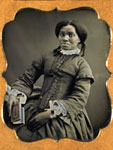
Daguerreotype, unidentified African American woman, c. 1850, Flickr Commons
Article Body

This student think-aloud shows a 99-second video of a student reading a Social Security poster and congressional testimony by a NAACP representative. The student reads the poster out loud, generating a question as she reads. Rather than spending time hypothesizing answers, the student reads the next document, which helps her answer her original question, and raises other questions about the significance of race and class in the fashioning of Social Security legislation.

This example of intertextual reading reveals a student capable of reading documents using and comparing multiple documents to help her answer historical questions. The accompanying text commentary explains what the student is doing and how teachers can support students in intertextual reading. The documents she interprets may be downloaded here.

Close Reading for Vocabulary, Context, and Tone

Article Body

This student think-aloud shows a high school student reading a New York Times article about the Scopes Trial and working to make sense of its meaning. During this 74-second video, she identifies words she is unfamiliar with and draws on outside information in order to analyze the tone of the document. As a result of this close reading, she is able to better understand not only the meaning of the document, but also the viewpoint of its author—a big city reporter visiting a small town in Tennessee. A commentary on the think-aloud is also available and you can find the document the student reads here.

Reading for Context

Article Body

This video shows a student thinking-aloud while reading a headnote to an excerpt from Bayard Rustin's diary. In this 58-second reading, the student puzzles through the motives of civil rights leaders, who were concerned that Rustin—a gay Communist—would undermine the movement. He identifies the importance of context in his reading, noting that "this was during a great fear of Communists in America" and that if the movement was aligned with Communists, "it would lose a lot of support." The accompanying written commentary highlights the importance of contextualization, which the student uses to better understand a world in which civil rights activists would exclude someone who was different. Find the document the student reads here.

Stories in History: Is Narrative an American Approach?

Image
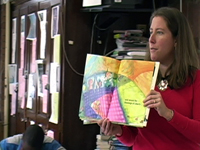
An eigth grade teacher reading a childrens book to her class. NHEC
Article Body

In "A Sociocultural Perspective on Children’s Understanding of Historical Change: Comparative Findings From Northern Ireland and the United States," Keith Barton, a professor at Indiana University, looked at how children in different countries learn history, specifically the role played by narrative.

Barton observed that American students learn the "story" of American history, more often than not, as one of perpetual progress. In Northern Ireland, history is seen as relationships among social institutions over time, not a story about progress.

Barton wondered about the effects of such an approach. To that end he interviewed 121 students, ages 6–12, in four schools across Northern Ireland, asking how and why life had changed over time. Along with classroom observations and collecting data from history-related settings like museums, Barton’s interviews demonstrated how students in a non-American cultural context learn about history.

When he compared these to studies done in the United States, Barton found that American students portray historical change as straightforward, linear, and generally beneficial progress, while the Irish students saw history as either random and ambiguous, or cyclical. The American students studied tended to focus on accomplishments of historical figures, whereas students in Northern Ireland often discussed the role of societal and economic forces.

Narrative in American History

The "story" of history taught to American students frequently takes the form of a "quest-for-freedom" narrative in which life slowly but surely gets better for all Americans. This serves to unite a diverse society, such as is found in the U.S. By contrast, in Northern Ireland, where Protestants and Catholics remain divided, the narrative form creates the potential for opposing sides to take aim at each other. Consequently, in Northern Ireland, the primary emphasis in history is on societal relationships—relationships between different groups, as well as between people and institutions.

The "story" of history taught to American students frequently takes the form of a "quest-for-freedom" narrative in which life slowly but surely gets better for all Americans. This serves to unite a diverse society, such as is found in the U.S.
The Individual in American History

History classes in the United States also tend to focus more on the role of exceptional individuals in driving history forward. In this version of history prominent figures initiate a series of events which follow a causal chain to bring about significant change. For example, the American students learned that the civil rights movement was the product of Martin Luther King, Jr.’s genius rather than a broad range of social and institutional forces. In Northern Ireland, the students focused less on individuals and more on issues relating to social and economic structures. Barton suggests this may be because Americans are more comfortable dealing with individuals and their stories than with issues such as social class and prejudice. Conversely, there are few historical figures taught in Northern Ireland classrooms who don't represent a political position of one kind or another. Thus, while the Northern Irish are comfortable discussing social class, for instance, they have less experience examining the influence of particular individuals.

Progress in American History

Barton's study showed that narratives about American history are frequently positive stories about the triumph of progress: as time passes, technology improves, freedoms expand, and life gets better. In Northern Ireland, stories about progress are much less common. Time goes on and life changes, but they do so in unpredictable ways. Barton argues that while a focus on progress may be positive, giving students a feeling of shared identity and inspiring their belief that Americans can learn from their mistakes, relying solely on such a narrative doesn't acquaint students with the effects of societal forces on individual actions or the diversity that exists at any given time in history.

image
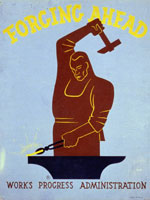
Poster, Forging Ahead, Harry Herzog, 1936-1941, Library of Congress
In the Classroom

Help students understand that the passage of time doesn't always bring what is commonly viewed as "progress."

  • Begin with contrasting images—a rural village and a large city—and ask students to explain the relationship between the two.
  • Students will likely explain how the village became the city. This is a good jumping-off point to helping them see that the "story of history" is not always simple or straightforward.
  • Next, explain that villages and cities have often existed simultaneously.
  • Spend some time discussing why and how cities first began to emerge. While urban centers may look like signs of "progress," students should be made aware that there is a more complex relationship between villages and cities.
  • Suggest to students that historical development doesn't occur in a simple progressive sequence, and that historical periods can't be boiled down to a single image. While many people in the past lived in villages, there are also cities that date back thousands of years. And even though today many people reside in cities, villages are far from extinct.
Sample Application

In interviewing students in Northern Ireland, Barton gave them a number of exercises. One asked the students to explain why British students were once caned—hit with a reed or branch—by their teachers, and why the practice ceased. In answering, one third of the students attributed the change to inevitable progress:

Because over time they realized that they should be less strict.

They just found out that it’s really, really bad, and they’re thinking of other people’s feelings now.

In explaining how things change, these students didn't mention collective action or how institutional change can bring about social improvements. However, the rest of the students—two-thirds of those interviewed by Barton—pointed to changing social relations, collective action like strikes and protests, and evolving legal and government institutions:

Because if you cane them, you could get sent to jail. . . it’s against the law to hurt somebody that you don’t know.

New people came in. . . and they made new rules like child abuse, like jails, and all that kind of thing.

For these students, caning ended not because of inevitable progress, or even due to a change in attitude; instead, the changing attitudes themselves led to collective action, that in turn produced new laws and regulations.

Bibliography

Keith Barton, "A Sociocultural Perspective on Children’s Understanding of Historical Change: Comparative Findings From Northern Ireland and the United States," American Educational Research Journal 38, no. 4 (Winter 2001), 881-913.

Amy Trenkle's Be the Blogger!

Date Published
Image
Blog, Lincoln Logs, http://stampslincoln.blogspot.com/, Amy Trenkle
Article Body
Beginning to Blog

During the 2008–2009 school year, in an effort to integrate more technology into my classroom I started blogging with my students about history class. Because I was pretty new to blogging and wasn’t sure how it would go, I did one collective site for the 8th grade. Basically, the students wrote and I uploaded it to the blog. As the year went on, I logged in for students and they took over the maintenance of the site. Sometimes the writing was an assignment and I chose the best ones to post. Other times, I offered extra credit if they posted about a topic provided. And still other times I loved what a student wrote and typed it up for the blog. This site ended up being a wonderful compilation of our year come June. I still use it as a preview site for students, parents, and pre-service teachers I work with, as to what we do during the year. The blog can be viewed at http://shmshistoryclass.blogspot.com/.

That same year, an after-school group that is co-sponsored by myself and a friend from the National Park Service took a cross-country trip for Lincoln’s Bicentennial. I created another blog for the students to document their adventures and for friends and family back home to be able to find us. What was nice was that because I had been working with the blog in history class, my students were aware of how a blog works and were familiar with how to write for it and their audience. Each student was required to write three times for the blog during the course of our week-long adventure. Each night after our full day they would write on either paper or share the two laptops we brought for blogging. Before going to bed each night I would upload any remaining blog entries. The system proved effective for sharing our adventures and for students documenting their days. The site has also become a great way for Jen Epstein, my National Park Service co-organizer, to share what she is doing in schools for outreach. View it here: http://stampslincoln.blogspot.com/.

Blogging Expanded

With two school group blogs under my belt, I decided to ramp it up for the 2009–2010 school year. I wanted students to be able to learn how to blog . . . not just post, but learn the process. I set out the planning of it before school started. Basically, I decided to have students choose their groupmates in the class they were in. I have approximately 100 students each year and about 25 per history class. I asked them to be in groups of three or four students.

I wanted students to be able to learn how to blog . . . not just post, but learn the process.

Once they chose their groups (and we discussed the characteristics of a quality groupmate, both in a group partner and as a group partner—they are 8th grade after all!), I gave them a sheet that asked them to record their group member names, create a name for their blog, and to write a username and a password that they would remember (not one that was already in use by one of the group members!). I created Google accounts for each student using the information provided, noting on their sheet, if a username was taken, the reassigned username.

Generally, I’ve found that it takes about a week for me to set up the 30 or so email accounts and blog sites. I introduce the blog and what it will be about, how it will be used, etc., and then come back to it about a week later once I’ve created the accounts and site. We spend a full double block learning to log in, changing the appearance of the blog, and learning to post. We generally do the first blog post together. We discuss the elements of a quality blog post—what am I looking for? Points I stress are that it is still for class—correct English grammar must be used. For all intents and purposes, I am their audience (so it should remain as formal writing), and the blog is only for history class. I do not want to read about their weekend experiences on this blog.

Usually, after a guest speaker they have a blog update to do. Sometimes they turn in an assignment and then I ask them to cut and paste what they have typed and to post it. Other times I have them work as a group to post a response to something in class.

Points to Consider

I find that they’re pretty excited about the blogs and they like to write on them. I’ve learned that a clear rubric is key to success—for the students but for my grading as well. Just as any teacher would do for a writing assignment, it is important to lay out the criteria for the post in advance. Am I grading on content? Spelling? Grammar? Reflection? When grading 30 blogs, it becomes ultra important to be able to know what I’m looking for, especially because their posts can vary so much.

I find that it is important to be very clear with parents about expectations as well.

Another important note to consider is deadlines. Because students aren’t turning in a physical paper, it’s easy for them to forget deadlines and to overlook them. I find that it’s important to have a final cut-off date for grading blogs . . . along with a lot of reminders. Many parents are not familiar with blogging and so I find that it is important to be very clear with parents about expectations as well. Last year I ran a parent workshop and walked parents through the what, how, and why of blogging so that they could better support their children at home . . . and because I was getting a lot of questions!

I’m fortunate enough to have a classroom set of laptops and a relatively new and working internet system. However, the number of computers is what has dictated my choices for class blog site vs. small group blog sites. When I started in 2008, I had only two laptops and a desktop, with no permanent and/or regular access to a classroom set of computers.

My recommendation would be to start small—either with a classroom blog or with a select group of students. Simultaneously, I was blogging on a personal blog and it helped for me to play around with my own blog. I found the Google help site for Blogger very helpful when teaching my students. Pages can be printed and copied for students and then put in their notebooks to be referenced. (Editor's note: If you're using a different blogging service, look for that service's support documentation.)

The Advantages of Blogging

For me, blogs are really flexible—for both time and content. While I’ve used them for the duration of a school year, they would be great for a unit project or a semester project. And for those students who are really savvy, it’s a great way to engage them by having them add other multimedia objects to their blogs and to embed links to related content material.

Just remember to give yourself a head start and don’t be afraid to play around!

The ideas truly are endless! The winter break and other school breaks really lend themselves to my own exploration time on the blog. It allows me to see what I could implement with my students and to think about how it might further benefit what I am teaching in the classroom. Just remember to give yourself a head start and don’t be afraid to play around! Blogging can be wonderful for both you and the students!

For more information

Curious to learn more about blogs and blogging? Our Tech for Teachers entry on blogs looks at some possible platforms, and, in a Teaching Guide, high-school teacher Kyle Smith details one way of using a blog in class.

Read other ideas from Amy Trenkle in her blog entries on teaching Christopher Columbus with monuments and celebrating the First Amendment.

Diana Laufenberg on the Power of Visuals

Date Published
Image
Image, Tablue Data Visualization, Apr. 14, 2010, courtneyBolton, Flickr
Article Body

History teachers (tend to) love history. Students do not (often) love it so much. This is a perplexing situation that I have bounced around in my brain for the past two decades. When I was a student, I liked the teachers and felt as though I was being educated, but I did not love my history classes. That is until I enrolled in a special freshman seminar at the University of Wisconsin-Eau Claire: "Medieval Foundations of the Modern West," co-taught by a history professor, Dr. Thomas Miller, and an Academic Adviser with an art degree, Jeannie Harms. This course was about nurturing freshmen as students but also approaching history from an interdisciplinary angle. It was incredibly unconventional and I loved every minute of it. There was a significant 'visualness' to the history—we were constantly digging into paintings and illustrations and artifacts of the era to extract their history, for ourselves.

The Need for Images

As I developed my own classroom practice, it occurred to me that I needed to include that compelling visual component in my teaching as much as possible. Some years I have been more successful than others at achieving that balance, and there have been years when I was more acutely aware of the need. Consider this student: a 12-year-old girl with a 2nd-grade reading/writing level, identified with a specific learning disability in both areas. She is in my classroom in adherence with the inclusion model. I quickly realize that her struggles with the written word have nothing to do with her capacity for logic and critical thinking. She is bright and actively participates in class discussion, but is left out of the conversation much of the time because the reading and writing stand between her and the ideas. To address her identified areas of struggle, she is scheduled into small, intensive remedial classes, but much of the content is well below her actual intellect; she is bored.

I began to realize that if I introduced the concepts visually, this student was much more motivated to attempt the assignment even though she struggled. In addition, her ability to engage verbally in the discussion and group work related to the content improved. Here's the other bonus moment—introducing concepts in a visual way motivated most of the kids. It helped them to access the ideas or get hooked by the story so that they then wanted, all on their own, to know more, inquire, and dig. Two minutes of historical video on the Space Race can get a room of 13-year-olds completely rapt and intrigued. A famous political cartoon with clever components can provoke a stream of compelling questions. An infographic comparing unemployment rates in the Great Depression to those today can link the personal experiences of the students today to the historical concept of the Great Depression, helping them look for commonality and divergence in the events. As teachers of history we often place reading and writing before discussion, leaving behind those students averse to or struggling with the written word. By flipping the compelling component to the front of the day or lesson, students are much more likely to buy into the learning. I learned this all those years ago in that freshman seminar.

Data Visualizations

As technology advanced and I began to use more video, I also stumbled across the occasional data visualization. My interest was piqued. These visualizations were not just a way to capture interest but also a way to introduce highly complex ideas and relationships quickly, so as to elevate the level of dialogue and inquiry. One such example is GapMinder from Hans Rosling. If you have never investigated this tool, I dare you to spend less than an hour on your first visit. Watching the bobbing and weaving of country data through time makes the data beautiful and meaningful to many students and fills them with curiosity. The visualizations created by Slate and The Guardian for the unrest in North Africa and the Middle East deliver a deluge of rich information to the learner in forms that suggest connections between events, geography, and time. Tools like these can include the vast majority of learners, regardless of reading ability, in a dialogue of ideas and critical thought.

Accessing and Assessing in Many Ways

This is not to say that we shouldn't work with students on their areas of struggle, but we can teach students to access and assess content in more ways than just reading and writing. That 12-year-old girl taught me that seeing a student as a voraciously curious brain and not just a reader/writer was critically important. We teach the whole child, not just the parts that decode letters. Our history classrooms have the ability to become fertile ground where citizens engage in truly enriching dialogue about issues of import. I want to involve all of my students in the conversation, not just those interested in the history or those that can access the reading, but all the students, their interests piqued by engaging and relevant resources about which they can ask thoughtful questions.

For more information

Our Tech for Teachers section introduces you to visualization tools like Many Eyes and Wordle.

Mind mapping and mental mapping are data-visualization techniques students can embrace, and English language learners can also benefit from bringing more visuals into the classroom.

Framing History with Historical Questions

Image
Photography, puzzle, 21 March 2005, Nasir Nasrallah, Flickr CC
Article Body
Why Essential Questions (EQs)?

After six successful years implementing three Northern Nevada Teaching American History projects, it became apparent to us that we could challenge ourselves and our teachers to move beyond individual professional development experiences and engage in a long-term, three-year project aimed at fostering collaboration between vertical teams of upper elementary, middle, and high school teachers. Because teachers at these various levels had different curricular foci in American history, we sought common ground through common themes and questions. A primary goal for these vertical teams was to reframe their entire curriculum around the same essential questions (EQs) to facilitate historical inquiry and historical thinking.

Essential questions are open-ended questions that address the big ideas of history, have no predetermined correct answer, allow for multiple interpretations, and, most importantly, are applicable across historical eras and to contemporary events. Four to six well-written essential questions could frame every unit of study across all grade levels. After setting the instructional stage with these essential questions, teachers could structure historical inquiry around specific historical questions (HQs) for each unit of study. An HQ is directly related to specific historical content and to an individual EQ. The formula used by teachers was: EQ + history standard = HQ. Our article, “The Past as a Puzzle: How Essential Questions Can Piece Together a Meaningful Investigation of History” in The Social Studies (2011), details the process and results of our adventure implementing EQs and HQs in grades 5–12.

(For more examples of EQs and HQs for elementary, middle, and high school, download this chart.)

Overcoming Difficulties

The first difficulty we faced in this process was collaboratively writing the overarching essential questions. Writing questions that were truly open-ended and thematic proved difficult to say the least. Despite originally believing that one eight-hour session introducing the concept and writing the EQs would be enough time, we found that the process actually took almost the entire year. We had to allow teachers time to process and play around with the questions before we could adopt them as a whole group.

...we had to provide additional tools, guidance, and mentoring in ways to think about EQs as a framework rather than an addition to their classroom goals.

Even more difficult was facilitating the use of EQs with integrity. That is, EQs were meant to help teachers reframe their curriculum around broad themes and enduring questions but were not initially used in this fashion. For some teachers, the leap to instruction and assessment around EQs was natural. They had a yearning to focus on the big picture and enduring ideas while engaging students in inquiry, and so the change was embraced. However, a majority of the teachers involved struggled with reframing their curriculum around EQs. They were eager to implement EQs, recognized the potential for increased student engagement and understanding, and even regularly inserted EQs into their lessons. They hung posters of the EQs in their rooms and talked about them sometimes during class. BUT, for these teachers, we had to provide additional tools, guidance, and mentoring in ways to think about EQs as a framework rather than an addition to their classroom goals.

Positive Results

Despite the initial difficulties, we have all found great success in implementing EQs. Teachers have noted that students in their classes who were exposed previously to the same EQs in lower grades grasp the enduring issues in history and comment on their comfort in using EQs to inquire deeply into the content.

We have been most impressed by the natural link to the next NNTAH project focus: creation and implementation of Document Based Questions (DBQs). Familiarity with using questions to guide the curriculum supported the move towards answering historical questions with DBQs. Historical questions, directly aligned with EQs, were the foundation of the document based questions. Teachers were able to create DBQs that supported their year-long focus on enduring issues in history, because the historical questions under study were always linked to the EQ. In 2010–2011, 44 teachers created their own high-quality DBQs based upon essential and historical questions. Since that time, many have reported creating additional DBQs to support historical inquiry in their classrooms.