My History at School
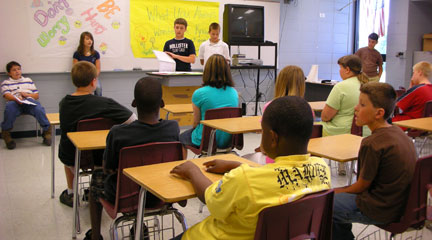
This collection of activities found on the Bringing History Home website introduces first graders to important historical concepts. Through exploring the history of their time at school, students learn about topics such as chronology and historical context as well as how to identify and question different types of primary sources. While these concepts may seem fairly sophisticated for first or second graders, the activities introduce them in accessible and engaging ways. There are seven activities that make up this instructional unit. Each activity can stand alone as a single class lesson or can be combined with others for a multi-day lesson or unit. The first activity asks the question, “What is history,” and distinguishes between fictional stories and stories about things that actually happened. Understanding history as a story is a central theme throughout the plan, and the subsequent activities focus on the centrality of evidence in creating historical stories.
Understanding history as a story is a central theme throughout the plan. . .
Activities three, four, and five introduce students to various types of evidence historians use to make sense of the past, through examining school artifacts such as a newsletter and cafeteria menu. In the final activity, students work as a class to construct a mind map about the history of their year at school. Students are then asked to draw a picture that illustrates one of the concepts from the mind map. Finally, students can be assessed by asking them to identify types of evidence that can provide particular types of information about the school. With a focus on making connections to students’ experiences and teaching them that history is a story based on evidence, these clear and kid-friendly activities are an elegant way to introduce key aspects of history to young elementary students. Designed for first graders, these activities can be useful for both younger and older students.
Notes
Teachinghistory.org Lesson Plan Rubric
| Field | Criteria | Comments |
|---|---|---|
| Historical Content | Is historically accurate? | Yes. Introduces core characteristics of the historical discipline. |
| Historical Content | Includes historical background? | Yes |
| Historical Content | Requires students to read and write? | Yes. Teachers must find text-based artifacts about their school. |
| Analytic Thinking | Requires analysis/construction of interpretations using evidence? | Yes. Students analyze multiple pieces of evidence to construct a history. |
| Analytic Thinking | Requires close reading and attention to source information? | Yes. Students are introduced to sourcing. |
| Scaffolding | Appropriate for stated audience? | Yes. An accessible introduction to the idea that history is more than facts. |
| Scaffolding | Includes scaffolding materials and strategies? | Yes |
| Lesson Structure | Includes assessment criteria focused on historical understanding? | Yes. Includes an assessment activity and rubric. |
| Lesson Structure | Defines clear learning goals and progresses logically? | Yes |
| Lesson Structure | Includes clear directions; realistic for classrooms? | Yes. No estimated times provided. A few activities rely on specific texts. |
Related Topics
Florida State Archives Photographic Collection
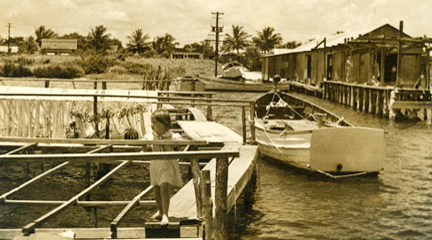
Presents more than 137,000 photographs of Florida on specific localities from the mid-19th century to the present.
Incorporating 20th Century US Environmental History in the 6-12 Classroom
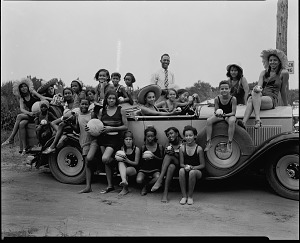
This guide consists of curated primary and secondary sources to help students connect environmental history to broader …