Welcome to Best Practices

Primary Sources: What Are They?
In Using Primary Sources
Of the Student, For the Student, By the Student
In Teaching in Action
Creative Memo on Lay's Products
In Examples of Historical Thinking

Spotlight on Elementary Education

Oral histories and interviews are a unique form of historical documentation. This guide by Linda Shopes offers an overview of the various ways oral history can be integrated into classroom discussions. Though some of the techniques will have to be adapted for elementary students, the ideas Shopes presents are extremely useful. FIND OUT MORE »

Example of Historical Thinking

Scholars, students, and teachers model historical thinking
Women's Rights: Sarah Bagley Letters

What do these letters from a women's rights activist reveal about social [...] »

John Smith Map

Watch Smithsonian curator Barbara Clark Smith discuss John Smith’s Map of [...] »

World War II Memorial

What meanings does the World War II Memorial in Washington, DC, have? [...] »

Intertextual Reading of Two Primary Documents
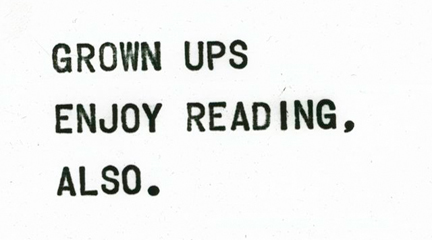
Photo, "Collecting books for readers. . . ," 1964, LSE Library, FLickr Commons

A student demonstrates thinking aloud reading two documents.

[...] »
My Lai Massacre Political Cartoon

Professor Meredith Lair examines a 1971 political cartoon and what it says [...] »

Teaching in Action

Teachers demonstrate promising teaching practices
Foundations of American History: John Brown Song

How did people in the North feel about John Brown after his raid on Harpers [...] »

FDR's Fireside Chats

High school teacher Joe Jelen combines roleplaying and critical analysis—by [...] »

Using Primary Sources

Strategies for analyzing primary sources
Making Sense of Oral History
Image, Marginalia, CHNM

Work with oral history interviews as historical evidence.

[...] »
Secondary Sources: What Are They?
Photo, Final Day, April 11, 2005, *styler, Flickr

National History Day identifies secondary sources along with [...] »

Teaching with Textbooks

Techniques for promoting historical inquiry
Learning Menus: Textbooks a la Carte

Turn your students into 'master chefs' by using learning menus that allow [...] »

Building a Conversation between Textbooks, Students, and Teachers

Class discussion and personal inquiry builds an interactive relationship [...] »

The Grammar of History Textbooks, Part I: Language Analysis
Marginalia, CHNM

The language of history textbooks challenges English language learners and [...] »

Opening Up the Textbook
Negative, "Schoolroom. Concho, Arizona," Russell Lee, Oct. 1940, LoC

Make the most of your textbook—engage students in close reading and analysis [...] »
The Grammar of History Textbooks Part II: Questioning the Text
Marginalia, CHNM

Turn your textbook into a conversation by scanning its language for biases [...] »