We Hold These Truths

Description

Colonial Williamsburg interpreter Bill Barker and other interpreters, including women and African Americans, read and perform the Declaration of Independence.

To listen to this podcast, select "All 2009 podcasts," and scroll to the June 29th program.

Old Fort Niagara State Historic Site [NY]

Description

The Old Fort Niagara State Historic Site preserves Fort Niagara, founded in 1726. The majority of structures on site date from the 18th and 19th centuries. The fort is strategically located at the mouth of the Niagara River. As a result, it was crucial to deciding American dominance in the Great Lakes Region, as opposed to control by the French or British. Both the British and French controlled either the fort itself or the site of the fort at various points of time. Soldiers lived and trained on site for both World Wars. The fort also shaped the history of the Iroquois. Collections include more than 102,000 artifacts.

The site offers period rooms, student programs, guided tours for students, school overnight programs, school outreach programs, and school distance learning programs. The website offers a virtual tour.

Woodley House [DC]

Description

Built in 1801, The Woodley House had a panoramic view of the fledgling American Capitol. The mansion would host a series of prominent Americans, including two presidents, two Secretaries of War, a Secretary of the Treasury, a Secretary of State, a Senator, a Judge, an admiral, and General George Patton. The Maret School purchased the home in 1950, and today serves as a historic house museum.

The home offers guided tours. The website offers visitor information and a brief history of the home.

East Tennessee Historical Society and Museum [TN]

Description

The East Tennessee Historical Society seeks to preserve and share the unique history of Eastern Tennessee and its people. To this end, the society operates the Museum of East Tennessee History. Permanent exhibits include a historical overview off the area, addressing the Cherokee, frontier life, the Civil War, the Great Smokey Mountains National Park, the Tennessee Valley Authority, country music, and the Civil Rights Movement. The museum also presents a recreated early 20th-century streetscape, including period dentist and drug store settings and an original streetcar.

The society offers exhibits, period rooms, genealogy workshops, school tours and scavenger hunts, curriculum-based programs, curriculum-based outreach programs, and educator workshops and summer institutes. The website offers lesson plans and genealogy resources for use in the classroom.

Joshua L. Chamberlain Museum [ME]

Description

The Joshua L. Chamberlain Museum is located within the adulthood residence of Civil War officer Joshua Chamberlain (1828-1914). Best known for his strategic command of Little Round Top at the Battle of Gettysburg, Chamberlain also commanded the Union troops during the Confederate infantry's official surrender to the Union, served as President of Bowdoin College, and was elected Governor of Maine. Topics addressed include Chamberlain's family, career, and life story.

The museum offers guided tours of the museum and self-guided walking tours of Brunswick.

San Pablo Historical Society [CA]

Description

The San Pablo Historical Society seeks to preserve and share the history of San Pablo, California. To this end the society operates two museums—the Alvarado Adobe, a replica of California Governor Alvarado's (in office 1836-1842) home, and the 1905 Blume House, a historic farm dwelling.

The museums offer period rooms. The website offers virtual tours.

Diary, Correspondence, and Papers of Robert "King" Carter, 1701-1732

Image
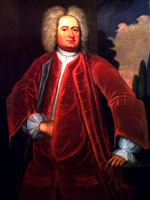
Image, Robert Carter, Diary, Correspondence, and Papers of Robert..., 1701-1732
Annotation

A work-in-progress, this collection offers letters and diary entries by Robert "King" Carter (1663–1732), a wealthy landowner and leading public figure in Virginia. Educated in England, Carter inherited and acquired more than 300,000 acres in the Northern Neck Proprietary between the Rappahannock and Potomac Rivers. Carter, who owned nearly 1,000 slaves, served as a member of the Council of Virginia and as acting governor of the colony.

The site presently contains transcripts of all existing Robert Carter texts, including approximately 800 letters, written between 1701 and 1727, diary entries covering 1722–1726, and wills. Each document provides both modern and original spellings, and hyperlinked notes offering identifying information for more than 130 persons, places, and things. A 2,200-word biography of Carter, a 2,100-word essay on the Northern Neck Proprietary, and a bibliography of nearly 80 titles are also available.

Deshler-Morris House [PA]

Description

The Deshler-Morris House, or Germantown White House, is the oldest official presidential residence. It was utilized by George Washington during the 1793 Philadelphia outbreak of Yellow Fever and the following summer.

The house offers exhibits and period rooms.

Bill of Rights Institute

Image
Screenshot, Bill of Rights Institute home page
Annotation

The Constitution is a classroom (and U.S. ideological) staple. As the platform from which U.S. history shapes itself, it is crucial that your students understand the Founding Fathers and their documents. The Bill of Rights Institute exists to help educators present this material.

The website brings together a variety of resources from introductions to and copies of primary source documents to a wide selection of resources specifically for educators. The latter includes Constitution Day resources such as an interactive game on living without the Bill of Rights, another that provides interesting background information on all of America's infamous founding figures, and an essay contest. Browsing through the educator resources also brings to light lesson plans, Bill of Rights-related current news articles which have been selected for classroom appropriateness, information on 24 of the Founding Fathers, summaries of major Supreme Court cases, and the ability to search the site by choosing a major topic such as "criminal procedure."

The student resources are largely the same as the Constitution Day resources, although links are provided to a number of relevant videos and an "Americapedia," which identifies and describes civic values, portions of the Constitution, major political documents, major Supreme Court Cases, and names to know.

Educators may also be interested in seminars and webinars. Two previous webinars are available online.