Spotlight on Elementary Education

History is made by those who are unafraid to push the envelope and redefine the society in which they live. Encourage your students to examine the men and women who worked to make America what it is today with this creative activity. FIND OUT MORE »

Lesson Plan Reviews

Evaluate key elements of effective teaching Watch the INTRODUCTORY VIDEO
The Road to Pearl Harbor

Explore the rise of animosity between the U.S. and Japan through primary [...] »

Transportation: Past, Present and Future

What pushes and pulls people into new ways of life? In this lesson, students [...] »

English Language Learners

Instructional strategies and resources for ELL
Life, Liberty and Property: What’s the Big Idea?

Explore a lesson, designed especially for English Language Learners, that [...] »

Targeting Content and English Language Objectives
Photo, English club First meeting Dover Library, Sept. 13, 2010, RTLibrary

Build your students' language skills and historical understanding by using [...] »

Teaching Guides

Explore new teaching methods and approaches
Structured Academic Controversy (SAC)

Are classroom discussions about winning the argument or about understanding [...] »

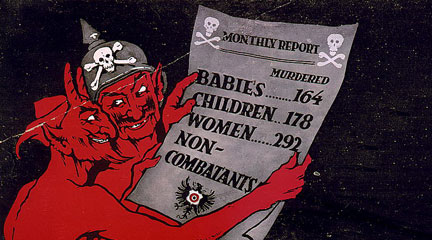
1916 Children's Code of Morality: A Guide for Pre-Service Teachers

Primary sources from the Library of Congress help students explore a [...] »

Mormons and Westward Expansion: A Guide for Pre-Service Teachers

Teachers guide students to create interactive digital maps detailing the [...] »

Teaching with Timelines
Image, Squared Circles-Clocks, 25 Oct 2006, Leo Reynolds, Flickr CC

Construct an ongoing, shared classroom timeline in middle and elementary [...] »

Free Speech Teaching Guide 2: Brandenburg v. Ohio (1969): Defining and Arguing Hate Speech

This teaching guide includes a structured guide to explaining the case [...] »

Ask a Master Teacher

Forming Lesson Plans Around State Mandates
Watercolor, Otto Dix, 1924, Assault under Gas, Deutsches Historisches Museum

How do you teach the effects of WWI on art and literature? Transforming a [...] »