The Good Mother: A History of American Motherhood
Description
Ed Ayers, Peter Onuf, and Brian Balogh discuss the evolution of the concept of motherhood in U.S. history.
Ed Ayers, Peter Onuf, and Brian Balogh discuss the evolution of the concept of motherhood in U.S. history.
Migration, both forced and voluntary, remains a prominent theme in African American history. This website is built around the history of 13 African American migration experiences: the transatlantic slave trade (1450s1867), runaway journeys (1630s1865), the domestic slave trade (1760s1865), colonization and emigration (17831910s), Haitian Immigration (17911809), Western migration (1840s1970), and Northern migration (1840s1890).
Twentieth-century migrations include the Great Migration (19161930), the Second Great Migration (19401970), Caribbean immigration (1900present), the return South migration (1970present), Haitian immigration in the 20th century (1970present), and African immigration (1970present). More than 16,500 pages of texts, 8,300 illustrations, and 67 maps are included. An interactive timeline places migration in the context of U.S. history and the history of the African Diaspora.
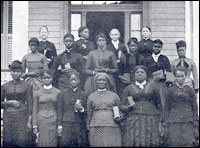
Nearly 1,400 documents address aspects of life in the South from the 18th, 19th, and early 20th centuries. The database features 10 major projects.
The First Century of the First State University presents materials on the beginnings of the University of North Carolina. Oral Histories of the American South offers 500 oral history interviews on the civil rights, environmental, industrial, and political history of the South. First-Person Narratives of the American South, 18601920 offers 140 diaries, autobiographies, memoirs, travel accounts, and ex-slave narratives. North American Slave Narratives furnishes about 250 texts.
The Library of Southern Literature makes available 51 titles in Southern literature. The Church in the Southern Black Community, Beginnings to 1920 traces the role of the church as a central institution in African American life in the South. The Southern Homefront, 18611865 documents non-military aspects of Southern life. The North Carolina Experience, Beginnings to 1940 provides close to 600 histories, descriptive accounts, institutional reports, works of fiction, images, oral histories, and songs.
North Carolinians and the Great War offers 170 documents on the effects of World War I and its legacy. Finally, True and Candid Compositions: The Lives and Writings of Antebellum Students at the University of North Carolina analyzes 121 documents written by students. All projects are accompanied by essays from the Encyclopedia of Southern Culture.
Historian Linda Gordon looks at family values during the 1960s, comparing and contrasting the institution of the family and perception of problems in family in the 1960s with such institutions and perceptions both past and present.
The provided site links directly to the Real Media audio file, as it is not associated with a visual webpage.
The Fredericksburg Area Museum and Cultural Center displays and interprets artifacts spanning 10 thousand years of area history, from a circa 8,000 BC Clovis point to materials from the 2004 Embrey Dam demolition. The Museum seeks to convey the stories these objects tell about the people who have lived in Fredericksburg and the surrounding counties.
The museum offers exhibits, self-guided and guided tours for school groups, in-class outreach presentations, traveling trunks for rent, and recreational and educational events.
The Sevier County Historical Society Museum consists of a replica blacksmith shop, jail, and 1897 bank, as well as a 1940s residence furnished in period style.
The museum offers period rooms.
The John D. Murray Fire Museum presents the history of the City of Oswego fire department, founded in 1876. Collections include three historic fire engines from between 1925 and 1952.
The museum offers exhibits. The museum is open between the beginning of June and Labor Day. Please call to make an appointment if you are unable to visit during the posted hours.
The National Soccer Hall of Fame and Museum presents the history of soccer within the United States, recognizes figures who have excelled at the sport or influenced its playing, and hopes to inspire continued interest in soccer. Museum collections include trophies, jerseys worn by stars such as Caligiuri, historical soccer gear, and Major League uniforms.
The site offers exhibits, summer soccer tournaments, halls of fame, a game zone, and research library access. Visitors are asked to call ahead in order to use the research library.
The Heyward House is a circa 1840 antebellum house museum which also serves as the welcome center for Bluffton, South Carolina. The site includes the original slave cabin and a portion of the summer kitchen; and is located within Bluffton's historic district.
The house offers period rooms, 30-minute guided home and grounds tours, two-hour guided area walking tours, and self-guided area walking tours. Reservations are required for guided walking tours and for all groups of 10 or more.
The Society's Museum is housed in the 1885 Poehler home. In the back yard of the house stands a log cabin built by another German immigrant, Christian Didra, about 1858. This log cabin is a dramatic reminder of the harsh living conditions under which the earliest of the Sibley County pioneers existed.
The society offers occasional recreational and education events; the museum offers exhibits.