Welcome to Teaching Materials

Hispano Music & Culture of the Northern Rio Grande
In English Language Learners
Bridging the Language Barrier
In Ask a Master Teacher

Spotlight on Elementary Education

History is made by those who are unafraid to push the envelope and redefine the society in which they live. Encourage your students to examine the men and women who worked to make America what it is today with this creative activity. FIND OUT MORE »

Lesson Plan Reviews

Evaluate key elements of effective teaching Watch the INTRODUCTORY VIDEO
Messages of Houses and Their Contents, 1780-1820

Examining changes in early American homes helps interpret the past. It [...] »

Immigration

Very few of us have ancestors who were not immigrants. Bring the topic of [...] »

English Language Learners

Instructional strategies and resources for ELL
Uncovering Human Agency
Photography, My Desk, 15 March 2006, Flickr CC

Use this strategy to help students discover historic actors—the people, [...] »

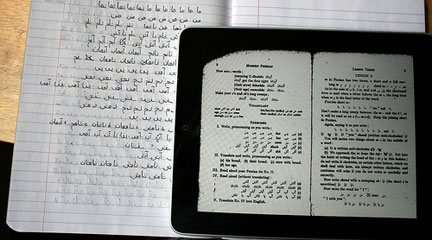
Responding to English Learners’ Writing with the 3 P’s
Middle school student, VA

Use the three P’s (Preparation, Purpose, and Proficiency) to provide [...] »

Teaching Guides

Explore new teaching methods and approaches
Well-behaved Women [and Men] Seldom Make History

Help your elementary school students get more out of historical biographies [...] »

Mystery Strategy for Elementary Students

Using the premise of a mystery, elementary students act as history [...] »

Applying KWL Guides to Sources with Elementary Students

To engage with a source, ask, "What do I know, what do I want [...] »

Mormons and Westward Expansion: A Guide for Pre-Service Teachers

Teachers guide students to create interactive digital maps detailing the [...] »

9/11 and Commemoration: A Guide for Pre-Service Teachers

Help students understand the events of 9/11 and how such events are [...] »

Ask a Master Teacher

Constructivism: Actively Building Knowledge
Photoprint, Making a sandman, 1964, Ozzie Sweet, Flickr Commons

Traditional concepts of knowledge and pedagogy view the student as a "fact [...] »