Welcome to Teaching Materials
![Negative, [Woman wearing native american clothing. . . ], 1923, LoC](/sites/default/files/ResourcesonNative.jpg "Glass negative, [Woman wearing native american clothing next to automobile], 1923, Library of Congress")


Spotlight on Elementary Education
Lesson Plan Reviews

Students learn more about the larger than life figure of Theodore Roosevelt [...] »
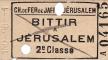
Help students make connections between religion, technology, and [...] »
English Language Learners
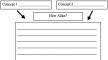
Graphic organizers are helpful for students with limited English proficiency [...] »

Primary sources in both English and Spanish on the Spanish American War, [...] »
Teaching Guides

Using primary sources from the Library of Congress, help students reconsider [...] »
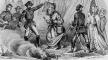
Political cartoons are often conceptually complex, but offer valuable [...] »

Help students understand the how policy and structural forces have shaped [...] »
Hypothesize, test, and acknowledge how sources form different "pictures of [...] »

Are classroom discussions about winning the argument or about understanding [...] »
Ask a Master Teacher

Traditional concepts of knowledge and pedagogy view the student as a "fact [...] »