Welcome to Teaching Materials

Divining America: Religion in American History
In Lesson Plan Reviews
Adapting Documents for the Classroom: Equity and Access
In Teaching Guides

Spotlight on Elementary Education

History is made by those who are unafraid to push the envelope and redefine the society in which they live. Encourage your students to examine the men and women who worked to make America what it is today with this creative activity. FIND OUT MORE »

Lesson Plan Reviews

Evaluate key elements of effective teaching Watch the INTRODUCTORY VIDEO
Woman Suffrage and the 19th Amendment

Relive the dream of the women's vote through roleplay or interfacing with [...] »

Jamestown: The Starving Time

Only 60 settlers out of 600 survived the winter of 1609–1610 in Jamestown [...] »

English Language Learners

Instructional strategies and resources for ELL
Life, Liberty and Property: What’s the Big Idea?

Explore a lesson, designed especially for English Language Learners, that [...] »

Using Visuals to Build Interest and Understanding

Using primary source images to help English Language Learners build [...] »

Teaching Guides

Explore new teaching methods and approaches
Religion and the Labor Movement: A Guide for Pre-Service Teachers

Engaging Library of Congress primary sources that connect religion and [...] »

History of Higher Education: A Guide for Pre-Service Teachers

Help students understand the different types of universities and colleges in [...] »

Writing to Learn History: Annotations and Mini-Writes

A pen or pencil in your student's hand is an excellent tool for teaching [...] »

Adapting Documents for the Classroom: Equity and Access

Documents are riddled with difficult vocabulary. Don't be afraid to adapt [...] »

Stop Action and Assess Alternatives

Teach students to explore contingency with this great lesson plan idea.

[...] »

Ask a Master Teacher

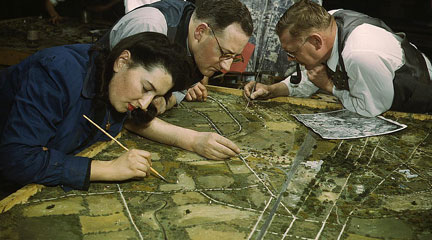
Locating Resources on Teachinghistory.org
Photography, London Archive Research, 16 Sept 2008, Flickr CC

Have a specific topic you desperately need to locate primary sources for? We [...] »