Welcome to Teaching Materials

What Really Happened? Comparing Stories of the First Thanksgiving
In Lesson Plan Reviews
Well-behaved Women [and Men] Seldom Make History
In Teaching Guides

Spotlight on Elementary Education

History is made by those who are unafraid to push the envelope and redefine the society in which they live. Encourage your students to examine the men and women who worked to make America what it is today with this creative activity. FIND OUT MORE »

Lesson Plan Reviews

Evaluate key elements of effective teaching Watch the INTRODUCTORY VIDEO
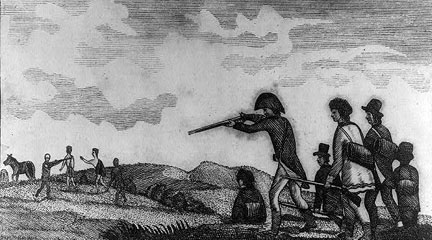
What Really Happened? Comparing Stories of the First Thanksgiving

Take a variety of perspectives into account before moving past the first [...] »

Organizing History Through Images

In this lesson, students will organize photographs both chronologically and [...] »

English Language Learners

Instructional strategies and resources for ELL
Using Visuals to Build Interest and Understanding

Using primary source images to help English Language Learners build [...] »

Why Did It Happen? Making Claims about Cause and Effect

A shift in writing is required, often using new language tools, when making [...] »

Teaching Guides

Explore new teaching methods and approaches
Incorporating 20th Century US Environmental History in the 6-12 Classroom

This guide consists of curated primary and secondary sources to help [...] »

Historical Agency in History Book Sets (HBS)

Looking for ways to use fiction in your elementary history curriculum? Read [...] »

Using Historical Ephemera in the Classroom

Ticket stubs. Report cards. Photographs. All of these things have historical [...] »

Students Working in Local Historic Preservation

Engage your students in preserving local history! Use this teacher's [...] »

Truth in Transit: Crafting Meaningful Field Trips

Leave your students with intellectually and emotionally significant memories [...] »

Ask a Master Teacher

Brain-based Research
Photography, My Brain and My Mind, 4 Dec 2006, D. Bjorn, Flickr CC

What's in a brain? Quite a lot actually! Discover how brain research relates [...] »