Senatorial Division

field_image
free and slave states map
Question

When Texas became a state, did slave states have a majority in the U.S. Senate until Wisconsin entered the Union as a free state? During the three years in between Texas and Wisconsin becoming states, was the South able to take advantage of their numbers in the Senate? Also, when California entered the Union as a free state, did it send pro- and anti-slavery senators to Washington?

Answer

After the War of 1812, the northern, free states' members in the House of Representatives exceeded those from slave states. The slave states reckoned then that Congress could try to outlaw slavery in the South. Their representatives in the House had tried to stave off attempts by that chamber to legislate the abolition of slavery by instituting a "gag rule" which, for years, had blocked abolitionist petitions from reaching the floor of the House, but which had been rescinded in 1844. The South therefore worked out a strategy to ensure that they would not be outnumbered in the Senate. If they maintained a balance in the Senate, they figured, attempts to force the end of slavery on the southern states could be blocked.

To maintain this balance as new territories were admitted into the Union, slave states and free states were admitted, roughly speaking, in pairs: Mississippi and Indiana, Alabama and Illinois, Missouri and Maine, Arkansas and Michigan, and Florida and Iowa. In some cases, the admission of a state was slowed or sped up in order to pair it with another. This practice was the outcome of a strategy that the South considered essentially defensive. The South's primary aim in this was not so much to spread slavery as it was to protect slavery where it already existed. To do that, it had to protect its strength in the Senate, and for that to happen as northern territories were brought into the Union, the South had to find southern territories to balance them. Eventually, this even led some in the South to look for possible ways to annex Cuba and Nicaragua and bring them into the Union as slave states.

Texas and Wisconsin were considered to be a pair. Partly due to objections of northern abolitionists who feared that the admission of Texas by itself would tilt the Senate balance in favor of the South, the Lone Star State's entrance into the Union was delayed until December 29, 1845, and only happened then because of the successful Democratic campaign of 1844 that succeeded in electing James Polk to the White House on a platform that combined a call for admitting Texas into the Union with an expansionist stance on the question of setting the northern territorial claims of Oregon as far as possible. The northern vote was split in that election, between Whig candidate Henry Clay, Liberty Party candidate James Birney, and James Polk (partly because of his party's position on Oregon), giving the election to Polk.

There was a strong effort to bring Wisconsin into the Union in 1846, along with Iowa, but Wisconsin was not admitted until May 29, 1848. Did that make the Senate balanced in the South's favor between the time of the admission of Texas and the admission of Wisconsin? Not really. For one thing, the balance in fact was volatile.

For example, although Iowa had been admitted to the Union as a free state on December 28, 1846, political turmoil in its state legislature, almost evenly divided on party lines, and spiced by accusations of bribery, resulted in the state's inability at first to elect U.S. Senators to send to Congress. In addition, party politics factored into votes, with northern Democrats, for example, sometimes voting with their southern colleagues. Nevertheless, a rough parity existed in the Senate, although the South recognized it as tenuous.

South Carolina Senator John C. Calhoun's speech in the Senate on February 19, 1847, described the situation in which the South perceived itself at the time:

Sir, already we are in a minority—I use the word 'we' for brevity sake—already we are in a minority in the other House, in the electoral college, and, I may say, in every department of this government, except at present, in the Senate of the United States—there, for the present, we have an equality. Of the twenty-eight States, fourteen are non-slaveholding and fourteen are slaveholding, counting Delaware, which is doubtful, as one of the non-slaveholding States. But this equality of strength exists only in the Senate. … We, Mr. President, have at present, only one position in the government, by which we may make any resistance to this aggressive policy which has been declared against the South; or any other, that the non-slaveholding States may choose to take. And this equality in this body is of the most transient character. Already, Iowa is a State; but, owing to some domestic calamity, is not yet represented in this body. When she appears here, there will be an addition of two Senators to the Representatives here, of the non-slaveholding States. Already, Wisconsin has passed the initiatory stage, and will be here at next session. This will add two more, making a clear majority of four in this body on the side of the non-slaveholding States, who will thus be enable to sway every branch of this government at their will and pleasure. But, sir, if this aggressive policy be followed—if the determination of the non-slaveholding States is to be adhered to hereafter, and we are to be entirely excluded from the territories which we already possess, or may possess—if this is to be the fixed policy of the government, I ask what will be our situation hereafter?

Calhoun was reacting here to the introduction of the "Wilmot Proviso," an attempt by northern anti-slavery congressmen to ban slavery in all territories that would enter U.S. possession in the future. Far from seeing itself at this point as capable of taking advantage of its senatorial strength, the South—as is clear from Calhoun's speech—saw itself as barely able to hold its defenses against an aggressive North intent on outlawing slavery everywhere. In his speech, Calhoun calculated that if all the territories were thenceforth brought into the Union as free states, the slave states would be outnumbered in the Senate by two to one.

The Wilmot Proviso was defeated in the Senate—that was as close as one could say that the South was able to "take advantage of" its strength there—but the battle over it served to turn opposing political forces further into sectional differences, North versus South, free state versus slave state. By doing this, it also helped to redefine the politics of the time away from party affiliation and loyalty to sectional affiliation. Both the Whigs and the Democrats underwent fragmentation and inner realignments during this period.

When California was admitted on September 9, 1850, its formal admission came only five days after the passage of the bills that formed the Compromise of 1850. As part of the Compromise, California came in as a single free state, rather than divided into two parts, one free and one slave, but Utah and New Mexico territories were organized to allow popular votes in the territories to decide later whether slavery would be permitted. In point of fact, the admission of California did not immediately change the balance of anti- vs. pro-slavery votes in the Senate because California, although a free state, sent one anti-slavery senator and one pro-slavery senator to Washington.

Bibliography

William J. Cooper, Jr. The South and the Politics of Slavery 1828-1856. Baton Rouge: Louisiana State University Press, 1978.

Jonathan Halperin Earle. Jacksonian Antislavery and the Politics of Free Soil, 1824-1854. Chapel Hill: University of North Carolina Press, 2004.

Eric Foner. Free Soil, Free Labor, Free Men: The Ideology of the Republican Party Before the Civil War. New York: Oxford University Press, 1995.

William W. Freehling. The Road to Disunion: Secessionists at Bay 1776-1854. 2 vols. New York: Oxford University Press, 1990-2007.

Michael F. Holt. The Political Crisis of the 1850s. New York: Norton, 1983.

Allan Nevins. Ordeal of the Union: Fruits of Manifest Destiny 1847-1852. 4 vols. New York: Collier Books, 1992.

Leonard L. Richards. The Slave Power: The Free North and Southern Domination 1780-1860. Baton Rouge: Louisiana State University Press, 2000.

Joel H. Silby. Storm over Texas: The Annexation Controversy and the Road to the Civil War. New York: Oxford University Press, 2005.

Images:
Map of the United States, showing the free and slave-holding states, 1857. Slave Heritage Resource Center.

"United States Senate, A.D. 1850," drawn by P. F. Rothermel, 1855. Prints and Photographs Division, Library of Congress.

Honest Abe

field_image
Lincoln bust
Question

Recent publications and documentaries have suggested that Abraham Lincoln was a homosexual. How do you suggest this topic be discussed in the high school classroom if students bring it up?

Answer

The topic of an historical figure’s sexuality can be used by teachers to pique student interest in the ways that historical inquiries attempt to resolve salient questions. If students bring up the subject of Lincoln’s alleged homosexuality, a high school teacher might welcome the opportunity to involve students—who by initiating the discussion have indicated a potential receptivity to a “teachable moment” —in broader questions such as why Lincoln’s personal life might matter to people living in the 21st century; how notions of sexual identity and sexual deviance and normality have changed over time; and how historians might evaluate the limited evidence available in the historical record regarding Lincoln’s sexual life.

To lead a discussion of the first two questions listed above—why a prominent historical figure’s sexuality matters and how sexual identity designations have changed—teachers should familiarize themselves with some of the literature that the field of queer studies has produced in the past 40 years. Sharon Marcus, “Queer Theory for Everyone: A Review Essay,” Signs: Journal of Women in Culture and Society 31, no. 1 (2005): 191-218, offers a concise account of many of the myriad issues and positions taken in the scholarly literature. Larry Gross, “The Past and the Future of Gay, Lesbian, Bisexual, and Transgender Studies," Journal of Communication 55, no. 3 (2005): 508-28, puts queer theory and related studies into historical perspective. Donna Penn, “Queer: Theorizing Politics and History,” Radical History Review 62 (1995): 24-42, specifically addresses concerns relevant for the historical investigation of sexual identity. Henry Abelove, in “The Queering of Lesbian/Gay History," Radical History Review 62 (1995): 45-57, relates his experience teaching gay and lesbian history to undergraduates at Wesleyan University.

With regard to Lincoln, teachers should familiarize themselves both with C. A. Tripp’s The Intimate World of Abraham Lincoln, ed. Lewis Gannett (New York: Free Press, 2005), a comprehensive account arguing that Lincoln led a homosexual life in secret, and with commentary on Tripp’s book by other Lincoln scholars. Tripp, who joined Alfred Kinsey’s team at the Institute for Sex Research in 1949, died in 2003 before he could edit the book or respond to the challenges that others have published since. In an illuminating introduction to Tripp’s book, historian Jean Baker adds historical context to his argument, which analyzes Lincoln’s correspondence along with documentary evidence concerning purported sexual acts between Lincoln and a number of men.

Martin Johnson’s essay, “Did Abraham Lincoln Sleep with His Bodyguard? Another Look at the Evidence,” Journal of the Abraham Lincoln Association 27, no. 2 (2006): 42-55, presents a summary of the direct and circumstantial evidence that Tripp offered in his argument. The evidence concerns claims from two supposedly independent sources that Lincoln, known to have shared a bed with a number of men during his years in Illinois, slept with a bodyguard with whom he had become friendly when his wife and children were away during his tenure as president. Johnson briefly recounts the reaction of Lincoln scholars to Tripp’s assertions and conducts his own examination of the evidence, concluding that the two sources “both rely on a common source” that “must be weighed against an overwhelming mass of contemporary and later eyewitness testimony that breathes not a word of scandal.” In light of the preponderance of material already existing on Lincoln, Johnson cautions against making “into a defining episode” of his life, a claim of his supposed bisexual or gay orientation that relies so strongly on only one source.

Civil War Peace Offers

field_image
Clement Vallandigham
Question

Someone told me that during the Civil War, one of the American presidents got elected, or someone was elected to a government position when agreeing to remove the Union Army/military from Confederate states or certain territories to get the votes. Is any of this true? Was anyone elected to public office by removing the military from Confederate regions before, during, or after the Civil War?

Answer

Here are three possibilities about what you were told, none of which match precisely what you have described.

Before Fort Sumter

One possibility relates to the actions of Lincoln just after he assumed the presidency in 1861. By late March and early April, several southern states had seceded, but a few closer to the North—Virginia, in particular—had not. Virginia had called a Constitutional Convention to decide its course, but those in favor of remaining in the Union were in control of the convention, and this apparently accorded with public sentiment in Virginia. Nevertheless, the convention did not adjourn, so the outcome was still undecided.

During those weeks, the political and military situation was extremely volatile. The Federal army's forces at Fort Sumter in Charleston Bay and at Fort Pickens outside Pensacola needed to be relieved or reinforced, especially in the face demands from South Carolina and Florida. These two states called for the evacuation of federal soldiers at the forts, an action that would have been widely seen as a de facto recognition of the legality of their secession.

In testimony after the war at a congressional hearing, John Minor Botts and John Baldwin, both pre-war Virginia politicians and delegates to the Virginia convention in Richmond, gave contradictory testimony about Lincoln’s actions. Botts claimed that Lincoln had asked to confer with Baldwin, and that during their talk, Lincoln asked Baldwin to relay to the convention a pledge that, if it would adjourn without voting for secession, he would evacuate the federal forces from Forts Sumter and Pickens. Botts met with Lincoln several days later, he testified, and Lincoln had told him about the offer. This had alarmed Botts, who heard nothing of the offer from Baldwin. Botts claimed that Baldwin, on his own initiative, said nothing about the offer because it could have prevented Virginia’s secession. Baldwin, however, strongly denied that Lincoln had made any offer during their conversation.

if it would adjourn without voting for secession, he would evacuate the federal forces from Forts Sumter and Pickens

Nevertheless, by the time Lincoln met with Botts, he had already dispatched orders to send forces by sea to relieve Forts Sumter and Pickens, an action that South Carolina and Florida resisted by force. After the bombardment of Fort Sumter from Charleston and its fall, sentiment in Virginia and at the convention shifted dramatically, and Virginia seceded.

In the hearing, Botts—who was a Unionist before and throughout the war—said that Lincoln’s offer elevated the president’s reputation as a statesman who was genuinely seeking peace and the preservation of the Union. The Radical Republicans who presided over the hearing, however, were troubled by the idea that Lincoln had made such an offer, because, from their point of view, it would suggest that he had been willing to “offer a bribe to Treason.”

Historian Nelson Lankford points out that Lincoln may have been pursuing more than one course during the first weeks of his presidency, before hostilities erupted. He was criticized in the press for indecision, but in fact he had been working to resolve conflicting advice within his cabinet. His secretary of state, William Seward, in particular, advocated resolving the issue through negotiation, rather than by force.

During the War

Another possibility relates to the presidential election of 1864, when the Democrats nominated General George B. McClellan. The party's platform called for an end to prosecuting the war and a truce with the Confederacy, which would have ended the war by allowing the secession of southern states. McClellan himself did not agree with this and advocated continuing the war. Because the war had not been going well for the North, the Democrats might have won the election, but Union victories close to election day bolstered the Republicans, and Lincoln was re-elected.

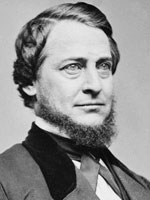
The Democrats' "peace plank" had declared the war a failure and promised to end hostilities. Its author was Clement Laird Vallandigham (a photo of him is at the top of the page), an Ohio politician who was arrested, tried, and convicted by a military tribunal the previous year for "disloyal" statements. Instead of serving time in jail, he was exiled south by Lincoln. From there he traveled to Canada and accepted the Ohio democratic nomination for governor in absentia. During his campaign, which he ran from a hotel room in Canada, he pledged, if elected, to withdraw Ohio from the Union unless Lincoln ceased hostilities with the Confederacy.

he pledged, if elected, to withdraw Ohio from the Union unless Lincoln ceased hostilities with the Confederacy

Vallandigham lost the election in a landslide, but continued to be influential in the Democratic Party. If McClellan had won the 1864 presidential election, many Democrats were determined that Vallandigham should serve as secretary of war.

At the End of the War

A third possibility relates to the closing days of the war. Radical Republicans in congress as well as Secretary of War Edwin Stanton became concerned that Lincoln would allow the confederate states back into the Union without punishing them or forcing them to outlaw slavery.

the legislature would be recognized as the de facto government of the state

Their fears seemed well-founded when they learned that Lincoln, during a trip to Richmond after its fall, early in April 1865, consulted with at least one Virginia politician and had informally encouraged him to help reconvene the Virginia legislature, declare the state's loyalty to the Union, and order Virginia's soldiers to lay down their arms. In return, said Lincoln, the legislature would be recognized as the de facto government of the state and it could begin to restore order. Republicans viewed Lincoln's offer as an attempt to usurp the power of Congress and as a "bribe of unconditional forgiveness." The point soon became moot, however, by Lee's surrender of his army at Appomatox. The Virginia Legislature did not reconvene.

Bibliography

John Minor Botts, The Great Rebellion: Its Secret History, Rise, Progress, and Disastrous Failure. New York: Harper & Brothers, 1866.

Nelson D. Lankford, Cry Havoc!: The Crooked Road to Civil War, 1861. New York: Penguin, 2007, pp. 63-71.

Joint Congressional Committee on Reconstruction, Subcommittee on Arkansas, Georgia, Mississippi, and Alabama, February 10 and 15, 1866, Chairman, Senator Jacob M. Howard, Report of the Joint Committee on Reconstruction, at the First Session Thirty-Ninth Congress. Washington: Government Printing Office, 1866, Part 2, pp. 102-109, 114-123.

Edgar Thaddeus Welles, editor, Diary of Gideon Welles, Secretary of the Navy under Lincoln and Johnson, Volume 2. Boston: Houghton Mifflin Company, 1911, pp. 273-274, 279-282.

Image Sources:
"Good-by to Sumter—February 3, 1861," the wives and children of the soldiers quartered at Fort Sumter wave good-bye as they leave, evacuated aboard the steamer Marion bound for New York, Harper's Magazine, February 23, 1861.

Portrait of Clement Vallandigham, Prints and Photographs Division, Library of Congress.

How Much Have Federal Census Takers Made Through the Years?

field_image
census enumerator 1920
Question

I am researching the history of the Census Bureau and am interested in the wages of census field enumerators through the years. Where is this information?

Answer

The National Archives and Records Administration (NARA) makes available the census records from the decennial censuses (the latest to be opened for public inspection is the 1930 census). But administrative records of the Census Bureau are also kept at NARA. Generally, these are in Record Group 29. NARA's website contains a description of the items, including, for example, item 134, "Record of Enumerators, 1900," which is in 37 volumes. These volumes give the name and address of each enumerator (commonly called a "census taker") and agent, his or her daily rate of pay, and the number of his or her enumeration district and his or her supervisor's district.

In the 19th century, compensation rates for enumerators generally were set by the laws that authorized each specific census. Carroll D. Wright and William C. Hunt reprinted these laws in The History and Growth of the United States Census, published in 1900. This volume includes the pay rates for enumerators--and other staff--for each census from 1790 through 1890.

compensation rates for enumerators generally were set by the laws that authorized each specific census

In it, we learn, for example, that the authorization law for the 1790 census specifies that the "marshals' assistants" (the enumerators) were to receive $1 for every 150 persons enumerated in rural areas and $1 for every 300 persons in cities, with some discretion allowed for marshals to supplement the pay of the enumerators working in rural areas, depending on the difficulties they encountered in locating people.

Pay Increased with the Complexity of Information Gathered

The amount and kind of information collected grew with each census. As a result, the basis on which enumerators were compensated reflected their increased labor. For the 1850 census, for example, enumerators were paid 2 cents per person enumerated (living or deceased), with a 2% supplement for collecting "social statistics," 10 cents per mile traveled, 10 cents per farm enumerated (where crop and livestock production figures had to be collected), and 15 cents per "establishment of productive industry."

The pay schedule for the 1880 census (the first in which women could serve as enumerators) was similar, except for replacing the provision for travel compensation with a provision enabling the Superintendent of the Census to adapt the rate of compensation to various regions, depending on the difficulties (mostly geographical) in collecting information there. A ceiling of $4 per day was set for enumerators in districts east of the 100th meridian and $6 per day west of that (enumerators were expected to work a 10-hour day).

Also included in Carroll's book are detailed listings of all the information that enumerators were expected to collect, as well as the printed instructions given to the marshals and their assistants, some of which are concerned with making exceptions to the standard pay rate for enumerators.

Enumerators have sometimes had to press claims for payment for "extra schedule work," such as, in 1880, arranging and copying long lists of occupants in alphabetical order or for required attendance at the local courthouse where they filed their forms.

For the last (2000) census, the Federal Register listed enumerators' wages as ranging from $8.25 to $18.50 per hour, depending on the locality. Typically, in recent censuses, regional supervisors have been given budgets and then decided how to recruit and pay the enumerators they have needed. Pay for mileage or travel has been more realistically set on a local basis, rather than a national one.

Pay Has Not Been the Only Motivation

Census enumerators have often been motivated by other considerations than the mere pay--the feeling of patriotism, for example, or civic duty, or a taste for adventure, or even sheer curiosity. The people being enumerated have not always welcomed the questions of their government enumerators. In addition, the enumerator's job can be physically and emotionally demanding. For the 1890 census, for example, the regional agent in North Alaska tried to recruit men as enumerators and found that the wages he could offer them ($16 a day) were "absurdly low in the gold region." Most people he asked "simply laughed at him."

the enumerator's job can be physically and emotionally demanding.

He then "appealed to the men's friendship, to their love of adventure, and to their love of country," and finally convinced 14 men to undertake the arduous task, which required traveling long stretches by dogsled and canoe and some wild encounters with some very wild men. The government paid them--in addition to their wages--50 cents a day per dog in their teams in order to feed them, and each enumerator also took along an Indian interpreter, who was paid $5 a day by the government.

The historian must also note that census-takers have sometimes been accused of being caught up in the "enthusiasm" of politics and the desire to maximize the local count, resulting in rumors of under-the-table remuneration. As an example, the U.S. marshal overseeing the 1870 census in the upper midwest lived in St. Louis, whose citizens, apparently, thought of the census as an opportunity for St. Louis to compete with Chicago. The census results showed a larger population in St. Louis than in Chicago, by a small amount, and the "citizens of St. Louis in grateful appreciation of the figures gave the marshal a banquet and presented him with a service of silver, as a reward for his victory over Chicago." The citizens of Chicago, however, were not at all amused.

For more information

The website of the U.S. Census Bureau provides, among other things, the questionnaires and instructions for the censuses from 1790 through 2000.

The Census Bureau has also devoted part of its website to the history of the census.

The enumerator instructions from the Government Printing Office for each census from 1850 through 1950 are also available online from the Minnesota Population Center's IPUMS-USA website (Integrated Public Use Microdata Series).

Census questions and enumeration forms from 1850 through 2000 are also available from IPUMS-USA.

Bibliography

Carroll D. Wright and William C. Hunt, The History and Growth of the United States Census, prepared for the Senate Committee on the Census. Washington, D.C.: Government Printing Office, 1900. Reprinted in 1966. The original 1900 issue is available on Google Books.

Guide to the Records of the Bureau of the Census (Record Group 29) at the National Archives and Records Administration.

"Census in North Alaska: Fourteen Enumerators Taking Their Lives in Their Hands," New York Times, December 5, 1899.

"Census-Takers' Wages: Encouraging Words from Congressmen Levi P. Morton and S. S. Cox," New York Times, September 14, 1880.

M. M. Trumbull, "Current Topics," The Open Court (Chicago), July 3, 1890, page 2372.

George Jean Nathan, "Humors of the Census: Some of the Difficulties Encountered by the Enumerators of Uncle Sam's Increasing Family," Harper's Weekly, October 1, 1910, pages 14-15.

Images:
"Taking the Census," Harper's Weekly, November 19, 1870, page 749.

"Taking the census, 1920," National Photo Company Collection, Prints and Photographs Division, Library of Congress.

Quoting Economic Policy

field_image
Milton Friedman
Question

I'm writing a government test on economics. I need a quote from a famous American basically stating that command economies are flawed. I have a quote from Maxwell Anderson, "When a government takes over a people's economic life it becomes absolute, and when it has become absolute, it destroys the hearts, the minds, the liberties, and the meaning of the people it governs"; but I have no date. I've tried to find quotes from Truman, Churchill, Kennan, Reagan, but all these speeches are too political and military in nature. Can you help me find a purely economic quote?

Answer

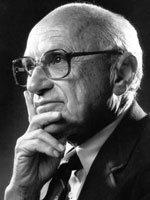
Our resident historian suggests the following quotations. Here is a quote from Milton Friedman, from a column he wrote in Newsweek, dated July 14, 1975, on p. 71, entitled National Economic Planning:

The central planners want planning by them for us. They want the government—by which they really mean themselves—to decide "social priorities" (i.e. tell us what is good for us); "rationalize production" (i.e. tell us where and how we should work); assure "equitable distribution" (i.e. take from some of us to give to others of us). Of course, all this can be voluntary—if we are willing to turn our lives over to them. Otherwise, "antisocial behavior" must be restrained—who can gainsay that? The iron fist must be there—just in case.

Such planning, from the top down, is inefficient because it makes it impossible to use the detailed knowledge shared among millions of individuals. It undermines freedom because it requires people to obey orders rather than pursue their own interests.

Here is a longer quote from Herbert Hoover, "Individualism Speech," October 22, 1928. Landmark Document in American History. Box 91, Public Statements, Herbert Hoover Library, West Branch,1A. :

When the Federal Government undertakes a business, the state governments are at once deprived of control and taxation of that business; when the state government undertakes a business it at once deprived the municipalities of taxation and control of that business. Business requires centralization; self government requires decentralization. Our government to succeed in business must become in effect a despotism. There is thus at once an insidious destruction of self government.

Moreover there is a limit to human capacity in administration. Particularly is there a limit to the capacity of legislative bodies to supervise governmental activities. Every time the Federal Government goes into business 530 Senators and Congressmen become the Board of Directors of that business. Every time a state government goes into business 100 or 200 state senators and assemblymen become directors of that business. Even if they were supermen, no bodies of such numbers can competently direct that type of human activities which requires instant decision and action. No such body can deal adequately with all sections of the country. And yet if we would preserve government by the people we must preserve the authority of our legislators over the activities of our Government. We have trouble enough with log rolling in legislative bodies today. It originates naturally from desires of citizens to advance their particular section or to secure some necessary service. It would be multiplied a thousand-fold were the Federal and state governments in these businesses.

The effect upon our economic progress would be even worse. Business progressiveness is dependent on competition. New methods and new ideas are the outgrowth of the spirit of adventure of individual initiative and of individual enterprise. Without adventure there is no progress. No government administration can rightly speculate and take risks with taxpayers' money. But even more important than this—leadership in business must be through the sheer rise of ability and character. That rise can take place only in the free atmosphere of competition. Competition is closed by bureaucracy. Certainly political choice is a feeble basis for choice of leaders to conduct a business.

Looking Closer at FDR's Fireside Chats

Image
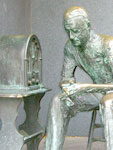
Photo, FDR Memorial, 2008, Lara M. Harmon
Article Body

This website features 9th-grade students in Maryland taking the role of critics to analyze President Franklin D. Roosevelt's Fireside Chat on the Works Relief Program (April 28, 1935). This lesson guides students to shape a more nuanced understanding of the Depression and the New Deal, and thus engages them in questioning the evitability of programs often treated by history as inevitable or obvious.

Students study Roosevelt's Fireside Chat and consider what it would have been like to be an everyday American listening to it. They then switch roles to take the place of one of five critics of Roosevelt's New Deal policies to dig more deeply into the sources.

This video provides examples of two promising practices:

  • Using multiple perspectives to critically analyze a complex primary source document;
  • Questioning the tendency to think of history as a progression of inevitable events.
The Lesson in Action

The Classroom Practice and Teacher Analysis section presents video of classroom instruction interspersed with the teacher's reflections on the lesson. During the warm-up, students imagine what might have been on their minds had they lived in 1935. Keeping these concerns in mind, they listen to the April 28 speech and reflect on what it says and how it could have helped gain support for New Deal programs.

The use of multiple historical perspectives challenges students to engage with the source—FDR's speech—and to think carefully about the complexity of historical moments.

Students then work in groups as critics of the New Deal. Playing the role of a prominent critic (Huey Long, Jouett Shouse, Upton Sinclair, Norman Thomas, or Rev. Charles Coughlin), they craft a rebuttal to FDR's policies. The use of multiple historical perspectives challenges students to engage with the source—FDR's speech—and to think carefully about the complexity of historical moments. Each group presents its critique of the New Deal and the class votes on the most compelling criticism.

This lesson is effective in having students critically engage with the primary source. As critics, they are challenged to read Roosevelt's speech carefully to discern what he says and how he says it, and to unpack the nuances of his argument. Turning over the process of learning to students actively engages them in thinking of history as dynamic, complex, and subject to interpretation.

This activity makes use of a variety of historical perspectives to help students better understand the New Deal, its supporters, and its critics. You can find a comprehensive lesson plan, complete with additional primary sources, background information, and classroom worksheets, on the website.

Lincoln Heritage Museum

Description

Located on the campus of the only college named for Abraham Lincoln in his lifetime, the award-winning Lincoln Heritage Museum exhibits a significant collection of Abraham Lincoln and Civil War related artifacts, as well as local and Lincoln College history, Presidential letters, and a tribute to September 11, 2001. On display are such items as several 1860 Lincoln presidential campaign banners, a ballot box in which he voted, several of his personal books (including Shakespeare), and tools, several furnishings from the Lincoln's Springfield home, and Lincoln family personal items including Mary Lincoln's jewelry.

Admission to the museum is free, and museum staff supply schools with personalized and living history tours catered to the topics being covered in individual classes.

Model Professional Development: Lincoln's Second Inaugural Address

Video Overview

Ford's Theatre Society's Sarah Jencks leads a group of TAH teachers through analysis of Abraham Lincoln's Second Inaugural Address. After taking a close look at Lincoln's techniques in the speech, the teachers engage in a roleplaying activity, suggesting the reactions of a selection of historical characters to the speech and to Lincoln's assassination.

Video Clip Name
Fords1.mov
Fords2.mov
Fords3.mov
Fords4.mov
Video Clip Title
Analyzing the Second Inaugural: Part One
Analyzing the Second Inaugural: Part Two
POV Activity: Part One
POV Activity: Part Two
Video Clip Duration
7:03
7:58
7:05
7:27
Transcript Text

Sarah Jencks: First take: What are some of the things you notice, both about the content, what he’s saying, and also about the way he goes about saying it? Just a quick phrase or what words or phrases stick out to you here?

Teacher: Well, there’s some old Biblical references.

Sarah Jencks: Yeah, he calls on the Bible a lot, absolutely

Teacher: That’s strange for us in the 21st century

Sarah Jencks: And he also, it’s clear he assumes people know that those quotes are from the Bible, right, because he doesn’t say these are Bible quotes, he just does it. What else?

Teacher: He brings sort of a why he said some things in the first inaugural address and how this is going to be different, lays out and prepares for what he’s going to say.

Sarah Jencks: He definitely starts off by saying this is a new day, this is a different time. Absolutely. What else? What other things do you notice in here? Yeah.

Teacher: Malice towards none is sort of the start of the Reconstruction.

Sarah Jencks: So yeah. So at the very end of the speech, he’s definitely moving forward and he’s setting a tone for what his expectations are. Absolutely. What else?

Teacher: I think he reaffirms the notion that we’ve seen since the Emancipation Proclamation, that originally the war was about preserving the Union, but now he’s very clear that it was about ending slavery.

Sarah Jencks: Absolutely. Yeah, he really states it. He even goes further than that. We’ll talk a little bit more about that. What else? What else do you notice? Anything about the structure?

Teacher: I’m just struck by the rather severe comment that God wills the retribution.

Sarah Jencks: Yeah, there’s nothing light or casual about this middle paragraph. Anything else? Okay, let’s try to take a second pass at this, and as we’re doing it, I want you to think about those things, about the references, the Biblical references, and let’s also—we’ll pay attention to these different paragraphs. He starts by saying it’s a new day, then he goes into talking about what it was like in the country at the beginning of the Civil War in the next paragraph, and then he goes into this really intense paragraph about slavery and about why this war—he’s got an idea why this war happened. And then moving us towards post-war times. And just quickly I want to remind you, do you all know what the day was that Abraham Lincoln was assassinated? Do you remember?

[Murmuring answers]

Sarah Jencks: April 14th. He was assassinated on the 14th, he died on the 15th. And what is this date right here?

March 4th. So it’s how much earlier? Yeah, just like a month and a half. It’s not much. He hardly had a second term.

Teachers reading: Fellow-Countrymen: At this second appearing to take the oath of the Presidential office there is less occasion for an extended address than there was at the first. Then a statement somewhat in detail of a course to be pursued seemed fitting and proper. Now, at the expiration of four years, during which public declarations have been constantly called forth on every point and phase of the great contest which still absorbs the attention and engrosses the energies of the nation, little that is new could be presented. The progress of our arms, upon which all else chiefly depends, is as well known to the public as to myself, and it is, I trust, reasonably satisfactory and encouraging to all. With high hope for the future, no prediction in regard to it is ventured.

Sarah Jencks: Okay, let’s stop for a second and talk about some of the things he’s doing in this first paragraph. It’s funny, I’ve been doing this for three years, and I just noticed a new thing, so what, what are some of the—he’s very skilled in the way he’s structuring this. What are some of the things that he’s doing in this first paragraph. How is he—what is he trying to do as he introduces this speech? What do you see?

Teacher: Well, ’high hope for the future, no prediction in regard to it is ventured.’ Like, he has a plan, he’s not quite sure how it’s going to go and how it’s going to be accepted.

Sarah Jencks: Yeah, and, you know, that’s the part that I just noticed something for the first time. He doesn’t ever say in this speech, and the Union is going to win, which was clear by then. It was clear by March 4th that the Union was going to win. Why wouldn’t he say that? Why might he choose not to say that in this speech? Given what else he knows?

Teacher: He feels he’s a president of all the states.

Sarah Jencks: He doesn’t want to stick it to the South. He’s specifically saying no prediction is ventured, I’m not going to go there. It’s an interesting way for him to start this.

Teacher: So he’s already thinking about healing.

Sarah Jencks: Exactly, exactly. Yeah, yeah, we’re not going to start this speech by saying we’re winning, we’re doing it.

Teacher: Well, he even has sense before, ’reasonably satisfactory,’ he doesn’t go jump and say that we’ve won, pretty much, it’s very—

Sarah Jencks: I just heard, I’m sorry, I don’t know—yes. Yeah. And very measured. He’s very careful how he does that.

Teachers reading: On the occasion corresponding to this four years ago all thoughts were anxiously directed to an impending civil war. All dreaded it, all sought to avert it. While the inaugural address was being delivered from this place, devoted altogether to saving the Union without war, insurgent agents were in the city seeking to destroy it without war—seeking to dissolve the Union and divide effects by negotiation. Both parties deprecated war, but one of them would make war rather than let the nation survive, and the other would accept war rather than let it perish, and the war came.

Sarah Jencks: Okay, let’s stop again. Um, he’s still talking about the previous inauguration and the beginning of the war here, and he does a lot of this ’then and now.’ If you notice, in the first paragraph, he says ’then the statement seemed fitting and proper, now, we don’t need it anymore.’ So, what do you notice about this paragraph, what are some of the things you notice about what he’s saying at this paragraph? I’m going to say one—are there any hands back there that I’m missing? Yes.

Teacher: I was just going to say he’s very balanced. He’s not placing blame. And, you know, in these last few sentences, he states what one party did, then what the other party did, and then response one party did, and the other party did. He’s very—it gives a very balanced perspective.

Sarah Jencks: And what’s the—this is just a little grammar thing that I sometimes do with kids when I’m looking at this. In that very last clause of the paragraph, who’s taking the action?

Teacher: The war itself.

Sarah Jencks: Yeah. Isn’t that interesting? It’s not a person on either side. It’s the war is the subject.

Teacher: And he also does a similar thing by saying that insurgent agents, he’s not saying the whole South, the government, you know, or the leaders of the South, like agents, like I know it’s not everyone, it’s just these few.

Sarah Jencks: And he also says in that second sentence, notice the way he says all dreaded it, all sought to avert it. Nobody wanted war.

Teacher: I think he does nail, though, who he feels started it.

Sarah Jencks: Yeah, yeah. It’s true.

Teacher: Makes it clear.

Sarah Jencks: It’s true. He says one of them would make war rather than let the nation survive. And the other would accept it. No, you’re absolutely right, you’re absolutely right. I mean, he’s not saying nobody’s responsible here, but he is really being careful about the way he phrases it. Um. We’re ready to keep going.

Teacher: Okay.

Sarah Jencks: Okay.

Teachers reading: One-eighth of the whole population were colored slaves, not distributed generally over the Union, but localized in the southern part of it. These slaves constituted a peculiar and powerful interest. All knew that this interest was somehow the cause of the war. To strengthen, perpetuate, and extend this interest was the object for which the insurgents would rend the Union even by war, while the Government claimed no right to do more than to restrict the territorial enlargement of it.

Sarah Jencks: Okay, I’m going to stop us here, because this is a really long paragraph. What’s he doing here? He’s moving on from talking about what happened at the beginning and who was responsible. He’s going a little deeper here. What’s he doing?

Teacher: He’s kind of always said that the cause of the war was to save the Union, but here he’s saying that even though we always said it was to save the Union, we knew that this was slavery and this institute had something to do with it.

Sarah Jencks: And who knew? According to him?

Teacher: Everybody.

Sarah Jencks: Everybody. He does it again. All dreaded it, all sought to avert it. All knew that this interest was somehow the cause of war. He’s not letting anyone off the hook here. What else? Do you recognize any language here, from other studies of slavery or anything?

Teacher: A peculiar institution.

Sarah Jencks: Exactly. A peculiar and powerful interest. Absolutely. And I think it’s really interesting the way he says to strengthen, perpetuate, and extend this interest was the object to which the insurgents would rend the Union even by war. I love that image, his use of that word, to rend the Union, because I always think of sort of tearing fabric or something.

Teacher: He’s also in the next part of that sentence talking about, you know, I didn’t say that I was going to abolish slavery at the beginning, I was not—I was going to let the states deal with it, the territory. He says, hey, you know.

Sarah Jencks: Other "than to restrict the territorial enlargement." Part of what I like about this speech also is that it sort of like gives you like, the whole history of, you know, the early part of the 19th century. He addresses so many issues that you can then make connections to.

Okay, let’s keep going.

Teachers reading: Neither party expected for the war the magnitude or the duration which it has already attained. Neither anticipated that the cause of the conflict might cease with or even before the conflict itself should cease.

Sarah Jencks: Okay, stop for just a second. What is he saying here? He’s addressing something that happened in January 1865 here. The cause of the conflict should cease before the conflict itself should cease. Does anybody know? Do you remember from down—

Teachers: The Emancipation Proclamation.

Sarah Jencks: The Emancipation Proclamation, yes, that was in 1863. January 1865, the Congress passed the 13th Amendment. And so it hadn’t been ratified yet, it wasn’t ratified until December 1865, but it had been passed by Congress. And so he lived to see that happen, and that was yet another sign that it was—we were in the endgame.

Teachers reading: Each looked for an easier triumph, and a result less fundamental and astounding.

Sarah Jencks: I love that sentence because the kids often, they think, they’re not used to these words being used in such a powerful way. A result less fundamental and astounding. Just changing the whole country. Keep going.

Teachers reading: It may seem strange that any men should dare to ask a just God’s assistance in wringing their bread from the sweat of other men’s faces, but let us judge not, that we be not judged. The prayers of both could not be answered. That of neither has been answered fully. The Almighty has His own purposes.

Sarah Jencks: Okay, let’s stop again. So he’s making a transition here from determining what the cause of the war was to what? What’s going on here?

Teacher: It’s in God’s hands.

Sarah Jencks: It’s in God’s hands. Where do you see that?

Teacher: It’s just the [unintelligible] that I’m getting from the actual—the whole Bible and everything else, it’s just kinda like this is fate now.

Sarah Jencks: He’s doing something more here with that. The way he was using 'all' before, he’s using—do you see he’s using that here as well? What words does he use here to bring people together?

Teacher: Neither.

Sarah Jencks: Neither and also—does anybody see anything else?

Both. Yep, neither and both. He’s bringing everybody—he’s saying, we may not be seeing this from the same perspective, but we’re all seeing it together.

Teacher: And I take that both sides here have lost. Neither side is jumping for joy.

Sarah Jencks: Yeah. Yeah, absolutely. Absolutely. And he really is bringing everybody together. Let’s talk about that dig for a second. What’s his dig here?

Teacher: That the prayers of both could not be answered.

Sarah Jencks: The prayers of both could not be answered. That of neither has been answered fully. They could—we can’t—we’re not—we’re not going to be satisfied. What’s he—his previous sentence, though, may seem strange.

Teacher: Yeah.

Sarah Jencks: What’s going on in that sentence? Anybody want to read it aloud again? Somebody just go ahead. Go ahead.

Teacher: Uh, okay. ’It may seem strange that any men should dare to ask a just God’s assistance in wringing their bread from the sweat of other men’s faces, but let us judge not, that we be not judged.’

Teacher: Is that a dig against slavery, then?

Teacher: Yeah.

Sarah Jencks: What’s he—how do you take that?

Teacher: You’re making money from someone else’s work.

Sarah Jencks: Yeah. But who do you think he’s talking to there?

Teacher: I think to the South.

Sarah Jencks: You think he’s talking—okay, tell me more about that.

Teacher: Slaveowners.

Sarah Jencks: Slaveowners. Okay. And the workforce. Think about the Northerner here, for a second. Why might that sentence—and I’m just thinking of this right now, so don’t think I’m so far ahead of you here. Why might that sentence be addressed to a Northern audience?

Teacher: He’s critical in that the Northerners really didn’t maybe speak up more loudly against it, that they even have labor issues themselves.

Sarah Jencks: Remember he quotes the Bible here, though. He says it may seem strange that slavery exists, but, let us judge not, that we be not judged. So yeah, he’s bringing up issues of labor in the North, and he’s saying hey, you Northerners, you abolitionists, you may think those Southerners are pieces of white trash, but let us judge not so that we be not judged. You’re not God. It’s interesting because he’s got many many audiences here, and we’re going to be playing with that in the minute.

Teacher: I was thinking similar to the reference that he used, let he who casts the first stone be without sin, so, you know, it seems like another Biblical reference or reference to that part of the Bible.

Sarah Jencks: Yeah, absolutely. Let’s keep going. Let’s go.

Teacher: Woe—

Sarah Jencks: My apologies for cutting you off.

Teacher: It’s okay. ’Woe unto the world because of offenses; for it must needs be that offenses come, but woe to that man by whom the offense cometh.’

Sarah Jencks: What does this mean? What does this Biblical quote mean? Let’s break it down, because it’s not an easy one. ’Woe unto the world because of offenses; for it must needs be that offenses come, but woe to that man by whom the offense cometh.’

Teacher: I mean, to go back to the Biblical language, he’s saying something along the line of it’s a shame that we have to live in a world of sin, this is a sinful world, so we should feel sorry for ourselves, and this is a place where sin is going to happen, but God help the sucker who commits the sin.

Teacher: Yeah.

Teacher: Bad things happen, but this could have been avoided.

Sarah Jencks: Right, and also you’d better not be the one who’s actually doing it. Yeah, absolutely, and what he’s doing, it almost looks here like he’s setting up the South, but then let’s see what comes next.

Teacher: You wonder if there’s a little confusion in the speech. He starts out saying it’s about saving the Union, then he ends up saying, well, this is really about retribution for slavery. Which is it?

Sarah Jencks: It’s the big question of the Civil War, isn’t it?

Teacher: It strikes me, realistically, you can’t have it both ways, even though he wants it that way.

Teacher: Couldn’t you read it, though, as more of a superficial understanding—

Teacher: Superficial is my middle name.

Teacher: No, no, I mean, the whole thing about preserving the Union, that sort of, you know, the reading of it, initially, but then, you know, we spent the whole week studying Lincoln and how he agonized over this stuff in his summer retreat and then at a deeper level, he’s looking for a more meaningful way to frame the whole thing, so that it’s not necessarily contradictory, but just deeper readings of the same situation.

Sarah Jencks: I would throw out to you also that Abraham Lincoln was the consummate politician. He was a great leader. That’s separate from his having been a great politician. And that he was very conscious of the laws of the land and the way that he handled this war in the first half of the war. And in the second half, he started to become much—he was looking for a deeper meaning. For himself, with the death of his son and the death of all of these soldiers, whom he was mourning. And he really started drawing on—looking for a deeper meaning in a different way. So that doesn’t answer your question.

Teacher: Back in the 19th century, didn’t most Americans, or at least, you know, the elites believe that democracy was a divine act? I mean, Reagan wasn’t the first person to say that United States was a city on the hill. You know, you’ve got Melville[?] and all these other guys referring to it that way, so for Abraham Lincoln, couldn’t that also be the case. That to preserve the Union was to keep God’s purposes, God’s will going on Earth, because as long as democracy was there, justice could be done.

Sarah Jencks: That’s really interesting. Yeah, and that was, it was Winthrop, it was that early on, the city on the hill concept started.

Teacher: Remember that, yesterday, talking about how the Declaration of Independence was the apple, yeah, the Constitution is the rain. Goes right back to that.

Teachers reading: With malice toward none, with charity for all, with firmness in the right as God gives us to see the right, let us strive on to finish the work we are in, to bind up the nation’s wounds, to care for him who shall have borne the battle and for his widow and his orphan, to do all which may achieve and cherish a just and lasting peace among ourselves and with all nations.

Teacher: I mean, this is what brings the whole thing full circle. From the introduction, what Mike said about it started out trying to preserve the Union. Yes, slavery was a major part of it, but, I think, you know, events change people. You’ll have a belief when you’re a younger person and then as you get older and as experiences start to mold and shape you, you start to—especially having a child or something else—it makes you think differently. And this war, with the loss of his own child and the loss of all these mother’s children, changed him. So he needed to get back to a place that brings us back together.

Sarah Jencks: I see also that he’s using this whole Biblical kind of exegesis almost to set up what he says in the last paragraph. Because if none of us are responsible, then we have to move forward, we have to strive on with malice towards none and charity for all. We can’t hold it against anyone.

Teacher: Especially when he said back a few sentences before that both sides have committed sins during the course of this war.

Teacher: Yet does he really say that nobody’s responsible, or does he say that we’re all responsible. I sort of get the sense he’s saying that we’re all responsible.

Sarah Jencks: Yes, I agree with you. I totally agree with you. We are all responsible.

Teacher: But he still names the insurgents.

Sarah Jencks: Yes.

Teacher: We’re still pointing the finger somewhere.

Teacher: I still wonder, to what degree does Lincoln himself take personal responsibility for all this tremendous loss. I mean, in the first inaugural, I lot of you are remembering, he said, I’ve taken an oath to preserve the Union. So I’m this passive agent, essentially, and I must follow my oath. But of course he didn’t have to follow his oath exactly as he saw it. He had other choices.

Teacher: And I think—

Teacher: What do you think?

Teacher: He wasn’t passive. You know, he used the Constitution to his benefit and that other times he expanded powers in it and stretched things and kind of toyed with it in order to achieve a goal. And you’re saying he’s a master politician, he wasn’t just—he wasn’t, in my opinion, this ’I’m a moral person that’s just following my oath,’ he was very deliberate in what he did, he was very calculated in what he did, and the way things that he followed in the Constitution, things that he chose to kind of stretch a little bit, it was all for his kind of for his goal to win the war.

Teacher: Very Machiavellian. Ends justify means.

Sarah Jencks: One of the phrases that I find really powerful from—I don’t know if you all are ever trying to make these connections, I can’t imagine you’re not, but I’m always looking for those threads that sort of go through the 19th century or follow from the Declaration, you know, the different political threads, through to the Civil War and beyond, and Lincoln was a great follower of Daniel Webster, the Whig politician. And one of Webster’s phrases, or his sayings, which is actually on the wall of the National Constitution Center if you ever get to go up there in Philadelphia, it’s ’one country, one Constitution, one destiny.’ And they were struggling with these same issues in, you know, the middle and the early part of the 19th century, too. It didn’t just happen.

Teacher: [Unintelligible]—time we were a country—

Sarah Jencks: Yeah. You’re absolutely right. And so Webster said that. Well, if you go down to the coat in the lobby, Lincoln had those words, ’one country, one destiny,’ embroidered in his overcoat. Literally, an eagle of the Union, with the words ’one country, one destiny,’ embroidered in his overcoat.

Sarah Jencks: So what I’d like to do is to start off by looking at some of the things, specific things that might have been, you know, when we hear presidential speeches and other speeches today, commentators and even regular people can see things, and then you think, oh my gosh, I see they said that, that’s going to be—that’s a buzzword or there’s that kernel of an idea, it’s going to keep going forward, I know it’s going to be an issue.

And so the idea here is to partner up and to look for, to try to articulate, we’ve talked a lot about these, but the theory, the sort of proposition about the war that Lincoln makes, and then, secondly, what the policy is that he’s proposing. He makes a statement of a proposition of what the war was all about, and then he proposes a policy.

Teacher: These two people get along fantastically—this person didn’t want to fight the war at all. This person didn’t want a war that would disrupt the institution of cotton and slave [uncertain], because his livelihood would be

Teacher: Right—

Teacher: But he could always turn a blind eye to how the cotton was being produced.

Teacher: Alright, so the theory we’re going with is that there’s blame to go around, right?

Teacher: Right, and the South is not going to be punished. And I guess that’s what she was getting to, in order to understand what happens next, why Lincoln’s assassination was a tragedy is because we know that Reconstruction went in a million different directions.

Teacher: The war is God punishing us for slavery.

Teacher: No, all parties are [unintelligible].

Teacher: Right. Because, I mean, he’s really not talking a lot here about the war to preserve the Union, to preserve states’ rights, he’s really focusing on the slavery issues a lot more.

Sarah Jencks: I call these the POV cards, your point-of-view cards. I want to first ask you, does anybody feel particularly good about what you wrote, not to show off, but you feel like you could—you’d be willing to share with us either your theory or your policy and/or did it bring up any questions that anyone wants to raise with the—

Teacher: We kind of felt that people of the North who really felt that they were sort of fighting to fight would see this as controversial. What do you mean we shared the blame, you know, we don’t have slavery, we’re trying to preserve the Union, and now you’re telling us that we’re partly to blame. I think maybe that’s where some of the controversy lies.

Sarah Jencks: Interesting. Okay. Yes.

Teacher: We also felt that neither the North, kind of going on what Nancy said, that neither the North nor South is going to be happy with his plan of no blame and that, you know, he wanted to move quickly, like the South now is going to be forced to join the Union, which they’re going to be upset about, and the North is going to be angry that they’re not, you know, held as this victorious winner, that he’s really got enemies on both sides now.

Teacher: Northerners don’t want to accept Southerners, Southerners don’t want to accept Northerners, and that 10% loyalty cutoff[?] of which 90% of the population in that Confederate state doesn’t want to be there.

Sarah Jencks: Did any—I don’t know how much you all got to talk about or you read about in the basement museum the election of 1864. What were Lincoln’s chances? What happened? Can anybody sort of revisit that?

Teacher: I think it depended on victory.

Teacher: Yeah.

Sarah Jencks: I’m sorry, say it again?

Teacher: Well, it depended on victory.

Sarah Jencks: Yeah, military victory. So, how was he doing before Sherman started succeeding in the fall? Yeah, it was not looking good. It was all over.

And there are amazing images, again, of what happened on the Library of Congress website and on other places, in Atlanta and Savannah. And at the same time just remember, you know, if he hadn’t done that, where would we be? It’s a conundrum. It’s a little bit like the conundrum, when you investigated, of should we have dropped the atomic bomb on Hiroshima?

Teacher: Well, Grant as well. I mean Mike was talking about should Lincoln take the responsibility of the death toll, where if you look at a Sherman or a Grant, their strategy was attrition and just keep throwing bodies at the problem until they run out of bullets.

Sarah Jencks: Yeah, I mean, there’s a lot of controversy over what the best military practice is here. We do a play called The Road from Appomattox and it’s a meeting between Grant and Lee the day after the surrender, which we know took place. We don’t know what happened in it, but we know it took place. Or at least in their memoirs they both say it took place. And one of the things that Lee says is this is the last war that will ever be fought according to conventional rules of war as we know them. And I think that was true in many ways. So.

Sarah Jencks: What else? What else is coming through here, in terms of the controversy of his theory, his controversial theory, or what his proposal was. What is the policy that he’s beginning to articulate here? Maybe we can move on to the policy. Yes.

Teacher: The whole ’malice towards none, charity for all’ is remarkable.

Sarah Jencks: So what’s he saying there? If you were thinking of it from policy terms?

Teacher: Well, it’s directed towards the South. We’re not going to hang the leadership like many wanted to do up north, and after four years of hell, that’s pretty remarkable, that he would keep that focus, on reuniting the country.

Sarah Jencks: Just to repeat myself, is it just directed towards the South, do you think? I mean, what about those Northerners?

Teacher: Stop looking for revenge.

Sarah Jencks: And the border states, it was a really big issue. As you begin to look at Andrew Johnson, one of the issues that we come up against with Andrew Johnson is that he was from a border state. He had been holding out for four years, as a member of the Union, as a legislator and a senator from a state that, essentially, had seceded. But he was maintaining his presence, which was why he was named vice president in the 1864 election. From a state that essentially had seceded from the Union, Tennessee. He was full of vengeance. He couldn’t have been more the opposite of Lincoln.

Sarah Jencks: So having thought about these two, having articulated this theory and then the resulting policy he’s proposing, I want you to take a look at these different Americans—almost all of them are Americans, one is not an American—that you have in front of you on these POV cards. And by the way, I have one more—if anybody needs one, I have one more. And take a moment to think both about how they would have responded to the speech and then, as a follow-up, how they would have responded to the assassination.

Abraham Lincoln’s family was from Kentucky, originally, and they—his parents left their Baptist church because it was pro-slavery and they were not. So these are—and even if you can’t make a clear decision, start to think of what the questions are, you know.

Okay, in his very last speech before he was assassinated, Lincoln proposed that what he described as ’very intelligent Negroes’ and those who had fought for the Union should be eligible for the vote.

Teacher: Okay.

Sarah Jencks: So. . . .

Teacher: That would give hope, but—

Teacher: Yeah.

Teacher: But this is after the assassination, right?

Sarah Jencks: What happened in South Carolina afterwards actually was that it became the state with the most black legislators during Reconstruction.

Teacher: Right.

Sarah Jencks: Right, so. . . .

Teacher: And that only lasts about 10 years.

Sarah Jencks: Right. Not even. Alright, so. Good questions you guys are bringing up, though.

I’m not going to ask you to tell—to go around and say what your person would have thought. But instead, if you want to reflect on some of the questions that you were struggling with or that came up or some of the issues that you had to ask—

Teacher: How about if we know what the person would have thought?

Sarah Jencks: If you know? If you feel certain, then I think you should say what were some of the things that made you know. Okay?

Alright. Go ahead. Whoever wants to start, raise your hand or just shout out. Anybody? Okay.

Teacher: Well, we got Andrew Johnson the [unintelligible] legislator from Tennessee, so we already know that he was a little angry and wanted revenge, but was politically-minded enough to go with Lincoln until, you know, his time came.

But then because I mouthed off, she gave me another one. And this one was a white merchant in San Francisco, formerly of Delaware. Apparently Delaware was a very small, slaveholding state—

Sarah Jencks: Yeah, but border state.

Teacher: —and this gentleman moved to San Francisco, obviously probably during the Gold Rush, so our idea was we really don’t think this guy cares. He’s in San Francisco, he’s trading, he’s involved with all sorts of ethnic groups and nationalities and he’s there just to make money. So I really don’t think his political opinions are going to be very strong, since he moved from a very small state to a state with more people where there could be more opportunity.

Sarah Jencks: But California came—was strongly in which camp during—

Teacher: In the free state category—

Sarah Jencks: In the free state category.

Teacher: —since the Compromise of 1850.

Sarah Jencks: Okay. Excellent. Good thoughts. What else? Who else? What did you—what were you thinking about as you were going through this process?

Teacher: Right. We were a white Georgetown DC dockworker. We’re wondering why we were unable to fight, but—

Sarah Jencks: Maybe you had like a leg that had a—you broke your leg when you were little.

Teacher:: You have to build your character.

Teacher: Our options are really limited, so we’re really worried now with the freeing of slaves, because all this cheap black labor is going to be coming up from the South and if this—if what you’re saying is basically our case, we have very few options economically to turn to. So if we lose this job. . . .

Sarah Jencks: Not to mention that the Potomac River is about to silt up and there isn’t going to be a dock in Georgetown in 10 years, but you don’t know that.

Teacher: Man.

Sarah Jencks: What else?

Teacher: I just thought it was interesting how you guys think about their reaction to the speech and then to the assassination, and the role that we had was a Massachusetts writer with strong abolitionist ties. And we have very different reactions to the speech and the assassination, that, you know, they’re disillusioned by the speech, and this is not enough. You know, you’ve soft-pedaled down, you’ve taken more of a centrist stance. But the assassination still devastates them because this is, you know, your revered leader who did speak out.

Sarah Jencks: Interesting.

Teacher: We also struggled as an abolitionist with the idea of, you know, having a religious sort of approach to this whole thing, would we have been insulted that, okay, now we’re being lumped in with the sinners who perpetrated this horrible institution, and how dare you try to make us be with them. And then maybe we become more zealous once Lincoln was assassinated—see, now you didn’t want to punish them, now they killed the president on top of it, just sin upon sin on the South, and I’m not part of that. You know, even more stronger regional identity of not wanting to be seen as part of that bigger—

Sarah Jencks: Yeah. Very interesting.

Teacher: And one of our controversies was, just because you’re an abolitionist didn’t mean you believed in equal rights.

Sarah Jencks: So true. That’s so true. Absolutely. There were a lot of Northerners who did not—we sort of tend to say that the Northerners were oh, they were antislavery. Not so much, you know. That was unusual. Absolutely.

So the last thing I want to ask you all is if you were to take this into your classrooms, what kinds of things might you want to do to enhance your ability to assess students and/or to develop this into something that would actually work for you. And I know this is really fast, but let’s just quick do some popcorn ideas about this. And the last piece is if you were to use this, is there anything that you feel like you would need to do to scaffold it differently? Yeah.

Teacher: I mean, I teach global, so we were thinking of ideas, possibly doing this with, like, the French Revolution and giving out different characters, or Caesar or any revolution for that matter, and really, you know, coming up with different types of characters and seeing what the kids do.

Sarah Jencks: It does require some research, though. Because as you noticed as I was going—it can be your research or the kids’, you can decide, sort of. You can use it as an assessment tool, or you can give it to them and then say you need to go find out more about these people.

Teacher: We had an Illinois regimental soldier, [unintelligible] Taylor, and we were trying to think what battles that soldier would have fought in. So that would be a springboard to do a little more research about that regiment, get background on—

Sarah Jencks: One thing that has occurred to me just while we’ve been doing this here is that you could potentially do this in part as a Google map activity. You could use Google maps to actually pin where each of the different people were from, and to upload, you know, something so that you’re creating a class project as a result that might allow you to—everybody can make use of it as a tool, ultimately.
Classic African American Literature

Image
Logo, Multicultural Pavilion
Annotation

Provides links to 49 full-text versions of books, essays, articles, and poems about African-American life and culture, from the 18th century to the present day. Authors represented include Frederick Douglass, Harriet Beecher Stowe, Chester W. Chesnutt, James Weldon Johnson, Marcus Garvey, Rita Dove, Booker T. Washington, Phillis Wheatley, and Maya Angelou. Many texts are from the University of Virginia's Electronic Text Center.