Minnesota Maps Online

Image
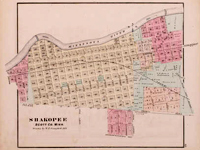
Map, 1874, Alfred Theodore Andreas, Minnesota Maps Online
Annotation

This site allows the visitor to search and view Minnesota's original public land survey plats created by the U.S. Surveyor General's Office during the years 1848 to 1907 and the later General Land Office and Bureau of Land Management maps of the state. The collection includes more than 3,500 original land survey maps; an 1873 map book of Hennepin County; late-19th-century plat books of Dakota, Hennepin, Ramsey, and Winona counties; and an 1871 illustrated historical atlas of Minnesota. Browse all the maps and plats or search the collection by county, township/range, or keyword. The advanced search feature allows the researcher to search the collection by title, subject, description, creator, publisher, date, source, or coverage. A useful resource for those researching the social, economic, environmental, or political history of Minnesota and its counties and towns.

Automobile in American Life and Society

Image
Hartford Auto-Jack advertisement, 1911, Automobile in American. . . site
Annotation

This website was designed as an academic resource for courses focused on the automobile and the automobile industry. Each section—design, environment, gender, labor, and race—has a short introduction and two illustrated scholarly essays (often including annotated bibliographies). The complete text of each essay can be viewed in a separate window and each essay is accompanied by a student and teacher resources section with one or more questions for reading, discussion, writing, and research, as well as questions making connections between the essays. "Design" also offers a list of 110 "automotive oral histories" available in the Benson Ford research center, but only 17 are available on the site. Visitors can search the site by keyword but no advanced search is available. This site is a useful resource for students and educators studying the role of the automobile in American culture and society.

Madison: Celebrating 150 Years

Image
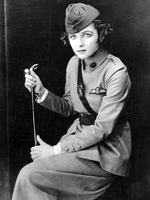
Photo, Irene Castle in Uniform, WWI or later, Madison: Celebrating 150 Years
Annotation

In 2006, Madison, WI, celebrated the 150th anniversary of its incorporation as a city. To mark the occasion, this website features 6,952 images, several articles and documents, maps and information on Madison's buildings, and links to virtual exhibits, entreating users to investigate Madison's past. This diverse collection of materials highlights both the experiences of the American Indian groups that had lived in the Madison area for many thousands of years, as well as those of the Yankee, English, Irish, German and Scandinavian settlers who began to arrive in 1837.

Visitors can view a map of American Indian village and mound sites, built for burial and ceremonial purposes, which are still visible around the city today. Also available are the recollections of George W. Stoner, one of the first settlers to arrive in Madison, through which one can learn about the construction of the city's first buildings and businesses, its first election, and its first suicide. Moving into the 20th century, visitors can also learn of the Federal Government's attempts to enforce Prohibition in Madison, which one official described as "queen of the bootleggers." This website is useful for those interested not only in Wisconsin history, but also in the history of urbanization in the United States more generally.

The Dick Thornburgh Papers

Image
Photo, Thornburgh with wooden spoon, 1966, The Dick Thornburgh. . . site
Annotation

Dick Thornburgh served as Governor of Pennsylvania from 1979 to 1987, and Attorney General from 1988 to 1991, under Ronald Reagan and George Bush. He also served as Undersecretary General of the United Nations from 1992 to 1993 after an unsuccessful bid to fill John Heinz's vacated U.S. Senate in 1991. He is currently a practicing lawyer in Washington, DC. This website presents 5,115 documents from his personal papers, including executive orders, news releases, op-eds, reports, speeches, testimony, and transcripts. It also includes 488 photographs, 31 audio clips, and 55 video clips. These materials shed light on many prominent events in late-20th century U.S. political history and international relations. For example, a search for "Three Mile Island," the nuclear power plant near Harrisburg that experienced a partial meltdown in 1979, calls up more than 300 items, including photographs of Thornburgh at the site and op-eds written by Thornburg designed to quell public fear.

Alabama Maps

Image
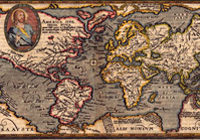
Image, "Typus Orbis Terrarum" Matthais Quad,1596
Annotation

This site contains more than 3,500 scanned and digitized maps divided into two indexes—historical and contemporary. The historical maps index contains several sections. The most voluminous section, "Alabama," is divided into time periods, geological features, Alabama counties, rivers, and state highways. Another section indexes 13 other southeastern states, including Texas, the Carolinas, and Florida. There are also maps of the Western Hemisphere, North America, Mexico, and the Caribbean, some dating before 1700.

An especially valuable feature of the historical index is the "Special Topics" which contains maps of the Civil War, including the battles in Gettysburg and Antietam, railroad routes, and ten Native American maps, mostly illustrating the boundaries of Cherokee territories. The contemporary map index is divided into eighteen themes, including education, housing, politics, federal expenditures, climate, and recreation. There are more than 100 world maps of Africa, Asia, Europe, the Middle East, and the South Pacific. Users will also find links to the University of Alabama's Department of Geography and the publications of the Cartographic Laboratory. Created for educators and the business community, this is valuable resource for those researching the history of Alabama or contemporary themes in Alabama, the United States, and the world.

History News Network

Image
Annotation

The History News Network (HNN) was "conceived as primarily a national platform for historians wishing to comment on current events." The website publishes original articles by historians and links to current news articles either referencing or about history. The site's "Roundups" present collections of current media excerpts related to history, unvetted for accuracy or scholarship—these include the "Historian's Take" roundup, with excerpts from historians writing on the news; "Media's Take," with excerpts from mainstream articles that "take a historical approach" to current events; and "Talking About History," with excerpts from mainstream articles on history. A weekly "Top 10!" roundup gathers together the week's top 10 articles, and "Pop Culture and the Arts" "links to reviews of movies, documentaries, and exhibits with a historical theme."

Educators may find the "Hot Topics," highlighted on the left-hand side of the site, particularly useful—constantly updating, these "buzzwords" indicate current hot-button issues in the media, and direct visitors to content related to the issues on HNN. "Student Shortcuts" connects students with tools and resources, both on HNN and other websites, related to "Doing Research on the Web," "9-11," "U.S. History," "World History," "Science & Technology," "Doing History," and "Applying to College and Graduate School," while the "Teacher's Lounge" collects together HNN and site-external resources for educators on "Teaching the Constitution," "Teaching History," "Teaching the Middle East," "Teaching 9-11," and "Teaching Presidential Elections." Visitors to the site may also browse HNN's "History Blogroll," a directory of blogs run by historians, or follow any of HNN's seven in-house blogs; sign up for one of four weekly newsletters, including one specifically for high school educators; view videos of Organization of American Historians presentations under "HNN Videos"; or search the site's archives by keywords, posting date, author, and department.

Though the website can be difficult to navigate, its focus on viewing current events from a historical perspective and addressing the use (and abuse) of history in the media make it ideal for U.S. history educators looking for ways to link current events to history.

National Security Archive: The Pentagon Papers

Image
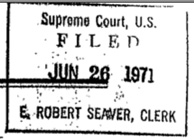
Image, detail from U.S. Supreme Court brief for the Washington Post, 1970
Annotation

A collection of textual and audio documents concerning "arguably the most important Supreme Court case ever on freedom of the press." The case revolved around the 1971 decision to lift prior restraint orders instigated by the Nixon Administration to prohibit publication of the government's secret historical collection of documents labeled "United States-Vietnam Relations 1945-1967." These quickly became known to the world as the "Pentagon Papers." Includes 10 recently released audio files and transcripts of Nixon Administration telephone conversations and meetings; Supreme Court briefs (including some material originally kept secret) and opinions; audio files and transcripts of oral arguments before the Court; appellate court documents; and excerpts from memoirs by Richard Nixon, Henry Kissinger, and H. R. Haldeman. Also provides a 4,500-word commentary on the documents. Valuable for those studying American political and legal history and the Vietnam War.

Papers of Justice Tom C. Clark

Image
Photo, Heart of Atlanta Hotel. Georgia State University, Special Collections.
Annotation

This collection from the papers of Supreme Court Justice Tom C. Clark offers 450 documents that include case files, bench memoranda, and docket sheets from 21 cases during Clark's tenure on the Court (1949-1967). The website offers seven topical presentations on desegregation, school prayer, voting rights, the Fourth Amendment, the Fifth Amendment, Communism, and Mexican American Civil Rights. Each topic is centered on a case or cases involving the topic and each has an introductory description of the case (or cases), selected case files, links to Internet resources, and a list of print resources. Visitors can also browse the entire collection of documents (organized into 10 groups of cases). There is no separate search capability for the site. The site also offers a brief biography of Clark and a timeline of his life. This archive provides useful resources for scholars studying the history of the Supreme Court, American legal history, or for those specifically interested in Justice Clark.

Inter-University Consortium for Political and Social Research

Image
Image for Inter-University Consortium for Political and Social Research
Annotation

Providing access to social science data for member colleges and universities, this website presents data that covers a range of sociological and political areas. Issues include census enumerations; urban and community studies; conflict, violence, and wars; economic behavior; legal systems; legislative bodies; mass political behavior and attitudes; and organizational behavior.

While much of the site emphasizes the late 20th century, data sets such as "Historical and Contemporary Electoral Processes" and "1790–1960 Censuses" will be useful for historical research. Searching is available according to a controlled vocabulary of names, subjects, and geographical terms. There are 10 special topic archives with data geared to health, education, aging, criminal justice, and substance abuse and mental health concerns. A "data use tutorial" and links to related sites may be useful.

Business Plan Archive

Image
Image for Business Plan Archive
Annotation

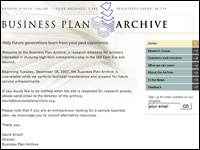
A collection of business plans and planning information, this archive documents the "Birth of the Dot Com Era." Documents can be browsed (free registration required) by alphabetical listing of companies, document type, market sector, or market audience, or the archive can be searched by company name. An advanced search option is also available.

Currently, there are 2,445 companies in the archive with one or more documents and more than 3,400 archived documents. Each company record includes a brief description of the company, historical information on the company (if available), and related documents. "What We Can Learn" offers three articles on the kinds of observations we can extract from the dot com boom and bust. "Research Corner" offers tips on using the archive in the classroom, announcements, and other project news. Of particular interest are the entries on guidelines and recommendations for studying companies and for using the archive.