Social Pinboards

Image
What is it?

Online social pinboard services let you "pin" images, videos, text, and more (depending on the service) onto virtual bulletin boards. You can create new boards for different topics, rearrange pinned items on a board, share your pins, and follow other users' boards that interest you.

Getting Started

To use a social pinboard service, you'll need to register. Registration is free, but may require you to have a Facebook or Twitter account. (If you're considering having students create accounts, make sure to read the Terms of Service first. Children must be 13 or up to register on Pinterest.) Once registered, sign in to begin making boards and pinning content.

If you find pins that you like, you can "repin" them on any of your own boards.

Depending on the service you choose, what you can do with your pinboards and pins will vary. First, you will need to create a board or boards. A board is a blank space on which you can pin related content. For instance, you could create boards titled "Civil War Primary Sources" or "Ideas for Constitution Day." You can create new boards at any time, and can invite other users to contribute to a board. Once you've created a board, you can start pinning content to it. On Pinterest, you can pin images and videos that you find online or upload from your computer by using the "Add a Pin" or "Upload a Pin" options; to "Add a Pin" from online, you will need the URL of the image or video's original location. You can add a brief caption to each pinned image. Clicking on a pinned image will take you to the image's original location. Drag the Pinterest button to your brower's toolbar, and you can pin content as you surf the Web. Use the service's search engine to search for other people's pins and boards that might interest you. If you find a board or user you like, you can choose to follow them. If you find pins that you like, you can "repin" them on any of your own boards. Similarly, other users can follow you or any of your individual boards and repin your content on their boards. These social features let you share your own online finds and benefit from others'.

Examples

You can use social pinboard services to share and communicate with both students and other teachers. Many users use pinboard services to connect with their peers, locating users who teach similar subjects or have similar interests and following them for inspiration and resources. Pinboards also let you collect and organize content you find while surfing the Web. If you're searching for materials to put together a lesson plan, you can pin everything you find that might be useful on one board; if you're surfing casually and happen across a photo or article you'd like to remember, you can pin it to a board full of similar content, to look at later. Pinboards can help you save content, organize what you find, and share it with others.

Create a board of primary sources and use it to start off a lesson.

You can also create boards and share them with students. For instance, you could direct student research for a project or paper by pinning content from reputable websites to a board. Share the URL with the students, and they now have access to an online "reference shelf." Create a board of primary sources-—maybe engaging photographs or artwork—and use it to start off a lesson, or send the link to students before the lesson and ask them to look over the images and come in the next day with questions ready. If your students are old enough, they can also use Pinterest for themselves. Introduce them to the tool, and they can use boards to keep track of their own research, collaborate to create shared boards populated with materials they find on webquests or other scavenger-hunt-style projects, or curate mini exhibits with visuals and captions.

For more ideas, check out Online Universities's infographic "16 Ways Teachers are Using Pinterest" or Best College Online's "37 Ways Teachers Should Use Pinterest." Educational consultant Angela Watson also offers a quick rundown of tips for using Pinterest. Education World suggests four "power pinners" to follow or use as models. If Pinterest doesn't suit you, take a look around the web.

For more information

Visit Teachinghistory.org on Pinterest here!
Exploring Historical Fiction

Image
Question

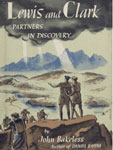
Do you have any suggestions for historical fiction that could be incorporated into our Language Arts classes on the topics of the Oregon Trail or Lewis and Clark? Currently we use Will Hobbs's Ghost Canoe to help reinforce teaching about Coastal Native Americans in the history classes.

Answer

Thanks for your inquiry. We often get requests for recommendations of historical fiction to use when studying particular time periods and historical events. So below, I first list some open-access digital databanks of fiction (and occasionally nonfiction) to use in the history/social studies classroom. Then I share some recommendations specific to your request.

Databases of Recommended Books

The National Council for the Social Studies’ (NCSS) Notable Books lists are a great resource. Each year, a panel of educators and librarians read more than 200 books to select these “notable books.” Lists from prior years can be downloaded for free and you can purchase the most recent list or access it for free with membership in NCSS. For each of these books, general reading levels and applicable NCSS standards are identified and a brief annotation gives an overview of content. OurStory, a project of the Smithsonian National Museum of American History, provides a useful bookfinder. Here you can search by general historical topic, age group, book type, and award. Searching this bookfinder for “19th century history” and "middle school" brings up 47 fiction and nonfiction books. Please note that it’s not clear when this list was last updated as it does not include recent award winners. The American Library Association's yearly list of Notable Children’s Books includes books suitable for children up to, and including, age 14. Books that win awards such as the Coretta Scott King Award and Newbery Medal are added to the list. (The ALA also has a page dedicated to book lists, but few specifically pertain to the history classroom.) The Reading and Writing Project at Teacher’s College has generated a list of historical fiction using teachers’ recommendations which can be accessed as a PDF here. This list just includes title, author, book type (i.e., picture or chapter) and level, but organizes the books by historical topic including a set of recommendations for “Westward Expansion and Prairie Life.” PBS has a list of historical fiction for grades four and five, which can be accessed here. Some states provide lists of historical fiction and nonfiction. Search California’s database using “Oregon” as keyword or “Lewis” as keyword and you will get more than 20 fiction and nonfiction books.

Specific Recommendations

All these online resources can help you find a book, but don’t forget your local and school libraries and independent bookstores. Often children’s librarians will have wonderful suggestions and your local bookseller may also have a quality selection of historical fiction. Indeed, Martha Dyer, librarian at Mission Hill Middle School in California, helped me compile the following recommendations. (One source she used that is not mentioned here is a database available at the local public library, “NoveList,” produced by Ebscohost.) Here are some titles worth investigating: Across the Wide and Lonesome Prairie: The Oregon Trail Diary of Hattie Campbell (1997) by Kristiana Gregory. This is a quality selection from the Dear America series. My Travels with Capts. Lewis and Clark, by George Shannon (2004) by Kate McMullan. Seaman: The Dog Who Explored the West with Lewis & Clark (1999) by Gail Langer Karwoski. The Journal of Jedediah Barstow, an Emigrant on the Oregon Trail: Overland, 1845 (2002) by Ellen Levine. This is part of the My Name is America series. Thomas Jefferson: Letters from a Philadelphia Bookworm (2000) by Jennifer Armstrong. This is part of the Dear Mr. President series. The books below do not directly address the specific time period or event you ask about, but they could also be good choices as they are engaging and relevant.

  • Call of the Wild by Jack London (1903)
  • The Devil’s Paintbox by Virginia McKernan (2010)
  • The Game of Silence by Louise Erdrich (2005)
  • The Journal of Wong Ming-Chung: a Chinese Miner, California, 1852 by Laurence Yep (2000)

And finally, consider one experienced middle school history teacher’s response to your question: “I usually have my students reading excerpts from Lewis and Clark's journals. Some of those read like a fictional story at times!” Good luck!

For more information

Teachinghistory.org addresses World War I and II literature in another Ask a Master Teacher response and 20th-century literature for the high school classroom in another.

See this response for five picture books for teaching the American Revolution to fifth graders.

Also see this Teaching Guide on using “book sets” that include fiction and nonfiction texts.

The Short-Handled Hoe

Teaser

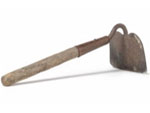
History is imbedded in the smallest objects. In this lesson, students examine how a simple farming tool connects to the work done by United Farm Workers.

lesson_image
Description

Students view a variety of documents and artifacts related to the short-handled hoe, migrant labor, and the United Farm Workers. They then draw on these sources to develop an online museum exhibit for the hoe.

Article Body

This lesson uses a simple farming tool, the short-handled hoe, to introduce students to migrant labor in California and the farm worker labor movement.

After a brief introduction to the hoe and the bracero program that brought workers to California from Mexico, students explore a variety of artifacts to understand the context of the hoe’s use, as well as the United Farm Workers’ role in the 20th-century labor and civil rights movement. Students then draw from these varied sources to create an online museum exhibit centered on the hoe.

One of the great strengths of this lesson is that it starts with what seems a simple artifact, the short-handled hoe, but leads students towards more complex thinking, including grappling with the artifact’s larger symbolic and political meanings and its historical significance. The lesson also provides an excellent opportunity for teaching about historical context because placing the short-handled hoe in the context of the other artifacts and documents clarifies the meaning of this particular artifact (labeled a “barbaric instrument” by one doctor).

While the lesson provides only minimal structure, teachers will appreciate the wealth of companion resources, including historians’ commentary, images of other farming tools, and primary sources related to California farm labor, and the work of César Chavez and the United Farm Workers.

Topic
20th Century Labor
Time Estimate
1-2 Class Sessions
flexibility_scale
2
Rubric_Content_Accurate_Scholarship

Yes

Rubric_Content_Historical_Background

Yes
In addition to a brief introduction, teachers can find additional resources listed here.

Rubric_Content_Read_Write

Yes
While many of the primary sources are artifacts, others are written documents. In addition, in the final activity, students must give a written justification for items included in their exhibit.

Rubric_Analytical_Construct_Interpretations

Yes
Students create a thesis statement for their exhibit and have to explain why they chose each of the items in their exhibit. Ideally, this explanation should connect to the thesis.

Rubric_Analytical_Close_Reading_Sourcing

Yes

Rubric_Scaffolding_Appropriate

Yes

Rubric_Scaffolding_Supports_Historical_Thinking

No
Teachers may want to provide additional support for struggling readers and English Language Learners in understanding some of the historical documents.

Rubric_Structure_Assessment

No
While no specific assessment is provided, teachers may use the culminating activity as an assessment. Criteria for assessment would need to be established.

Rubric_Structure_Realistic

Yes

Rubric_Structure_Learning_Goals

Yes

IWitness

Image
What is it?

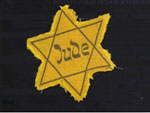
IWitness is a free resource developed by the USC Shoah Foundation Institute to help students develop a deeper understanding of 20th-century history alongside digital and media literacies. It houses approximately 1,000 Holocaust survivor and witness testimonies and allows students to construct multimedia projects using the testimonies. Users need only an Internet connection; all of the tools—including an online video editor—are self-contained on the server and are compatible with both Macs and PCs.

Getting Started

In order to start using IWitness, click here and select “register.” Once registered, you will be able to create classes and generate access codes students can use to register.

Teachers are using IWitness as a way to integrate 21st-century literacies into a range of subjects.

Even prior to registering, the IWitness home page features a rotating group of curated clips. These short clips run less than five minutes and draw learners into compelling stories. Linked from the home page, the Browse All Topics page provides more clips from a breadth of topics to anyone visiting the site. Registered users are able to search among more than 1,000 full-length testimonies, then save clips from the testimonies for use in projects. Testimonies have been indexed to the minute with keywords. If, for example, students search for “music,” they will get a list of clips where the interviewee discusses music, and they can go right to the exact minute in which music is discussed in a testimony. Users also can narrow search results in various ways.

Once signed in, you should go to your “Dashboard” to get started exploring IWitness. From here you will notice videos located on the left side under “Connections.” The Connections videos will help you address important topics with your students: ethical editing of video clips, effective searching, and defining terms like “archive” and “testimony.” There is an Educators page designed to orient teachers to the site and highlight available resources. There is also a resource tab on the top of the screen with links to reliable information. For students and teachers alike, IWitness offers a Tool Kit, which can fly out from the right side of the screen. The Tool Kit provides users with quick access to their assigned activities, as well as to an encyclopedia, glossary, and note-taking tool.

IWitness has numerous activities you can assign to your students. More than 200 activities are available in several languages and cover an array of subjects from the Holocaust and genocide to cinema and media & digital literacy. Different types of activities present information in diverse formats and can be filtered for different age or subject levels. “Information Quest”, for example, focuses on a single survivor or witness of the Holocaust. Students listen carefully for information in testimony clips and then reflect on their learning by using, among other things, a world cloud tool. As an educator, you are also able to build your own activities for your students in IWitness with the “Activity Builder”. The additional resources offered on the “Resources” page provide bibliographies, glossaries, and timelines that may be useful when assigning activities for students to build or complete.

Examples
IWitness allows students to learn about . . . the 20th century while creating meaningful projects and making connections with their own lives.

Teachers are using IWitness as a way to integrate 21st-century literacies into a range of subjects, including social studies, language arts, media studies, psychology, and more. One history teacher built an IWitness activity so his students could compare and contrast the Hollywood portrayal of the Sobibor Uprising in film with how survivors of the event remember and describe it. Through his IWitness activity “Escape From Sobibor: Hollywood and Memory,” his students were able to use critical thinking as they watched testimony and compared it to the film, then select clips of that testimony to construct a more historical depiction of daily life in the concentration camp.

You can also use IWitness to help teach online etiquette and respectful dialogue skills. Within IWitness, students finish their activities by viewing and commenting on their classmates’ projects. This is a great way to spark conversation that can continue in IWitness through social-media-style commenting tools. Teachers are able to mediate conversations and communicate with students within the application. IWitness also provides reminders to students about good digital citizenship when communicating with their peers within the site. IWitness allows students to learn about important events in the 20th century while creating meaningful projects and making connections with their own lives.

For more information

Want to learn more about IWitness? See Teachinghistory.org's Website Review for more information.

Looking for more resources on the Holocaust? Teachinghistory.org has gathered website reviews, lesson plans, teaching strategies, and more on the Days of Remembrance of the Victims of the Holocaust spotlight page.

Learning Menus: Textbooks a la Carte

field_image
Article Body
Why do it?

Elementary and middle school classrooms often require students to read history textbooks. Historical accounts in textbooks, however, can often be dry or difficult to grasp. Learning Menus offer students a variety of active methods to access the textbook, remember pertinent information, and learn to regulate their own learning. This strategy can be adapted for multiple grade levels.

What is it?

Learning Menus are forms of differentiated learning that give students a choice in how they learn. Each choice on the Menu encourages students to engage in an activity that requires actively reading, re-reading, and then summarizing important textbook content. After a student has completed an activity on the Menu, the teacher immediately assesses his or her work before she or he can move on. Learning Menus come in various forms and can include tic-tac-toe boards, restaurant-like menus, matrices, and multiple-choice grids. For example, students can be given a Learning Menu structured like that of a dinner menu with the headings “Appetizer,” “Entrée,” and “Dessert” and be instructed to follow the order of the menu just as they would in a restaurant. Within each “course” students choose from a list of activities. The assignment sheet includes a Well-defined Description for how to complete a chosen activity, the Possible Points one can earn for it, and the textbook Section it covers. At least one task must be completed for each book section, although students are always free to choose their own tasks from the menu choices. After the completion of each “course,” the teacher assesses the result in Points Earned before the student moves to the next one. In the dinner menu example, “Appetizer” activities focus on summarizing the overall content in each section of the textbook reading with activity choices like “Flash Cards,” “Outline,” and “Summary.” “Entrée” activities center on a closer reading of details and give students an opportunity to be creative with options like make a website or travel brochure. For “Dessert” students must choose a short activity that provides an overall summary of the most important themes found in the entire textbook reading.

Example

For an example of a Learning Menu in action, see the video Differentiating with Learning Menus on the Teaching Channel website. In this video, Mary Vagenas uses a “dinner menu” strategy with her 7th-grade social studies students at the Queens School of Inquiry in Flushing, NY. Below the video and in the right-hand column under “Supporting Materials” one can find a sample Learning Menu and a full transcript of the video in Word (DOC) format.

Why is this a best practice?

Learning Menus are a method of differentiating instruction that provides flexible ways to engage students, and that can be adapted to various classroom environments. Students become familiar with different types of study methods that they can use to self-regulate learning in the future. Tasks can include simpler activities for struggling students and more complex activities to challenge advanced students. Continual assessment and feedback can help ensure that each student makes progress towards the learning goals. Learning Menus also liven up textbook reading activities by giving students choices about how to extract essential information. These choices can help motivate reluctant readers. However, no matter what a student chooses from the menu, he or she engages in actively reading and making sense of textbook content, helping build historical knowledge.

For more information

See more on this topic elsewhere on Teachinghistory.org.

Graphic organizers are another strategy for scaffolding and breaking down challenging texts. Learn more about them, and consider including them in Learning Menus.

Also see the Institutes on Academic Diversity (IAD) at the University of Virginia's Curry School of Education.

Tenement Life

Teaser

Students examine primary sources related to the life of an immigrant girl and her family to discover what life might have been like at the turn of the century.

lesson_image
Description

Students examine a set of primary source documents related to the life of an immigrant girl in order to investigate what life might have been like at the turn of the century.

Article Body

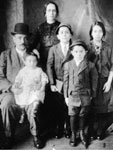
The Tenement Museum website provides engaging and entertaining ways to introduce young students to primary sources. The “Elementary School Lesson” found under “Primary Source Activities” uses a family photo, a postcard, a report card, and a passport to examine the life of Victoria Confino, an immigrant girl at the turn of the 20th century. Because these sources are mostly visual, they allow easier access for young students and English language learners than text-dense sources. The lesson provides useful guiding questions for the teacher when helping students examine the documents. After students have discussed the sources, they are asked to write a paragraph about Victoria’s life.

The Tenement Museum website also includes a variety of other fun and educational activities for students. Students can play the immigration game in which they figure out how to get to America, or complete a virtual tour of a tenement building. They could also mix a folk song or, for older students, explore the webcomics of a modern immigrant.

Topic
Immigration
Time Estimate
1 Class Session
flexibility_scale
4
Rubric_Content_Accurate_Scholarship

Yes

Rubric_Content_Historical_Background

No

Rubric_Content_Read_Write

Yes
Students “read” visual sources that contain minimal text. They write about the life of an immigrant girl using evidence from these sources.

Rubric_Analytical_Construct_Interpretations

Yes

Rubric_Analytical_Close_Reading_Sourcing

Yes
The lesson includes questions to prompt students to look at specific details in the documents, but teachers need to add questions about the origins of the documents.

Rubric_Scaffolding_Appropriate

Yes

Rubric_Scaffolding_Supports_Historical_Thinking

Yes
Suggested questions are provided for each source. The teacher could use the questions to develop a graphic organizer.

Rubric_Structure_Assessment

Yes
Students are asked to write about Victoria’s life using the historical evidence. There are no assessment criteria included and teachers will need to develop their own.

Rubric_Structure_Realistic

Yes

Rubric_Structure_Learning_Goals

Yes

Organizing History Through Images

Teaser

In this lesson, students will organize photographs both chronologically and conceptually in order to construct a narrative of the Holocaust.

lesson_image
Description

Students organize photographs from the U.S. Holocaust Museum both chronologically and conceptually in order to construct a narrative of the Holocaust.

Article Body

In this lesson, students organize photographs in order to tell the story of the Holocaust and construct an evidentiary narrative that makes sense to them. The lesson does not include any “correct” ordering or organization of the photographs and instead encourages students to experiment with organizing them both chronologically and thematically.

This lesson also guides students through the process of revising conclusions based on the discovery of additional historical evidence. Students are given a definition of the Holocaust and asked to consider or revise the definition with each new photograph in order to illustrate how historical narratives change depending on the available evidence.

Reading and analyzing primary texts can often be a daunting task for students who struggle with basic literacy skills. However, because this lesson presents historical data in the form of photographs, it is an excellent way to provide all students with access to the historical process, and to support historical thinking with struggling readers or English language learners.

For more advanced or older students, the supplementary activity asks students to read and incorporate brief testimonies of survivors into their definition of the Holocaust.

Topic
The Holocaust
Time Estimate
2 Class Sessions
flexibility_scale
4
Rubric_Content_Accurate_Scholarship

Yes

Rubric_Content_Historical_Background

Yes
The lesson requires students to “read” photographs and write a detailed “definition” of the Holocaust.

Rubric_Content_Read_Write

Yes
Captions and dates for each photograph are included in the lesson. There are additional background materials available.

Rubric_Analytical_Construct_Interpretations

Yes
Students construct an interpretation of the Holocaust using photographs.

Rubric_Analytical_Close_Reading_Sourcing

Yes
Students closely “read” photographs and accompanying source information.

Rubric_Scaffolding_Appropriate

Yes
Some of the photographs are disturbing (as is to be expected given the lesson’s topic).

Rubric_Scaffolding_Supports_Historical_Thinking

Yes
A student worksheet guides students through the process of analyzing each photograph and helps them focus on relevant details.

Rubric_Structure_Assessment

Yes
Some general strategies for assessment are provided. Teachers will want to determine and communicate their criteria for assessment.

Rubric_Structure_Realistic

Yes

Rubric_Structure_Learning_Goals

Yes

Prequel to Independence

Teaser

Teach your students about causality with this useful activity.

lesson_image
Description

Students view primary and secondary sources that represent events leading up to the publication of the Declaration of Independence and place them in chronological order.

Article Body

Teaching the events leading up to the Declaration of Independence is routine in many American history classrooms. This lesson consists of a brief sequencing activity followed by a written assessment and is a good activity to use in conjunction with other activities on this topic. Students view a collection of 10 historical documents representing events leading up to the Declaration of Independence. Each document includes an image of the original document and brief explanatory details. After putting the documents in their proper sequence, students are prompted to write one to three paragraphs describing the sequence of events leading to the publication of the Declaration of Independence, using the documents they have just sequenced as specific examples.

While the activity is simple and short, it can help to lay the foundation for a lesson on contextualization, as students place documents in chronological order and see them in the context of surrounding events. Additionally, this lesson provides an excellent opportunity to analyze the nature of cause and effect and teachers could augment the lesson by having students explain how specific events are related to one another as well as to the Declaration of Independence.

This lesson is one of a large collection of similar activities in which students engage with historical documents. Teachers can register with the website for free and create their own activities using a large searchable database of primary and secondary sources.

Topic
Pre-American Revolution, Cause and Effect
Time Estimate
1 Class Session (or less)
flexibility_scale
3
Rubric_Content_Accurate_Scholarship

Yes

Rubric_Content_Historical_Background

Yes
Limited, but a brief explanation and some background information are included with each document.

Rubric_Content_Read_Write

Yes
In addition to reading the documents, students are required to write a brief essay explaining how the documents fit together at the end of the lesson.

Rubric_Analytical_Construct_Interpretations

No
Students put events in chronological order using provided materials.

Rubric_Analytical_Close_Reading_Sourcing

No

Rubric_Scaffolding_Appropriate

Yes

Rubric_Scaffolding_Supports_Historical_Thinking

No
While background information is provided for each document, handwriting in some of the documents may be difficult for students to decipher. Teachers probably want to let students know ahead of time what sort of information they should look for in each document.

Rubric_Structure_Assessment

Yes
If the activity is completed on the website, the teacher may opt to receive an email for each student with the student’s written response, and a report of the student’s accuracy in placing the events in order.

Rubric_Structure_Realistic

Yes

Rubric_Structure_Learning_Goals

Yes

Propaganda and World War II

Teaser

Help students understand wartime propaganda with this excellent lesson plan.

lesson_image
Description

Students compare World War II propaganda posters from several countries and then choose one of several writing assignments to demonstrate what they’ve learned.

Article Body

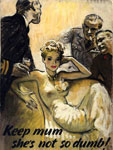
In this lesson from HERB—a website produced by the American Social History Project/Center for Media and Learning—students learn how to examine posters as primary sources and work with them to write essays. In addition to a collection of wartime propaganda posters, the site includes a brief essay providing historical context, as well as a well-designed “propaganda poster analysis worksheet” that students can use to explore the meaning of each document.

After work in small groups that includes each student analyzing a poster, students demonstrate their understanding through different kinds of writing assignments. These range from considering the historical time and events the poster sits within, to comparing two posters, to fiction writing.

The strength of this lesson is the collection of documents it brings together. Posters from the United States, Great Britain, Nazi Germany, and the Soviet Union give students insight into the propaganda machines operating in each country during the Second World War. Because each document is visual in nature, it is a good lesson for struggling readers and English Language Learners. The group structure is also a strength as students have the opportunity to analyze a single poster, but also to look for patterns across several posters.

The HERB website can be navigated several different ways: by collection, by historical era, or by approximately 70 different teaching activities.

Topic
World War II
Time Estimate
Variable
flexibility_scale
3
Rubric_Content_Accurate_Scholarship

Yes

Rubric_Content_Historical_Background

Yes
A brief historical background to U.S. propaganda during the period is provided, but additional background may be necessary for teachers to feel fully prepared.

Rubric_Content_Read_Write

Yes
Students show their understanding through writing.

Rubric_Analytical_Construct_Interpretations

Yes
Requires close reading and attention to source information?

Rubric_Analytical_Close_Reading_Sourcing

Yes
The poster analysis worksheet is an essential tool.

Rubric_Scaffolding_Appropriate

Yes
Because the sources are visual, they are useful for a number of audiences.

Rubric_Scaffolding_Supports_Historical_Thinking

Yes

Rubric_Structure_Assessment

This is partly dependent upon the choice of writing assignment. No criteria are included.

Rubric_Structure_Realistic

Yes
Directions are brief and clear. Teachers must design necessary supports for own writing assignments.

Rubric_Structure_Learning_Goals

Yes

Puerto Rico Encyclopedia/Enciclopedia de Puerto Rico

Image
Annotation

Visitors to this site will find more than 1,000 images and dozens of videos about the history and culture of Puerto Rico. The work of dozens of scholars and contributors, the Puerto Rico Encyclopedia reflects the diverse nature of the island: a U.S. territory, a key location for trade in the Caribbean, a Spanish-speaking entity with its own distinct culture, and a part of a larger Atlantic world. Funded by an endowment from the National Endowment for the Humanities and the Fundación Angel Ramos, the site is a key product from the Fundación Puertorriqueña de las Humanidades. It provides users with all content in both English and Spanish. Educators will find the site easy to navigate and conveniently categorized by themes; within each topic, appropriate subtopics provide an in-depth examination of Puerto Rican culture and history. Of particular interest to U.S. History teachers are the images and information found under History and Archeology. Here, teachers and students can explore a chronological narrative of the island's history and role at specific moments in U.S. and Atlantic history. Other sections worth exploring are Archeology (for its focus on Native American culture), Puerto Rican Diaspora (for its look at Puerto Ricans in the U.S.), and Government (for a detailed history on Puerto Rico's unique status as a free and associated US territory). Educators in other social science courses will also find valuable information related to music, population, health, education, and local government. In all, 15 sections and 71 subsections provide a thorough examination of Puerto Rico. The Puerto Rico Encyclopedia's bilingual presentation also makes it a good site for integrating Hispanic culture into the U.S. History curriculum, as well as helping to bridge curriculum for English Language Learners (ELLs) in the classroom.