Women in Journalism

Image
Annotation

Forty-four "full-life" interviews with American women journalists are available on this website. Interviewees include women who began their careers in the 1920s through the present. Print, radio, and television journalism all are represented.

Interviews address difficulties women have encountered entering the profession and how their presence has changed the field. They also discuss political life, famous people interviewed, such as Eleanor Roosevelt, and social, ethical, and technological changes of the 20th century.

A preface and an explanation of methodology introduce the site. Each interview is linked to a photograph and brief biographical sketch of the interviewee. Interviews range from one to 12 sessions and each session is about 20 pages long. Interviews are indexed but not searchable.
Parallel History Project on Cooperative Security

Image
Annotation

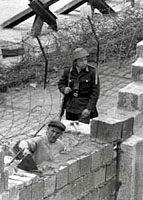
These more than 350 recently declassified documents from archives of former Warsaw Pact countries and the U.S. reveal previously hidden aspects of Cold War military strategy. The project offers documents and accompanying analyses in six categories: Warsaw Pact records; Warsaw Pact war plans; NATO records (U.S. and British); national perspectives (Bulgaria, Romania, Hungary, China, and Poland); crises (Berlin and Libya); and intelligence.

The website also provides 13 oral history interviews with former officials, including two Eisenhower administration officers involved with NATO planning and nuclear weapons policies. Documents reveal a 1964 Warsaw Pact war plan for using nuclear weapons in a preemptive strike against NATO forces and a 1965 Hungarian Army exercise detailing the targeted destruction of Western cities, including Vienna, Munich, Verona, and Vicenza. A 30-page survey article assesses the new history written since the release of recent documents.

Amateur Athletic Foundation Digital Archive

Image
Annotation

For those studying the history of the Olympics, sports history, and the history of leisure and recreation, this website provides more than 45,000 documents (in .pdf format) pertaining to official Olympics history as well as other sports. Complete or partial runs of 10 journals have been digitized, including Journal of Sports History (3,030 articles from 1974–2003), Olympic Review (1901–2003), Baseball Magazine (1909–1918), American Golfer (1908–1911), Golf Illustrated and Outdoor Man (1914–1915), and Outing (1883–1899).

The site also furnishes 58 oral histories of Southern California Olympic athletes and 83 official Olympic Reports from 1896 to 2004. The full text of This Great Symbol: Pierre de Coubertin and the Origins of the Modern Olympic Games by John MacAloon and some recent studies of aspects of sports history are also available. Additions to the site are made regularly.

The Wizard of Oz: An American Fairy Tale

Image
Annotation

The cultural impact of L. Frank Baum's The Wonderful Wizard of Oz is the focus of this well-designed exhibit. Three galleries offer images and explanatory text.

"'To Please a Child': L. Frank Baum and the Land of Oz" examines various aspects of the book, including W.W. Denslow's artwork, Baum's original copyright application, and an early review of the book appearing in the October 1900 issue of The Literary Review. "To See the Wizard: Oz on Stage and Film" looks at two of the most famous productions of Baum's book, the 1902–1903 stage play that became one of Broadway's greatest successes and the classic 1939 MGM movie, including color posters and a full-page color advertisement placed in the September 1939 issue of Cosmopolitan "To Own the Wizard: Oz Artifacts" examines Oz-related novelties, including the Wizard of Oz Monopoly game by Hasbro, a Wizard of Oz stamp, and "The Royal Bank of Oz" rebate check from MGM.

Famous Trials

Image
Annotation

This exceptional legal history site presents balanced treatments of over 50 prominent court trials. Trials include: Salem witchcraft (1692); Burr conspiracy (1807); Amistad (1839–1840); Dakota conflict (1862); Lincoln conspiracy (1865); Johnson impeachment (1868); and Susan B. Anthony (1873). 20th-century trials include: Bill Haywood (1907); Sacco and Vanzetti (1921); Scopes (1925); Scottsboro Boys (1931–1937); Rosenbergs (1951); Lenny Bruce (1964); "Mississippi Burning" (1967); Chicago Seven (1969–70); My Lai courts martial (1970); LAPD officers (1992); O. J. Simpson (1995); Clinton impeachment (1999); and Moussaoui's 9/11 trial (2006).

Each trial website includes a chronology, maps, and court documents, including transcripts of testimony, media coverage, depositions, and government documents. Most cases also contain images, links to related websites, and a bibliography. Biographies center on five "trial heroes," including trial lawyer Clarence Darrow. "Exploring Constitutional Law" offers 83 important constitutional topics for class discussion.

Museum of the City of San Francisco

Image
Annotation

These 11 exhibits address the history of California and San Francisco. Topics include the Gold Rush of 1849; earthquakes of 1906 and 1989; the history of the city's fire department; construction of the Golden Gate and Bay Bridges; and the internment of Japanese Americans during World War II. These exhibits provide timelines and links to more than 200 primary documents and images, including newspaper articles, diary entries, oral histories, photographs, political cartoons, and engravings. Two exhibits are hyperlinked chronologies pertaining to San Francisco during World War II and the rock music scene in the city from 1965 to 1969.

Documents can be accessed according to subject, with more than 25 documents listed on the Chinese-American community, fairs and expositions, and labor issues. The site also contains more than 150 biographies of prominent San Franciscans.

September 11 Digital Archive

Image
Annotation

This archive records the histories of people affected by the terrorist attacks of September 11, 2001 (9/11), including more than 150,000 stories and more than 40,000 emails from around the world. The site is constantly growing and the sources are viewable through galleries. Items include still images, with photographs, digital art, and artwork; moving images, with video files and digital animations; documents, including flyers, reports, and articles; and stories, emails, and voicemails.

The supporting information is strong as well. The FAQ section includes numerous links with information about the chronology and a timeline, including flight paths and building collapses; information about hijackers, victims, and rescuers; memorials and rebuilding efforts; and the 9/11 Commission Report. Visitors are invited to submit their own recollections.

Watergate Revisited

Image
Annotation

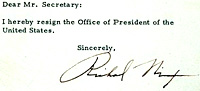
This is a thorough introduction to the Watergate scandal. Created by the Washington Post, the newspaper whose investigative journalism led to President Richard M. Nixon's downfall, the website provides more than 80 relevant news stories. It also offers links to 20 documents—speeches, tape transcriptions, and Nixon's letter of resignation—in the National Archives and the Nixon Library. A detailed timeline links to Post stories, and brief biographies introduce 26 "key players" in various phases of the scandal.

Users may listen to eight audio clips and view 11 video clips, such as Nixon's "I am not a crook" speech, announcement of his resignation, and farewell to his staff as well as John Dean's testimony. The Post's Bob Woodward and Ben Bradlee discuss the scandal in the transcript of a 1997 interview and a video recording of a 2002 forum. The site also includes a link to 20 cartoons by the Post's Herblock, photographs, and an interactive quiz.

U.S. Holocaust Memorial Museum Website

Image
Annotation

Interactive exhibitions and resources address the Holocaust and related subjects. The site is composed of five sections: education, research, history, remembrance, and conscience.

"Education" introduces the subject of the Holocaust and provides extensive bibliographies. "Research" contains a survivor registry and an international directory of activities relating to Holocaust-era assets. Searchable catalogs pertaining to the Museum's collections and library are easy to navigate to find artworks, artifacts, documents, photographs, films, videos, oral histories, and music. "History" includes the Holocaust Learning Center, with images, essays, and documents on 75 subjects, such as anti-Semitism, refugees, pogroms, extermination camps, and resistance. "Committee on Conscience" contains information on current genocidal practices in Sudan.