NASA History Division
Image
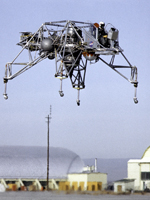
Photo, Lunar Landing Research Vehicle in Flight, NASA
Annotation

An extensive site covering the history of NASA's aeronautical and space programs. Materials include photographs, flight communications transcripts, essays, timelines and chronologies, policy documents, biographies, and much more. "Aeronautics" includes flight research centers, flight research projects (such as the lifting body program and the X-1 that first broke the sound barrier), and the X-15 project. "Biographies" includes all present and former astronauts. "Human spaceflight" offers extensive material, including essays, technical information, and other material on the Mercury, Gemini, Apollo, Skylab, Apollo-Soyuz Test Project, and Space Shuttle projects. The Apollo Program includes the Apollo Lunar Surface Journal, an extensive site that provides corrected transcripts of recorded conversations between lunar surface crews and mission control with commentary from the site editor and 10 of the astronauts who walked on the moon. The same is available for Apollo 12, 15, and 16 Flight Journals. Reference material includes more than 50 historical policy documents including NASA's 1959 Long Range Plan and the 1986 Report of the Presidential Commission on the Space Shuttle Challenger Accident. There are more than 30 timelines and chronologies.

The photo and video section has video clips from the Apollo missions including lunar surface exploration. The massive Johnson Space Center Digital Image Collection has a searchable database of more than 9,000 NASA press release photos from the manned space program (Project Mercury to the Space Shuttle). "Space science" includes descriptive information and technical data on all planetary exploration projects from Mariner and Pioneer to Voyager and Galileo, as well as the lunar probe series Ranger and Surveyor. "NASA History for Kids" includes more than 25 links to sites for elementary and middle school students' research. With a wealth of both primary source material and secondary source information this site is an outstanding resource for teaching or researching the history of aeronautics and astronautics and the history of U.S. science and technology in the 20th century.

Medicine in the Americas, 1619-1914

Image
Logo, Medicine in the Americas 1610-1914: a Digital Library
Annotation

This small "digital library" offers a collection of eight historical medical books related to the development of medicine in the U.S. PDF files of the original documents are accompanied by a transcription and a brief description. Additionally, most of the documents have a link to a "historical note" with a more detailed description of the document. The text of the documents is searchable. The eight medical works are Clara Barton's 1878 pamphlet on the Red Cross; Thomas N. Chase's 1903 Atlanta University conference report on the mortality of African Americans in cities; Benjamin Coleman's observations on smallpox inoculation, written during the 1721 Boston smallpox epidemic; an 1825 description by Robert Waln, Jr., of the Friends Asylum near Philadelphia, the first private hospital in the United States entirely dedicated to the treatment of mental illness; William T. G. Morton's 1847 work on producing anesthesia by the inhalation of sulphuric ether; L. Emmett Holt's 1894 book on the care and feeding of children; Benjamin Rush's 1808 pamphlet on medical care for U.S. Army soldiers; and the text of the 1906 Pure Food and Drug Act that led to the creation of the Food and Drug Administration.

Silicon Valley History Online

Image
Photo, Thin film, Intel Corporation, 2003, Silicon Valley History Online
Annotation

This small archive provides more than 850 images from the mid-18th century to the present of the Santa Clara Valley in California. Browse the archive or view images through six thematic groupings: agriculture (91 images); education (147 images); people (467 images); technology (182 items); transportation (125 items); and urban life (78 items). There is some overlap between the collections. Keyword and advanced searches are also available. There are seven lesson plans on the history of the Santa Clara Valley, primarily for high school. Topics include the 1906 earthquake, the history of technology, urban development, the Ohlone Indians, women in Santa Clara County, and transportation.

Encyclopedia of Chicago, Historical Sources

Image
Photo, Children standing in front. . . , 1917, Encyclopedia of Chicago
Annotation

This archive brings together more than 1,300 images on a wide array of topics related to Chicago, its people, and its culture. The material in the collection spans both the 19th and 20th centuries and includes photographs, advertisements, broadsides, maps, letters, newspaper articles, illustrations, and engravings. The photographs include aerial views of the Chicago cityscape, Chicago places, Chicago industries and workers performing their trades, historic photographs, Chicago events, and photographs of Chicago's people. The more than 100 maps can be browsed separately. Each item is cross-referenced to related items in the collection and many of the images are accompanied by explanatory text. The images can be enlarged and there are features for rotation and magnification.

Additionally, the site offers interpretive essays on the Plan of Chicago of 1909, "one of the most noted documents in the history of city planning" and the importance of water in Chicago's history. Other special features are a biographical dictionary, a dictionary of leading Chicago businesses from 1820-2000, and a presentation on how Chicagoans remember their history with images and brief interpretations. In addition, the entire contents of Encyclopedia of Chicago can be searched. A useful resource on the history of Chicago or urban history.

Turning Points in Wisconsin History

Image
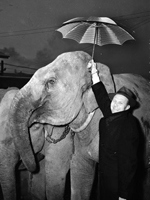
Photo, Arthur M. Vinje, April 4, 1947
Annotation

This website allows visitors to explore the history of Wisconsin through essays, primary source documents, lesson plans, and maps. The main feature is 53 presentations grouped under 10 overall topics: early native peoples; early explorers, traders, and settlers; territory to statehood; immigration and settlement; Civil War era; mining, lumber, and agriculture; Progressive Era; 20th-century wars and conflicts; prosperity, depression, industrialization, and urbanization; and response to 20th-century change. Each topic offers four or more presentations with a short introductory essay; primary sources available on the site; primary sources available elsewhere; and related links.

Documents available on the site include more than 140 books, tracts, pamphlets, or papers; more than 100 images; more than 260 articles; and more than 35 manuscripts. The site also offers 95 reference maps. There are more than 45 elementary and 36 secondary lesson plans searchable by keyword, grade level, and/or topic. The advanced search allows visitors to search by fields such as agriculture, intellectual life, and politics; or by keyword, education level, topic, presentation, or type of document. Additionally, there is a tutorial on using primary documents. This website is a good starting point for teaching or researching Wisconsin or the mid-Western region.

Thar's Gold in Them Thar Hills: Gold and Gold Mining in Georgia, 1830s-1940s

Image
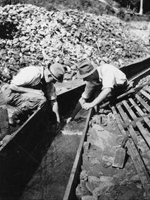
Photo, Two men searching for gold in a sluice flume, Thar's Gold in. . . site
Annotation

This website examines gold mining in Georgia's Lumpkin County from the late 1830s through the early 1940s with 90 primary sources, including letters, memoranda, photographs, picture postcards, and selected legal, financial, and promotional documents, including company prospectuses. The main concentration is the period between Reconstruction and the turn of the 20th century. Subjects include account collection, companies, leases, machinery, mineral rights, operations and techniques, and ore handling. An essay on Georgia gold mining history with links to primary documents discusses the Georgia Gold Rush, the "Great Intrusion" and Cherokee Removal, the U.S. branch mint in Dahlonega, gold mining in Georgia during the second half of the 19th century, the Second Georgia Gold Rush, 20th-century gold mining activity, and gold tourism. "Players and Places" provides brief descriptions of the people and places involved. "Suggested Readings" lists 38 related books, articles, and web essays as well as 14 mining company prospectuses and reports available at various archives and libraries. There is also a list of related archival collections.

Tennessee Documentary History Collection, 1796-1850

Image
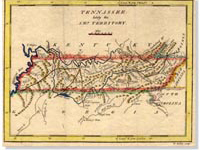
Map, Introductory graphic, 1796-1850, Tennessee Documentary History. . . site
Annotation

This archive assembles more than 1,600 primary sources, including letters, family papers, reports, and images, relating to the history of antebellum Tennessee. Visitors can browse the archive by collection or author, or they can use the simple keyword search or a variety of advanced searches to locate specific documents. Included in the collections are 142 letters, reports, and other documents, including the correspondence of Cherokee chiefs and officials such as John Ross. The archive also includes letters of such antebellum Tennessee figures as Sam Houston, James K. Polk, John Sevier, and Andrew Jackson, as well as letters to and from 12 antebellum Tennessee governors. The archive offers 79 images, many of various aspects of Cherokee village life in the mid-18th century. Though primarily focused on an audience of K-12 teachers of Tennessee history, academic historians and researchers in antebellum political and social history will also find this material useful.

Stephen Foster's Sketchbook

Image
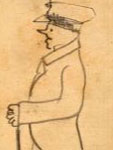
Sketch, Over the Calm. . . , 1851, Stephen Foster, Stephen Foster's. . . site
Annotation

This website makes available the full contents of the sketchbook of 19th-century American composer Stephen Foster. It contains handwritten drafts of 64 Foster songs, including some that were never published. Selecting "Song List" brings up the full list of songs contained in the sketchbook and clicking on the links takes the visitor to the pages with the draft of the song. Clicking on the thumbnail image of the page brings up a transcript, a larger image, and bibliographic data. Drafts of several of Foster's most popular songs appear here including "Old Folks Home" (or "Way Down Under the Swanee River"), "My Old Kentucky Home," and "Jeanie with the Light Brown Hair." The unpublished songs are indicated in brackets. The visitor can browse all 250 page images individually or search by keyword. A useful resource for those researching Foster or the history of 19th-century American music and culture.

Automobile in American Life and Society

Image
Hartford Auto-Jack advertisement, 1911, Automobile in American. . . site
Annotation

This website was designed as an academic resource for courses focused on the automobile and the automobile industry. Each section—design, environment, gender, labor, and race—has a short introduction and two illustrated scholarly essays (often including annotated bibliographies). The complete text of each essay can be viewed in a separate window and each essay is accompanied by a student and teacher resources section with one or more questions for reading, discussion, writing, and research, as well as questions making connections between the essays. "Design" also offers a list of 110 "automotive oral histories" available in the Benson Ford research center, but only 17 are available on the site. Visitors can search the site by keyword but no advanced search is available. This site is a useful resource for students and educators studying the role of the automobile in American culture and society.

Madison: Celebrating 150 Years

Image
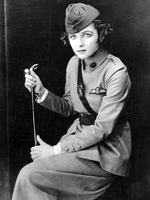
Photo, Irene Castle in Uniform, WWI or later, Madison: Celebrating 150 Years
Annotation

In 2006, Madison, WI, celebrated the 150th anniversary of its incorporation as a city. To mark the occasion, this website features 6,952 images, several articles and documents, maps and information on Madison's buildings, and links to virtual exhibits, entreating users to investigate Madison's past. This diverse collection of materials highlights both the experiences of the American Indian groups that had lived in the Madison area for many thousands of years, as well as those of the Yankee, English, Irish, German and Scandinavian settlers who began to arrive in 1837.

Visitors can view a map of American Indian village and mound sites, built for burial and ceremonial purposes, which are still visible around the city today. Also available are the recollections of George W. Stoner, one of the first settlers to arrive in Madison, through which one can learn about the construction of the city's first buildings and businesses, its first election, and its first suicide. Moving into the 20th century, visitors can also learn of the Federal Government's attempts to enforce Prohibition in Madison, which one official described as "queen of the bootleggers." This website is useful for those interested not only in Wisconsin history, but also in the history of urbanization in the United States more generally.