The Five Points Site
Image
Annotation

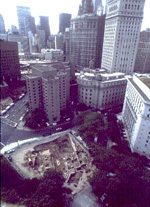
A virtual exhibit of a 1991 archaeological undertaking at the Foley Square Courthouse block in Lower Manhattan of the 19th-century "Five Points" area, a working-class and immigrant neighborhood infamously regarded in contemporary accounts as a "center of vice and debauchery." The site offers information on excavations of a tannery, bakery, saloon, and oyster house, as well as residences in the neighborhood--including Irish, German, Jewish, and Italian residents at various times--and makes an argument that journalistic descriptions of the period failed to adequately represent the "hard work and industry" that material culture evidence suggests. Includes eight images of the excavation sites and more than 60 photos of artifacts. The site also provides five maps, six contemporary images of the neighborhood, and a list of five recommended readings and 13 links to other websites on archaeology and history. Valuable for those studying 19th-century urban life and as a demonstration of ways that archaeology can provide a window on everyday life of earlier eras.
William P. Gottlieb: Photographs from the Golden Age of Jazz

Image
Annotation

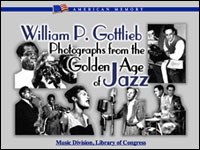
Writer-photographer William P. Gottlieb (1917–2006) documented the New York and Washington, D.C. jazz scene from 1938 to 1948 in more than 1,600 photographs. During the course of his career, Gottlieb took portraits of prominent jazz musicians—including Louis Armstrong, Duke Ellington, Charlie Parker, Billie Holiday, Dizzy Gillespie, Earl Hines, Thelonious Monk, Ella Fitzgerald, and Benny Carter—and legendary venues, such as 52nd Street, the Apollo Theatre, Cafe Society, the Starlight Roof, and Zanzibar. The site also features approximately 170 related articles by Gottlieb from Down Beat magazine; 16 photographs accompanied by Gottlieb's audio commentary on various assignments; a 4,300-word biography based on oral histories; and a 31-title bibliography. Extremely valuable for jazz fans, music historians, musicians, and those interested in urban popular culture.

Triangle Shirtwaist Factory Fire

Image
Annotation

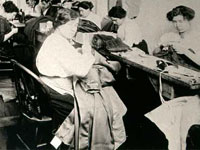
On March 25, 1911, a fire broke out at the Triangle Shirtwaist Factory in New York City causing the deaths of 148 garment workers—an event that came to be known as one of the hallmark tragedies of the industrial age. This website tells the story of the fire in six chapters: Introduction; Sweatshops and Strikes; Fire; Mourning and Protest; Relief Work; and Investigation, Trial, and Reform.

The text, targeted to a middle and high school audience, is accompanied by numerous primary sources that could be of use to more advanced researchers. These include close to 70 photographs, 18 newspaper articles, 17 testimonials, three oral histories, excerpts from investigative reports written in the years following the fire, several letters from witnesses, a lecture given by Secretary of Labor Frances Perkins in 1964, and a radio drama reenacting the event. Accompanying these primary sources is a list of victims and witnesses, a selected bibliography of works surrounding the fire, and tips for writing a paper.

Slavery in New York

Image
Annotation

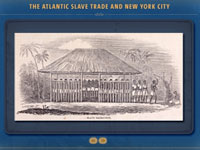
Focusing on the experiences of Africans and African Americans in New York City, this collection presents nine galleries that explore various themes and time periods in the history of slavery. These include the Atlantic slave trade; slavery in Dutch New York; the growth of slavery in British Colonial New York; freedom for blacks during the Revolutionary War; the Gradual Emancipation Act of 1799; free blacks in public life; Emancipation Day (July 4, 1827), and the history of scholarship on slavery in New York City. Each gallery has three panels: a gallery overview, a main thematic presentation, and one focusing on people, places, and documents. Of special interest are two interactive maps with timelines in the Dutch New York gallery and the Revolutionary War gallery; a picture gallery on the portrayal of blacks in New York City's public life; and profiles of nine African Americans who lived in New York City during the early republic.

Small-Town America: Images from the Robert Dennis Collection, 1850-1920

Image
Annotation

More than 12,000 stereoscopic photographs depict life in small towns, villages, rural areas, and cities throughout New York, New Jersey, and Connecticut from 1850 to 1920 on this website. Materials include pictures of buildings, street scenes, natural landscapes, agriculture, industry, transportation, homes, businesses, local celebrations, natural disasters, and people.

Each grouping of photographs offers a short description of the contents as well as notes on the locations, medium, collection names, and digital identification information. The site also features an essay on the history of stereoscopic views and nine related website links. The site is searchable by keyword and can be browsed by subject and image name. These revealing illustrations are valuable for examining rural and urban development as well as everyday life.

September 11 Digital Archive

Image
Annotation

This archive records the histories of people affected by the terrorist attacks of September 11, 2001 (9/11), including more than 150,000 stories and more than 40,000 emails from around the world. The site is constantly growing and the sources are viewable through galleries. Items include still images, with photographs, digital art, and artwork; moving images, with video files and digital animations; documents, including flyers, reports, and articles; and stories, emails, and voicemails.

The supporting information is strong as well. The FAQ section includes numerous links with information about the chronology and a timeline, including flight paths and building collapses; information about hijackers, victims, and rescuers; memorials and rebuilding efforts; and the 9/11 Commission Report. Visitors are invited to submit their own recollections.