Online Encyclopedia of Washington State History
Image
Annotation

History Link is an encyclopedia of the history of Seattle and King County, WA. A timeline of 180 "Milestones" connects visitors to 500-word historical essays on topics in Seattle-area history from before 1851 to 2000. "People's Histories" presents roughly 150 memoirs and oral histories (1000 to 16,000 words) of Seattle residents of diverse class and ethnic backgrounds, including Squamish and Nordic. There are 18 "Magic Lantern" photographic essays ranging from one image and 40 words to 50 images and 300 words. Special collections have been arranged in 17 folios, which cover topics such as Martin Luther King's 1961 visit to the city and the World Trade Organization (WTO) meeting in 1999. The WTO archive contains 19 articles of 100 to 2000 words on the history of radicalism in Seattle and the WTO protests of 1999 and 2000. This archive also contains 48 photographs of the protests taken by History Link staff.

Visitors may take four Cybertours of the city in which they click on sections of a map and connect to one or two images and 300-word descriptions of local history. "Then and Now" contains 49 before-and-after photographs of Seattle landmarks with 300-word essays on the history of each location. The site is easy to navigate and can be searched by subject. In March 2003, HistoryLink added a database for all of Washington state. It is an excellent resource for all levels of scholars interested in the history of the Northwest or oral history.
Quilts and Quiltmaking in America, 1978-1996

Image
Annotation

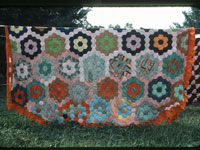
This colorful Library of Congress American Memory site brings together selected items from two American Folklife collections, the Blue Ridge Parkway Folklife Project Collection and the "All American Quilt Contest" series, sponsored by Good Housekeeping magazine and Coming Home, a division of the direct mail retailer Land's End.

The Blue Ridge Collection consists of 229 photographs and 181 interviews recorded in 1978 with six Virginia and North Carolina quiltmakers. These items illustrate the art of quiltmaking within the context of daily life in Appalachia. The Quilt Contest materials, from contests held in 1992, 1994, and 1996, include images of approximately 180 prize-winning quilts from across the U.S. The quilts represent a wide variety of styles, traditions, and materials used in the practice of the craft.

The exhibit is divided into three sections. Speaking of Quilts offers an essay (2,000 words) on the making of these two collections and the tradition of quiltmaking. Blue Ridge Quilts features the audio files of interviews and photographs of the six Appalachian quilters practicing their craft, along with a 500-word biography of each featured quiltmaker. Each audio clip is accompanied by brief (150-word) descriptive notes. The Quilt Contest section includes a roughly 2,000-word essay describing the contests and featuring a gallery of images of 180 prizewinning quilts.

The site offers a handy glossary of more than 50 terms and a selected bibliography of approximately 60 monographs and periodicals related to the history and craft of quiltmaking. It can be searched by keyword and browsed by quiltmakers and subjects. This beautiful site is useful for students researching American and Appalachian culture, not to mention those who simply love the art of quiltmaking.

River of Song

Image
Annotation

This site is a companion to a Smithsonian series produced in collaboration with public broadcasting stations in 1999. The series, River of Song, traced the history and character of contemporary American music along the Misssissippi River, from the head of the river in Minnesota to its mouth in Louisiana. The site offers 300-word biographies of each of the approximately 40 artists and music groups featured in the four-part series. Artists featured include Minnesota folk singer John Koerner, the Ojibwe powwow drummers of the Chippewa Nation, Illinois bluegrass group the Bob Lewis Family, and Louisiana blues musician Eddie Bo. Each profile includes 3–4 photographs and links to the musicians' own or related websites and artists are also indexed by genre and name.

The Music Along the River section provides more general information about the history and character of music in the four regions along the Mississippi River. There is a roughly 750-word narrative description of the music in each region. Each regional section includes links to approximately 10 articles from past Smithsonian Folklife Festival and Cultural Studies programs and five to seven other links to informational articles about that region.

A Teacher's Guide designed to accompany a videotape or CD of the music provides over 30 different activities for elementary and middle school students, including songs and specific exercises in rhythm, scales, notes, drumbeat patterns, and chords. Though the site is frustratingly devoid of audio clips of the music presented in the series, some of the related links do provide audio samples. This site is particularly ideal for music teachers, but could also be used in history classes to discuss American culture and the development of distinctively American kinds of music.

The American Experience

Image
Annotation

Visitors may browse these "website archives" to access the transcripts of 60 American Experience documentaries broadcast on PBS. In addition, the site offers transcribed interviews with the filmmakers, a timeline of events of each the of the film topic's era, and teaching guides.

Documentaries cover a wide range of topics including Harry Houdini, the Donner Party, the advent of television, and the Wright brothers. Primary source material includes pages from a colonial woman's diary, public documents from Truman's presidency, video clips of female pilots, and real audio files of three hobo songs. The site will be especially useful for teachers contemplating using films in the classroom.

National Museum of American History, Kenneth E. Behring Center

Image
Annotation

The highlight of the site is its Online Exhibitions section. There are currently 64 exhibits available. These include Separate is Not Equal, celebrating the 50 year anniversary of the Brown v. Board of Education decision (including audio and video files); Bon Appetit, documenting chef Julia Child's kitchen and career (including panoramic views and virtual examination of Childs's kitchen tools); and West Point, marking 200 years of military academy training.

Parents and teachers may appreciate the Kids area with hands-on history and science. Less useful for research, this site would be most useful as a virtual visit to the Museum.

The Uses & Abuses of the Constitution

Image
Annotation

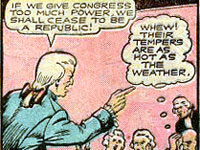
Common-place: The Interactive Journal of Early American Life has released a special issue on the United States Constitution. It provides a roundtable discussion of several questions concerning the uses and abuses of the Constitution in contemporary American political affairs. The eight essays are divided into four sections: Electoral College, The Clinton Impeachment, The Second Amendment, and Women and the Constitution.

The Bush vs. Gore controversy is tackled by distinguished professor Rogers Smith, while other leading scholars such as Jack Rakove and Linda Kerber address the role of the Constitution in landmark cases, the Clinton impeachment, the gun control debate, and the rights of women. The essays are a readable length, between 2,500 and 3,500 words, and offer a "common-place" for academic and non-academic readers alike.

Oneida Indian Nation: Culture and History

Image
Annotation

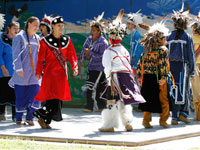
The Oneida Indian Nation, called the "first ally and steadfast friend" of the fledgling American republic, presents documents and historical studies focusing on the Revolutionary War period and on recent efforts to pursue land claims dating from the earlier period. Includes texts of six treaties or agreements involving the Oneida and the U.S. between 1777 and 1794; statements by the U.S. Congress, Presidents, and New York State regarding the Oneida; and President Bill Clinton's 1994 memo on "Government-to-Government Relations with Native American Tribal Governments." In addition, the site offers six essays by Nation historians and others, ranging from 1,300 to 7,400 words in length, on topics such as the roles the Oneida played in the birth of the U.S. and the War of 1812, and the land claim crusade.

Includes excerpts from an oral history project in which 13 tribal elders discuss food, herbal cures, crafts, annuity cloth, language, and land claims; a timeline; 35 press releases; a cookbook; and essays on lacrosse, legends, and the tribal creation story. The site promises in the future to include significant treaties from other Indian nations. Valuable for those studying American Indian history and culture, the Revolutionary War period, and recent legal efforts by Indian nations to pursue land claims.

WTO History Project

Image
Annotation

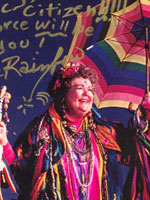
Designed to provide access now and in the future to documents created by groups that protested the World Trade Organization's "Ministerial Week," held in Seattle from November 29–December 3, 1999. Offers texts of more than 80 oral histories of organizers and participants, 73 photographs, and images of 224 fliers, posters, and leaflets. Also includes 46 planning documents, 18 signs carried by protesters, two audio files, three videos, and a timeline documenting 520 events from March to December 1999. A second timeline covers the week of protests and a table with contact information for more than 1,400 organizations that opposed the meetings. Documents in the collection can be searched by keyword, organizations, and issues—labor, environment, trade, democracy, direct action, food, agriculture, health, and independent media.

The site's creators state they are "dedicated to ensuring that any account ever written of the WTO protests be attentive to the range of people who turned out, the varieties of strategies and issues they brought to the streets and the meeting rooms, and the coalitions that emerged and failed." As a result, the site will be of great value to those studying social protest movements in the late 20th century.

SDA: Survey Documentation and Analysis

Image
Annotation

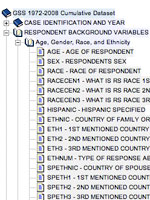
Within this site—designed primarily to aide social science researchers and analysts to construct large quantitative studies that can produce analytic results quickly—historians can find studies of importance relating to trends and shifts in American attitudes and opinions. The site presents 12 surveys on race and politics, Italian prejudice, health issues, and voter attitudes since 1952, among other topics.

Perhaps the most useful to historians of the late 20th century will be the General Social Survey, an "almost annual" study since 1972 that has interviewed U.S. households to produce a set of variables covering attitudes on an eclectic range of topics—from abortion to zodiac signs—that have been chosen by experts as "strategic for social science research" and related to public policy. Since 1982, surveys in other countries have replicated questions so that cross-national analyses may be achieved.

Includes data on beliefs concerning welfare, free speech, gun control, class structure, pornography, race, media exposure, working mothers, and women's rights, among other topics. Contains links to eight additional sites that use SDA. Valuable for those studying American social history.

Crime and Justice Data Online

Image
Annotation

Presents statistic tables showing trends in crime and law enforcement operations at state, local, and national levels. Users can find tendencies in types of crimes, types of victims, and types of weapons based on figures voluntarily reported to the FBI by state law enforcement agencies from 1960-1999, and by local agencies from 1985. In addition, statistics concerning law enforcement operations for states and large local agencies are searchable according to variables such as demographic composition of police forces, function, salary, and employment and training requirements. Valuable for those studying American social history, urban history, and human geography, in addition to students of the U.S. criminal justice system.