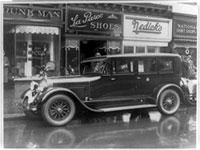
The African-American Mosaic

Image
Annotation

Comprised of 15 essays, ranging from 700 to 1,800 words, and about 120 images, this exhibit is drawn from the black history and culture collections of the Library of Congress. The materials cover four areas: colonization, abolition, migrations, and the Works Progress Administration (WPA)--a New Deal program of the 1930s. Specific subjects include Liberia and the American Colonization Society; prominent abolitionists; Western migration, homesteading, and Chicago as the "promised land" for Southern blacks; and ex-slave narratives gathered by WPA writers. No primary texts are available here, but the essays are well-illustrated with historical photos and images.

The Franklin County Publication Archives Index

Image
Annotation

This resource was designed for researchers and genealogists interested in Franklin County, MA, or social history in the late 19th century. It provides more than 12,000 articles from January 1870 to September 1873, organized by a full-text index. Gathered from the Greenfield Courier and Gazette, the articles are searchable by subject, and address topics such as African Americans, birth control, crime, cults, immigration, food, and bicycling.

The articles were chosen according to the interests of the site creator and emphasize social history and daily life. Information is also available on local court cases, cosmetics, fashion, and wife abuse. Article lengths vary from a few words to more than 700 words, but most are about 40 words. There are some explanatory comments and links within the text that provide biographical information of individuals and descriptions of 19th-century terminology, celebrations, or illnesses. The articles have been transcribed; original documents are not viewable. A valuable resource.

Lionel Hampton: His Life and Legacy

Image
Annotation

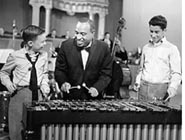
A tribute to jazz great Lionel Hampton, this site explains the long friendship between a university and a musician (after whom the University of Idaho named the Lionel Hampton School of Music). The site includes a 1,000-word biography of Hampton, as well as a timeline of his relationship to the school. Also included are a gallery of 23 photographs and a collection of nine videos of Hampton performing and conducting teaching sessions. A PDF version of Hampton's discography rounds out the collection.

Civilian Conservation Corps

Teaser

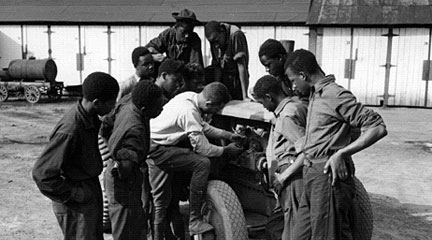
Examine the role of African Americans in the Civilian Conservation Corps during the Great Depression.

lesson_image
Description

Students engage in a sophisticated exploration of the African American experience with the Civilian Conservation Corps (CCC) during the Great Depression.

Article Body

The strength of this 2–4 day lesson is that it presents students with primary source documents representing multiple perspectives. These documents can help build students' understanding of the issues surrounding African American employment in the CCC. The documents also provide an excellent platform for students to explore the sticky political and civil rights issues facing the Roosevelt administration as it attempted to hold together a precarious political coalition that included both large numbers of African Americans and conservative Southern Democrats opposed to civil rights reforms. The lesson is comprised of four activities. Each activity is well structured and provides detailed procedures for classroom teachers. Teachers will use class discussions to assess student learning. The lesson closes with a solid writing prompt that encourages students to use documentary evidence to construct a historical argument. The lesson plan does not, however, provide resources for teachers to help students construct a high-quality historical essay. We suspect that teachers may need to provide guidance and assistance for writing the essay beyond that which is described in the lesson.

Topic
Civilian Conservation Corps; New Deal, Civil Rights
Time Estimate
2-4 Days
flexibility_scale
4
Rubric_Content_Accurate_Scholarship

Yes Historical background is detailed and accurate. Most documents are from the American Memory collection of the Library of Congress.

Rubric_Content_Historical_Background

Yes Lesson includes a brief overview for students.

Rubric_Content_Read_Write

Yes Lesson centers on reading and interpreting documents. It ends with a writing assignment that requires students to use textual evidence to support their answers.

Rubric_Analytical_Construct_Interpretations

Yes Students use evidence from primary documents to build understanding of the African American Experience in the CCC and its political and social ramifications.

Rubric_Analytical_Close_Reading_Sourcing

Yes Guiding questions require close reading of both source and perspective.

Rubric_Scaffolding_Appropriate

Yes Appropriate for 9–12 U.S. history classrooms. Could be adapted for higher-level middle school classrooms.

Rubric_Scaffolding_Supports_Historical_Thinking

Yes Activities 1, 2, and 3 include excellent guided questions for use in class discussion or small group exploration. Activity 3 provides strategies to help students analyze a primary document.

Rubric_Structure_Assessment

No Assessment is conducted primarily through class discussion. However, a final essay question encourages students to use historical evidence. No evaluation criteria are included.

Rubric_Structure_Realistic

Yes Activities are clear and explicit. Of course, teachers may need to adapt the lesson to meet student needs. Lesson presents teachers with the option to use electronic tools to help manage documents and student work if they set up a free user account.

Rubric_Structure_Learning_Goals

Yes The four activities are well structured and the activities progress logically.

Exploring Historical Texts in a Discussion-Based Class

Article Body

Learning from Others: Learning in a Social Context from Annenberg Media is a video made up of two sections, the second half of which documents the practice of Avram Barlowe, a high school history teacher at the Urban Academy in New York City. (Go to Session 7 and view video from 13:58–25:55.) This video provides examples of two promising practices:

  • Helping students use textual evidence to support their claims
  • Leading a productive discussion in the history classroom by asking open-ended questions and restating student answers
Black Codes

The subject for the class discussion is a set of discriminatory Southern laws known as Black Codes. The laws were passed by Southern state legislatures in the wake of the Civil War and reflected the efforts of former Confederates to reassert control over the recently emancipated black population.

Returning Students to the Text

The classroom discussion is grounded in primary sources. Students are asked to look at examples of Black Codes and answer the following questions:

  • What were the laws designed to do?
  • How might such laws be defended by the people who wrote them?

Having asked students to form interpretations based on these texts, the instructor is diligent about reminding students to return to the texts during their discussion. "Let's look at what the law says," he instructs at one point, reinforcing his desire that they work with the evidence to develop their ideas.

Leading Discussion

A major part of managing a successful class discussion, this video makes clear, is asking open-ended questions that students can answer in a variety of ways. This approach makes the class discussion more accessible for all students and can engage them in using evidence to support their claims. The instructor in this classroom also works to put students in conversation with each other. He does this by restating and clarifying the claims made by students, as well as by pointing out areas of agreement and disagreement in their comments.

What's Notable?

Discussions are a common feature in many history classrooms. What makes this class unique, though, is the approach taken by the instructor. First, the video documents the practice of consistently returning students to the text in discussions, asking them to use evidence to support their claims. Second, it reveals a successful approach to promoting deeper historical understanding by asking open-ended questions and restating student answers.
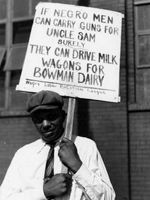
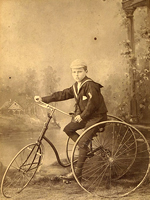
A Look at Slavery through Posters and Broadsides

Teaser

How to identify the author, audience, date, and message of historical posters.

lesson_image
Description

Using historic posters, this lesson engages students in analyzing primary sources by identifying their author, intended audience, date, and message.

Article Body

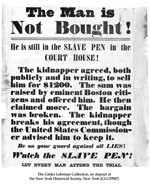
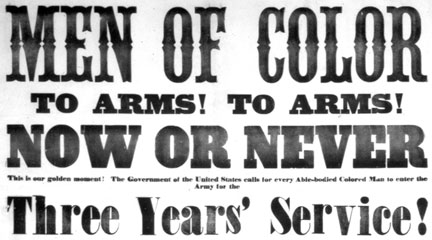
This well-planned lesson, which uses posters on slavery and abolition, teaches students to ask important questions as they read a primary source. First, the teacher models the task by analyzing a representative poster in front of the classroom. In small groups, students then analyze additional posters, locating such information as author, audience, purpose, and message. They use this information to consider the attitudes towards slavery that the posters convey.

One strength of the lesson is that the primary sources are given in two formats: students receive historically evocative reproductions of the original posters along with easy-to-read typed transcriptions. Some teachers may choose to highlight important text, particularly for beginning readers; other teachers will want to leave it up to students to locate and identify this crucial information.

This lesson appears in the December 2004 issue of History Now, a quarterly journal of the Gilder Lehrman Institute of American History.

Topic
Slavery and Abolition
Time Estimate
1 day
flexibility_scale
2
Rubric_Content_Accurate_Scholarship

Yes Lesson is accurate and up-to-date.

Rubric_Content_Historical_Background

No The lesson plan's Teacher Resources section includes links to information about historical context. It's up to teachers, however, to decide how much background students will need.

Rubric_Content_Read_Write

Yes In class, all students read, and one student per group records information on a Poster Inquiry Sheet. In the suggested homework assignment, students each write a news story about their assigned poster.

Rubric_Analytical_Construct_Interpretations

Yes The Poster Inquiry Sheet provides students with a method for identifying and interpreting historical facts.

Rubric_Analytical_Close_Reading_Sourcing

Yes During the modeling and the group work, students learn and practice how to read primary sources.

Rubric_Scaffolding_Appropriate

Yes Some language in the posters may be difficult, but teachers can choose to highlight sections of text to reduce the amount or difficulty of necessary reading.

Rubric_Scaffolding_Supports_Historical_Thinking

Yes The teacher's modeling step provides a helpful scaffold, as does the Poster Inquiry Sheet.

Rubric_Structure_Assessment

No Although the lesson plan does not include an assessment rubric, teachers can check in with small groups to assess student learning.

Rubric_Structure_Realistic

Yes The modeling provided in Steps One, Two, and Three is pedagogically useful. However, reading every single poster before the class may be excessively time-consuming. Teachers may want to discuss just one poster and then go around the classroom to check in with small groups as needed.

Rubric_Structure_Learning_Goals

Yes The lesson plan helps students to learn about slavery and abolition while providing a method for analyzing primary sources.

National Register of Historic Places Travel Itineraries

Image
Annotation

San Francisco during World War II, Mississippi's Indian Mounds, and Cumberland, Maryland, are just three of the more than 50 cities, towns, and rivers across the U.S. to which this website provides virtual access. In Baltimore, Maryland, a clickable map allows users to wander from the USCGC Taney (the last surviving warship present at Pearl Harbor on December 7, 1941) docked at Baltimore's Inner Harbor, to the house where Edgar Allen Poe lived in the mid-1830s, to the Union Square-Hollins Market Historic District to learn about Baltimore's oldest public market still in operation, and on to 40 more sites around the city. Each landmark is introduced with photographs, brief essays providing historical context, and tourist information.

Some travel itineraries are grouped by theme. For example, Historic Places of the Civil Rights Movement presents information on Arkansas's Little Rock Central High School, Virginia's Robert Moton High School, and the Lorraine Hotel in Memphis where Dr. Martin Luther King, Jr. was assassinated on April 4, 1968. Many of these sites includes links to lesson plans in NPS's Teaching With Historic Places. Updated regularly, this website is useful for teachers, students, and tourists alike.

Prosperity and Thrift: Coolidge Era and the Consumer Economy

Image
Annotation

This exhibit assembles a wide assortment of materials from the 1920s, items loosely related to the prosperity of the Coolidge years and the rise of a mass consumer economy. The collection includes more than 400 documents, images, and audio and video clips on subjects ranging from automobiles, consumer goods, department stores, families, Motion Picture News, and the National Negro Business League, to politics.

An introductory essay provides valuable background information on the Coolidge administration with additional insight on the social and cultural context of the era. An alphabetized guide to people, organizations, and topics includes definitions and brief descriptions. This sort of material has not been widely available, and this collection is extremely valuable as a resource on the development of mass consumption.

Race and Place

Image
Annotation

This archive addresses Jim Crow, or racial segregation, laws from the late 1880s until the mid-20th century, focusing on the town of Charlottesville, VA. The theme is the connection of race with place by understanding the lives of African Americans in the segregated South. Political materials includes seven political broadsides and a timeline of African American political activity in Charlottesville and Virginia. Census data includes searchable databases containing information about individual African Americans taken from the 1870 and 1910 Charlottesville census records. City records includes information on individual African Americans and African American businesses. Oral histories includes audio files from over 37 interviews. Personal papers contains indexes to the Benjamin F. Yancey family papers and the letters of Catherine Flanagan Coles. Newspapers, still in progress, includes more than 1,000 transcribed articles from or about Charlottesville or Albemarle from two major African American newspapers—the Charlottesville Recorder and the Richmond Planet. Images has links to two extensive image collections, the Holsinger Studio Collection and the Jackson Davis Collection of African American Educational Photographs, and three smaller collections.