Teaching Future Historians: U.S. History Lesson Plans Using Primary Documents

Image
Annotation

This website offers links to lesson plans, audio recordings, and video lectures related to the Antebellum, Civil War, and Gilded Age eras. There are 15 lesson plans on the Antebellum era focused on the Lincoln-Douglas debates, antislavery, Cherokee removal, slavery and the legal status of free blacks, gender roles, religion in political life, and the free-market labor vs. slave labor, "mudsill" theory debate. The nine lesson plans on the Gilded Age include such diverse topics as the WCTU and the lynching controversy, civil service reform, bimetallism, free trade, and political campaign songs. There are 145 downloadable songs organized by topic.

The site also offers access to downloadable video lectures on 12 different topics that include African Americans and race, economic development and labor, frontier settlement, law and society, religion and culture, women and gender, and political development. Most topics have 10 or more lectures available. A small site, but very useful for teaching the history of these three eras.

Harlem History

Image
Annotation

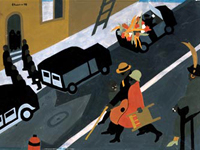
This website offers a collection of oral history interviews, images, videos, and scholarship on various aspects of the history of Harlem. It is divided into three main sections. "Arts and Culture" has six exhibits that include two video interviews focusing on Harlem's artists, writers, and musicians; oral history interviews with A. Phillip Randolph on the Harlem Renaissance and Dorothy Height on Harlem's theatrical scene; and a multimedia presentation on the Harlem Renaissance. "The Neighborhood" provides seven exhibits that include an oral-history interview with the first African American patrolman in New York City, an essay and video on the architecture and development of Harlem, an e-seminar about classic New York ethnic neighborhoods, an essay on the decline of Jewish Harlem, Bayard Rustin's reflections on different ethnic groups with economic interests in Harlem, and civil rights leader Dorothy Height's description of changes in Harlem and her attachment to the neighborhood. "Politics" offers four exhibits: oral history interviews with A. Phillip Randolph on Marcus Garvey's movement in Harlem and Bayard Rustin on Harlem congressman Adam Clayton Powell, Jr., a video lecture on Harlem politicians, and a video interview with David Dinkens on 1950s Harlem. The site also offers a short (eight images) photo essay entitled "The Streets of Harlem" and a multimedia presentation on the 1945 Negro Freedom Rally. This site offers a useful and varied collection of material for those researching or teaching Harlem or 20th-century African American history.

Jacob Lawrence: Over the Line

Image
Annotation

Jacob Lawrence (1917–2000) examined the African American experience through art. This website was created in 2001 to accompany an exhibition exploring his life and work. The website (with a flash version and an html version) provides a straightforward account of Lawrence's life and work accompanied by images.

The site is presented in three parts, "Beginnings," "The Young Artist," and "Over the Line," each organized as a sequence of pages consisting of short descriptions (50 words) and associated images. There are two short audio clips of Lawrence talking about Harlem and color. The images are relatively small and cannot be enlarged.

Dolley Madison Digital Edition

Image
Annotation

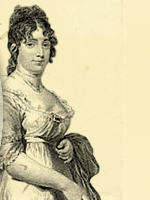
This website presents all known correspondence of the wife of James Madison, containing roughly 2,000 letters. Although many letters are thank-you notes or polite responses to social invitations, others offer rich insights into the personality and experiences of the First Lady, especially those exchanged with her sisters. The letters are organized into five periods: birth and youth; the years as wife of the secretary of state; the years as first lady; retirement; and widowhood. Users can search by name, date, topic, or place. A table of contents lists the letters by date, author, and recipient.

Additional features include a biographical sketch; "Crosslinks" listing all names (including nicknames, middle, and maiden) appearing in each letter, in order of appearance; a different color font to highlight unclear or missing characters or words; and a summary of the contents of each letter. Although the site is gated, a free trial option is accessible to all.

Northern Visions of Race, Region, and Reform in the Press

Image
Annotation

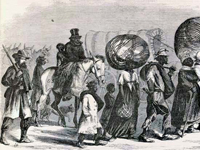
This website brings together more than 200 letters, articles, official documents, and illustrations focused on issues of race and reform during and after the Civil War, including unpublished letters written by Northern women who taught freedmen in the South and letters written by their students. Many of the texts are presented in original (handwritten) format and transcription. The website is a combination exhibit, with introductory and explanatory text, and primary source archive.

Materials are available through two paths-through the "Primary Resource Index" or through three topics: "The Freedmen," "Freedmen's Education," and "At War's End" (not yet complete). Within each topic, there are four to seven subtopics, such as "The Emancipation Proclamation" and "Visions of Freedmen in Letters of Freedmen" and at least one subtopic has further subcategories. Each subtopic begins with introductory text, often several paragraphs in length, that provides background information as well as links to relevant documents. The site cautions that "some of the materials on this site are racially offensive." A search is available at the bottom of document pages, but the dedicated search page is not currently working. There are links to more than 100 additional online primary and secondary sources.

Early American Imprints, Series II: Shaw-Shoemaker, 1801-1819

Image
Annotation

This database is the most essential collection of written materials for historical research in American history from 1801-1819. It provides full-text access to nearly 4.5 million pages of 36,000 books, pamphlets, broadsides and other imprints published in the U.S. during this period. Gazetteers, almanacs, juvenile literature, chapbooks, hymnals, campaign literature, novels, slave narratives, spelling books, school readers, treaties, maps, atlases, advertisements, diaries, autobiographies, and much more are all included. Most of these materials were originally detailed in the bibliography compiled by Ralph Shaw and Richard Shoemaker. This collection, long available on microfiche, is made available here as a digital, fully searchable online database. It complements Readex's other Early American Imprints series of material from the period of 1639-1800.

The Lincoln Institute

Image
Annotation

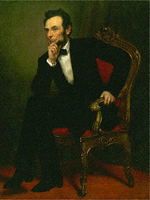
This extensive website offers five projects on Abraham Lincoln's life and political career along with teacher and student resources. Each section offers essays on the persons discussed. "Mr. Lincoln's White House" explores the people and events related to the White House in Mr. Lincoln's time, including a look at nearby areas of the city, and a section on visitors' impressions of Lincoln. "Mr. Lincoln and the Founders" includes an essay on Lincoln and the Declaration of Independence, a background essay, observations by Lincoln scholars, and a bibliography. "Mr. Lincoln and Freedom," explores Lincoln and the issue of slavery. Additional topics include "Mr. Lincoln and Friends" and "Mr. Lincoln and New York."

The "Teacher Assistance" page includes links to 13 lesson plans. The site also offers a link to "Abraham Lincoln's Classroom" with resources for students and teachers, including quizzes, quotes, featured commentary, and links to maps. This site is an outstanding resource for material on teaching about Lincoln and the events of his presidency, as well as an excellent starting point for research on the Lincoln presidency and the politics and people of the Civil War era.

Travel, Tourism, and Urban Growth in Greater Miami: A Digital Archive

Image
Annotation

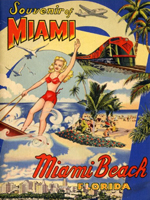
This site uses essays, a detailed timeline, and an image gallery to examine the growth of Miami and the history of its travel and tourism industry. An essay by Project Director Bachin provides an introduction to the website. The site has seven main thematic sections: advertising, architecture, environment, land use, migration, tourism, and transportation. Each section is introduced by a short three-to-five page essay and features a chronology and an annotated bibliography. There is also a searchable image gallery with more than 590 subjects, many with multiple images. The visitor can browse the gallery by subject, location, resource (such as aerial views, photographs, or postcards), or collection.

The site also offers an overall chronology (1823-2000), divided into sections for 1800s to WWI, WWI to 1930s, WWII to the 1950s, and the 1960s to the 1990s. The chronology can also be viewed by 18 themes such as civil rights, the Great Depression, hurricanes, land use, migration, and tourism. The overall annotated bibliography lists more than 90 books, links to 16 related websites, and 14 related archives. This site offers outstanding resources for those teaching or researching the history of Miami and South Florida and should also be of interest to anyone working on 20th-century urban and business history.

Maryland Digital Cultural Heritage

Image
Annotation

The cultural heritage of Maryland is readily accessible here through thousands of digitized documents, maps, and images arranged into more than 40 collections and two exhibits. Baltimore's native son and prominent early 20th-century journalist H.L. Mencken is featured through a collection of 19 portraits, artifacts, and letters. Edgar Allen Poe, who lived in Baltimore late in his life, can be glimpsed through 18 portraits, drafts, and letters. Another collection offers digital copies of primary sources from the War of 1812, including an original draft of the "The Star-Spangled Banner."

Other collections include photographs of African American life, a selection of sports-related items, photographs and watercolor paintings of old houses and churches in Queen Anne's County, vintage photographs of Baltimore streets and street cars, and a series of photographs awaiting identification from collection users. Ample historical context, including library donation information, is provided for all collections. The website's blog will be useful for those interested in library sciences, preservation, and digital archiving.

The Adoption History Project

Image
Annotation

In 1851, Massachusetts passed the first law recognizing adoption as a legal and social operation. Since then, adoption has had a rich history in the United States, documented at this website through close to 200 reports, writings, letters, adoption narratives, and other documents. Users unfamiliar with adoption history might begin by exploring the detailed timeline that traces adoption history from 1851 to 2000, when Congress passed the Child Citizenship Act of 2000 eliminating the process of naturalization for international adoptions. Moving on to the Topics in Adoption History section, with in-depth explanations of orphan trains, proxy adoptions, infertility, child welfare, and eugenics, will help build historical context. The Document Archive and Adoption Science sections boast documents from the late 1800s to the present by notables such as Pearl Buck, adoptees searching for information on their biological parents, and court decisions on adoption throughout the 20th century.