Marbury v. Madison

Teaser

Constitutional or not? Read about this 1803 landmark court case deciding issues of judicial review.

lesson_image
Description

Students examine documents establishing the principal of judicial review in 1803.

Article Body

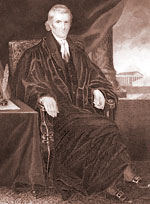
During the early years of the American republic, the system of checks and balances between the three branches of the federal government was tested and solidified. This lesson examines the history behind the expansion of the Supreme Court's role and the principal of judicial review that came from the case of Marbury v. Madison in 1803. For teachers, one of the helpful things this website provides is secondary background reading and questions at three different ability levels. The easiest level provides help with vocabulary and may be suitable for English language learners. An engaging political cartoon analysis exercise is also included. The cartoon illustrates the balance of powers between the three branches of government, equating the Supreme Court to referees in a football game. In addition, excerpts of the most significant passages and other related texts are provided for students to read and interpret. We think teachers will appreciate the flexibility in the recommended sequence of activities. Activities can be tailored to how much time you have to teach about this important topic.

Topic
Early Republic; Marbury v. Madison; judicial review; Supreme Court
Time Estimate
1-4 class sessions
flexibility_scale
3
Rubric_Content_Accurate_Scholarship

Yes Materials used in the lesson have been well researched. Content and materials on the site are very thorough.

Rubric_Content_Historical_Background

Yes Background information and questions are available for students at three different reading levels.

Rubric_Content_Read_Write

Yes Lesson focuses on reading and answering questions. No large, essay-style question for student writing is included, but students construct brief responses to questions about documents they have read.

Rubric_Analytical_Construct_Interpretations

Yes Students analyze documents to answer questions about who has the power to declare laws unconstitutional. The political cartoon analysis exercise centers on analytic thinking.

Rubric_Analytical_Close_Reading_Sourcing

Yes Emphasis on reading primary sources. Source and perspective understanding are required when considering (for example) Thomas Jefferson's adverse reaction to the decision.

Rubric_Scaffolding_Appropriate

Yes This lesson is appropriate for a secondary audience, though this is not specifically stated on the site. Teachers may decide the activities and resources are appropriate for an eighth-grade class.

Rubric_Scaffolding_Supports_Historical_Thinking

Yes In addition to the leveled background reading, an opening scenario, a diagram of the case, and excerpts from primary documents also work to support student understanding. Questions included with the sources require varied levels of understanding ranging from basic to quite sophisticated.

Rubric_Structure_Assessment

No Activities do not include assessment strategies other than questions that a teacher could assign to check for student understanding.

Rubric_Structure_Realistic

Yes The lesson provides adequate instructions for implementation.

Rubric_Structure_Learning_Goals

No No learning objectives are explicitly stated; however, the lesson activities progress logically.

Race and Place

Image
Annotation

This archive addresses Jim Crow, or racial segregation, laws from the late 1880s until the mid-20th century, focusing on the town of Charlottesville, VA. The theme is the connection of race with place by understanding the lives of African Americans in the segregated South. Political materials includes seven political broadsides and a timeline of African American political activity in Charlottesville and Virginia. Census data includes searchable databases containing information about individual African Americans taken from the 1870 and 1910 Charlottesville census records. City records includes information on individual African Americans and African American businesses. Oral histories includes audio files from over 37 interviews. Personal papers contains indexes to the Benjamin F. Yancey family papers and the letters of Catherine Flanagan Coles. Newspapers, still in progress, includes more than 1,000 transcribed articles from or about Charlottesville or Albemarle from two major African American newspapers—the Charlottesville Recorder and the Richmond Planet. Images has links to two extensive image collections, the Holsinger Studio Collection and the Jackson Davis Collection of African American Educational Photographs, and three smaller collections.

Native American Documents Project

Image
Annotation

These four collections of data and documents address Federal Indian policy in the late 19th century. The first set includes eight annual reports of the Commissioner of Indian Affairs from the 1870s, along with appendices and a map. The second set, Allotment Data, traces the Federal "reform" policy of dividing Indian lands into small tracts for individuals—a significant amount of which went to whites—from the 1870s to the 1910s. This set includes transcriptions of five acts of Congress, tables, and an essay analyzing the data.

The third set includes 111 documents on the little-known Rogue River War of 1855 in Oregon, the reservations set up for Indian survivors, and the allotment of one of these reservations, the Siletz, in 1894. The fourth set provides the California section of an ethnographic compilation from 1952.

Samuel J. May Anti-Slavery Collection

Image
Annotation

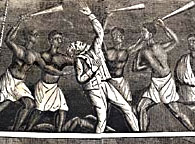
This is one of the richest collections of anti-slavery and Civil War materials in the world. Reverend Samuel J. May, an American abolitionist, donated his collection of anti-slavery materials to the Cornell Library in 1870. Following May's lead, other abolitionists in the U.S. and Great Britain contributed materials. The collection now consists of more than 10,000 pamphlets, leaflets, broadsides, local anti-slavery society newsletters, sermons, essays, and arguments for and against slavery. Materials date from 1704 to 1942 and cover slavery in the United States and the West Indies, the slave trade, and emancipation. More than 300,000 pages are available for full-text searching. Accompanying the documents are eight links to other collections.

American Radicalism Collection

Image
Annotation

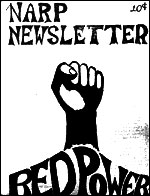
This website contains 129 pamphlets, documents, and newsletters produced by or relevant to radical movements. Groups represented by one to 30 documents include the American Indian Movement; Asian Americans; the Black Panthers; the Hollywood Ten; the Ku Klux Klan, the IWW, and the Students for a Democratic Society. Additional situations covered include the Rosenberg case, Sacco and Vanzetti, and the Scottsboro Boys. Additional topics include birth control and the events at Wounded Knee. This is a small but useful resource on radicalism, political movements, and rhetoric.

Slaves and the Courts, 1740-1860

Image
Annotation

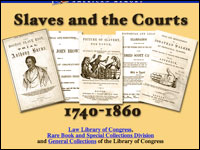
More than 100 published materials on legal aspects of slavery are available on this website. These include 8,700 pages of court decisions and arguments, reports, proceedings, journals, and a letter. Most of the pamphlets and books pertain to American cases in the 19th century. Additional documents address the slave trade, slave codes, the Fugitive Slave Law, and slave insurrections as well as presenting courtroom proceedings from famous trials such as the 18th-century Somerset v. Stewart case in England, the Amistad case, the Denmark Vesey conspiracy trial, and trials of noted abolitionists John Brown and William Lloyd Garrison. A special presentation discusses the slave code in the District of Columbia. Searchable by keyword, subject, author, and title, this site is valuable for studying legal history, African American history, and 19th-century American history.

Dred Scott Case

Image
Annotation

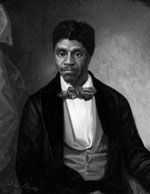
The Dred Scott case began in 1846 when slaves Dred and Harriet Scott sued for their freedom, basing their argument on the fact that they had lived in non-slave territories for a number of years. The case ended with the landmark U.S. Supreme Court decision of 1857 that not only denied Scott both citizenship and the right to sue in federal court, but ruled that he never had been free and that Congress did not have the right to prohibit slavery in the territories. The decision sparked increased sectional tensions in the years leading to the Civil War. Facsimiles and transcriptions of 85 legal documents relating to the Dred Scott case are provided on this website. The site also provides a chronology and links to 301 Freedom Suits—legal petitions for freedom filed by or on behalf of slaves—in St. Louis courts from 1814 to 1860.

Seattle Civil Rights and Labor History Project

Image
Annotation

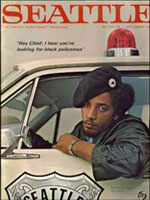
The long history of struggle for equal rights by various ethnic groups in Seattle, including Filipino, Chinese, Japanese, African, and Native Americans; Jews; and Latinos is documented on this website. Primary and secondary sources integrate labor rights movements with struggles for political rights, as is evident in the "special sections," that highlight the Chicano/a movement, the Black Panther Party, Filipino Cannery Unionism, the United Construction Workers Association, Communism, and the United Farm Workers. Each section brings together oral histories, documents, newspapers, and photographs that are accompanied by written and video commentary to provide historical context. The collection of more than 70 oral histories of activists is especially useful for understanding the lived experience of racism and its especially subtle workings in the Pacific Northwest. Together, these resources provide important national context for the civil rights struggle, too often understood as a solely southern phenomenon.

Triangle Shirtwaist Factory Fire

Image
Annotation

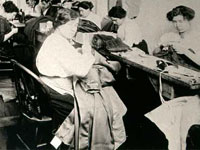
On March 25, 1911, a fire broke out at the Triangle Shirtwaist Factory in New York City causing the deaths of 148 garment workers—an event that came to be known as one of the hallmark tragedies of the industrial age. This website tells the story of the fire in six chapters: Introduction; Sweatshops and Strikes; Fire; Mourning and Protest; Relief Work; and Investigation, Trial, and Reform.

The text, targeted to a middle and high school audience, is accompanied by numerous primary sources that could be of use to more advanced researchers. These include close to 70 photographs, 18 newspaper articles, 17 testimonials, three oral histories, excerpts from investigative reports written in the years following the fire, several letters from witnesses, a lecture given by Secretary of Labor Frances Perkins in 1964, and a radio drama reenacting the event. Accompanying these primary sources is a list of victims and witnesses, a selected bibliography of works surrounding the fire, and tips for writing a paper.

Chicago Anarchists on Trial: Evidence from the Haymarket Affair, 1886-1887

Image
Annotation

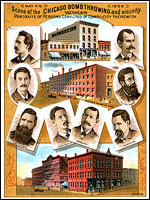
This collection of documents—roughly 3,800 pages of court proceedings—concerns the Haymarket Affair. This watershed event in the history of American radicalism led to the first "Red Scare" in America. Materials include autobiographies of two of the eight anarchists tried for conspiracy in the murder of seven Chicago police officers. The officers died after a bomb exploded at an anarchist meeting in May 1886, the day after two workers died in a struggle between police and locked-out union members at the McCormick Reaper factory. Four defendants were executed, despite lack of evidence connecting them to the bombing. The site presents approximately 221 newspaper clippings, 55 photographs, 19 letters, nine broadsides, and images of more than 20 artifacts. A linked exhibition, "The Dramas of Haymarket," furnishes a historical narrative and contextual interpretation. This website is valuable for the study of late 19th-century American radicalism, law enforcement, and political climate.