Civil Rights Oral History Interviews: Spokane, Washington

Image
Annotation

Produced as a part of a series of articles on black history titled "Through Spokane's Eyes: Moments in Black History," this site is a civil rights oral history project organized around the memories of men and women from Spokane, WA. Visitors can listen to of eight oral history interviews. They include an account by Jerrelene Williamson who compares the civil rights movement in Spokane to events in Alabama. Like most of the interviews, Williamson's dialogue is approximately 10 minutes in length. Emelda and Manuel Brown discuss their experiences with racial prejudice within the context of raising a family in Spokane in the 1960s. Their interview (32 minutes) is the second longest within the collection. Like many others within the project, Clarence Freeman shares his remembrances of the assassination of Dr. Martin Luther King. Sam Minnix and Verda Lofton describe the local civil rights demonstrations, and Flip Schulke recounts his experiences as a photographer in the south during the 1960s. His interview includes a discussion of James Meredith's admission into the University of Mississippi and at 45 minutes, is the longest. Alvin Pitmon talks about the desegregation of Arkansas schools and Nancy Nelson sings two civil rights spirituals, "My Lord, What a Morning" and "Let Us Break Bread Together."

A search engine allows users to search interviews by keyword and across database topics. This site will be of great interest to those interested in the history of civil rights in the United States.
The Perilous Fight: America's World War II in Color

Image
Annotation

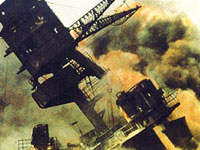
A complement to the four-hour PBS television series, this site presents unseen footage of World War II, the first war recorded primarily on color film. It brings the wartime experience of Americans on the battlefield and home front vividly to life through original color film clips and photographs. The site is divided into four main areas, including Battlefield, Psychology of War, the Home Front, and Social Aspects. Each section allows visitors to navigate through the different subtopics, read excerpts from diaries and letters, view nearly 250 photographs available for the first time, and watch rare color film clips of the period.

"Battlefield" includes homage to Pearl Harbor as well as film footage of covert American operations. "Psychology of War" contains a section entitled "The Atomic Option" that presents a video montage of images of an atomic bomb dropping on Nagasaki, Japan. Within this section, there is also a video of a Jewish Ghetto in Warsaw, Poland. "Homefront" includes five subsections, including censorship and migration. "Social Aspects" includes African Americans, Asians, Women, and Anti-Semitism. The footage of German American youth in New Jersey in the 1940s marching with fascist flags is very compelling. Visitors will also find an interactive timeline, essays on rediscovering the film footage, and a teaching guide for educators Those interested in this unforgettable period of history will find this site instructive.

When They Were Young: A Photographic Retrospective of Childhood

Image
Annotation

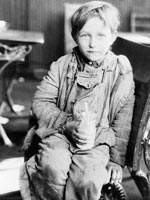
These 66 photographs capture the diverse experiences of children from many different parts of the world from the 1840s to the mid-20th century. The collection includes early 19th-century daguerreotypes, turn of the century studio portraits, and 20th-century prints and stereographs of young people. The portraits of children include those born into privilege, such as Tad Lincoln, son of the President Abraham Lincoln, and a young Theodore Roosevelt, as well as children of tenant farmers in Florida, California, and Texas during the Great Depression. There are also images of children from around the world, including children in Paris, Puerto Rico, Greece, and the Virgin Islands. There are poignant photographs of Cheyenne and Apache children from the Pacific Northwest, Mexican girls in Texas, and African American boys in Harlem.

The collection includes photographs culled from the American Red Cross Collection and the W.E. B. Du Bois Collection, in addition to pictures of African Americans in Washington D.C. by renowned photographer Gordon Parks. Four short descriptions (50 words) by Pulitzer Prize-winning author Robert Coles and information about his book, produced in conjunction with the exhibit, When They Were Young, accompany the collection.

Abraham Lincoln Presidential Library and Museum

Image
Annotation

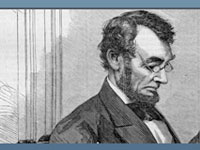
This website serves as an introduction to the Abraham Lincoln Presidential Library and Museum in Springfield, IL.

In addition to logistical information on visiting the library and museum (including floor plans, photographs, tips on planning school visits, exhibit information, and archival collection descriptions especially useful for researchers), the website also presents a substantial amount of digital material on Lincoln's life and times and Illinois history more generally.

New users may want to begin with an extensive timeline documenting major events in Lincoln's life. Teachers will be especially interested in the resources available in the website's Education section, which includes extensive guides to teaching the Gettysburg Address, teaching with objects, women's history, African American history, and celebrating Christmas at the White House.

The website also includes a Boys in Blue database of many Illinois soldiers who fought for the Union during the Civil War, as well as an oral history project documenting the lives of Illinois citizens from all walks of life. Current topics include war veterans and agriculture, with plans to include hundreds more interviews on statecraft, war and terror, family memories, and African American history.

Jim Crow Museum of Racist Memorabilia

Image
Annotation

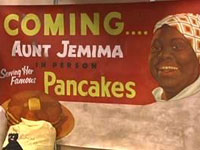
These materials come from a museum with approximately 4,000 pieces of racist memorabilia donated from Pilgrim's personal collection. Envisioned as an educational resource for scholars and students, this site contains most of the images within the museum collection, including sheet music, ashtrays, children's book covers, salt and pepper shakers, postcards, dolls, and matchbooks. The exhibit is divided thematically into 11 sections, including racist cartoons; Jezebel stereotypes; the tragic mulatto; and caricatures of the brute, picanninny, nigger, tom, mammy, coon, and golliwog. Each section includes a scholarly essay that provides historical context for the anti-black caricatures. For those interested in further research, the summaries (most between 2,000 and 4,000 words) offer extensive footnotes with primary, secondary, and online sources.

Of the 30 images within "The Brute Caricatures," users will find the covers of Charles Carrolls' The Negro a Beast, published in 1900, and D.W. Griffith's The Birth of a Nation of interest. There are 142 picanninny images, including Buckwheat and the cover of the children's book "Little Sambo." There are images of 50 "Uncle Tom," 87 "Mammy," and 90 "Jezebel" caricatures, both cinematic and commercial. More than 100 pictures and objects bear the appellation "nigger," and 118 19th- and early-20th-century racist cartoons (2 Quicktime and 2 RealMedia) are available. The exhibit includes a radio interview with Dr. Pilgrim, along with links to 13 scholarly essays and relevant newspaper articles. The site will be of special interest to those researching the history of racist memorabilia.

Selected Historical Decennial Census Population and Housing Counts

Image
Annotation

More than 40 historical census reports, including decennial reports dating back to 1790, are available for download on this website as PDFs. Historical statistics address topics such as population totals by race, urban or rural status, educational attainment, and means of transportation to work, among others.

There are also histories of the 21 U.S. census questionnaires produced from 1790 to 2000, including instructions to census marshals dating back to 1820. Comparative tables show which censuses included specific questions on subjects, such as ancestry and mental disabilities, and whether respondents were deaf, blind, insane, feeble-minded, paupers, literate, or convicts. Additional information includes state and territorial censuses, mortality schedules produced for a number of 19th-century censuses, population at the time of each census, and supplemental censuses taken at various times on free and slave inhabitants, Indian populations, unemployment, and housing.

Because of the PDF format, the reports take a number of minutes to download. These materials are useful for those needing demographic information or researching the history of census taking and the development of census categories.

Worthington Memory, Online Scrapbook

Image
Annotation

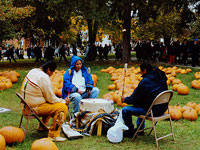
Currently provides more than 122 images of objects, documents, and photographs pertaining to the history of the town of Worthington, OH, founded in 1803 by a group of families migrating from western Connecticut and Massachusetts. The site creators plan to add more materials in the future, including digitized versions of 19th- and 20th-century newspapers and oral histories. Users may search by subject, title, or keyword in bibliographic records—which include abstracts of up to 100 words for each item—or browse the collection by decade or 27 categories covering aspects of the social, economic, cultural, civic, and environmental history of the town. Includes links to 22 related sites. Useful for those studying local history.

Working in Paterson: Occupational Heritage in an Urban Setting

Image
Annotation

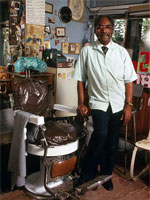
Presents 470 audio excerpts of interviews and 3,882 photographs compiled in 1994 by the American Folklife Center of the Library of Congress during a study of occupational culture in Paterson, NJ. The project—sponsored by Congress—explores ways that the industrial heritage of Paterson, with manufacturing roots going back to the 18th century, still affects present-day community life and culture with regard to work practices and leisure activities. Audio files are available in three formats, accompanied by bibliographic records with word-searchable summaries and subject headings. The site includes five essays—from 2,500 to 5,000 words in length with photographs—by project fieldworkers on African American family businesses in Paterson; an ethnography of a single workplace—Watson Machine International, a manufacturing film established in 1845; business life along a single street—21st Avenue, home to Italian and Hispanic communities; a traditional Paterson food—the hot Texas wiener; and remembrances by retired workers.

Offers a 27-title bibliography, annotated links to 32 related sites, and a glossary of specialized terms. Valuable for those studying the intersection of labor and ethnic history, urban history, and the functioning of historical memory.

Black Wings: African American Pioneer Aviators

Image
Annotation

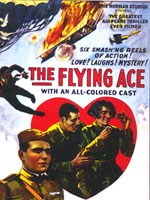
Approximately 75 items that tell the story of pioneering African American flyers, their contributions to the World War II effort, and racial discrimination they suffered. The site is arranged into four sections containing narratives of approximately 350 words each with hyperlinks leading to related images, mostly photographs. The exhibit also includes reproductions of posters, newspaper articles, insignias, advertisements, personal accounts, government documents, and letters. Searchable by keyword, decade, exhibit section, media, or name of plane. The reproduction quality of some of the items is poor; several newspaper articles are so blurred they are virtually unreadable.

Includes two lesson plans for grades 5-12, links to nine related sites, and an 11-title bibliography. The site will provide students with a brief introduction to an often neglected aspect of African American and aviation history.

WPA Life Histories, Virginia Interviews

Image
Annotation

Provides approximately 1,350 life histories and youth studies created by the Virginia Writers' Project (VWP)—part of the Works Progress Administration's Federal Writers' Project—between October 1938 and May 1941. In addition, the site offers more than 50 interviews with ex-slaves conducted by the VWP's all-black Virginia Negro Studies unit in 1936 and 1937 and six VWP folklore studies produced between 1937 and 1942. The life histories—ranging between two and 16 pages in length—offer information on rural and urban occupational groups and experiences of individuals during the Depression, in addition to remembrances of late 19th-century and early 20th-century life. The youth studies investigate experiences of young people between the ages of 16 and 24 who left school and include a survey of urban black youth. The ex-slave narratives, selected from more than 300 that were conducted for the project—of which only one-half have survived—provided research for the 1940 WPA publication The Negro in Virginia.

Interviews and studies were edited—sometimes extensively—at the Richmond home office. Each study includes a bibliographic record with notes searchable by keyword; for many records, notes are structured to include searchable data on age, gender, race, nationality, industrial classification, and occupation. The site includes a 2,300-word overview of the project. Valuable for those studying social, economic, and cultural life in Virginia during the Depression, in addition to early periods, youth culture, and the history of slavery.