Picturing America

Image
Annotation

Twenty-seven iconic images in American history are presented here, designed specifically to encourage educators to use images as primary source documents in the classroom. The images range in time from 17th-century depictions of the Catholic mission in San Antonio to the contemporary art of Washington, DC native Martin Puryear.

Also included are the Lansdowne portrait of George Washington, "Washington Crossing the Delaware," and Hiram Powers's statue of Benjamin Franklin, as well as works by artists such as Grant Wood, George Catlin, Winslow Homer, John Singer Sargent, Mary Cassatt, and Edward Hopper, and by photographers Walker Evans and Dorothea Lange. All images are accompanied by a brief annotation providing historical context, a biography of the artist, and a list of online resources offering further contextual information, lesson plans, and classroom activities. Images enlarge to fullscreen and are searchable by artist and by theme: Leadership, Freedom & Equality, Democracy, Courage, Landscapes, and Creativity & Ingenuity.

Marchand Archive

Image
Annotation

A memorial to Roland Marchand, the late historian of popular culture and advertising, this website presents a slide library with more than 6,100 images, including more than 2,000 advertisements, drawn from Marchand's collection. The images are organized into more than 40 major categories and close to 200 subcategories.

The site also offers 48 lesson plans designed by Marchand, each with an introduction, an essay assignment, and 10 to 40 primary source documents. The lessons cover a diverse range of controversial topics, including the Antinomian Controversy, the reactions against Chinese immigrants, the Pullman Strike, the Women's Suffrage Movement, and Watergate. The site will be useful for researching popular culture and advertising, as well as numerous other topics in American history, such as women, wars, immigration, labor, and African Americans.

Tangled Roots

Image
Annotation

These more than 200 documents explore cultural connections between the experiences of African Americans and Irish immigrants in America. Materials relate to individual leaders, historical events, economic, political, and social factors, and cultural achievements. A section entitled "Making Connections" offers 15 questions about historical events and people that represent the intertwined histories of Africans and Irish in America.

Other topics include the end of English participation in the slave trade, the emergence of the nativist Know-Nothing Party in the 1850s, and Ku Klux Klan activities against Catholics and blacks after the Civil War. A section on "Acceptance" explores perceptions of individual and group identities and four timelines focus on displacement, oppression, discrimination, and acceptance in America. "Voices" provides a sample of 13 public statements and interviews on ethnicity and race from ordinary modern Americans. The site also provides a bibliography; an essay by writer James McGowan, a black American with an Irish paternal grandfather; and links to related websites.

History and Politics Out Loud

Image
Annotation

Audio materials on this website were designed to capture "significant political and historical events and personalities of the 20th century."

Materials include 107 items, including speeches, addresses, and private telephone conversations from 19 speakers. Most material comes from three U.S. presidents—Richard M. Nixon (34 items); Lyndon Baines Johnson (30 items); and John F. Kennedy (19 items).

Additional material highlights international figures such as Secretary of State George Marshall; British Prime Minister Winston Churchill; civil rights leaders Martin Luther King, Jr., John Lewis, and A. Philip Randolph; Supreme Court Justices William O. Douglas, Arthur J. Goldberg, and Oliver Wendell Holmes, Jr.; and Soviet Union Premier Nikita S. Khrushchev. This website provides an opportunity to experience the persuasive speaking powers of 20th-century world leaders.

Without Sanctuary: Photographs and Postcards of Lynching in America

Annotation

James Allen has assembled a collection of chilling photographs of lynchings throughout America, primarily from the late 19th and early 20th centuries. Many were circulated as souvenir postcards. The site is a companion to Allen's book Without Sanctuary. The exhibit can be experienced through a flash movie with narrative comments by Allen or as a gallery of more than 80 photographs with brief captions. Most images also have links to more extensive descriptions of the circumstances behind each specific act of violence.

While the vast majority of lynching victims were African Americans, white victims are also depicted. Individually and as a group, these images are disturbing and difficult to fathom. They provide, however, an excellent resource for approaching the virulence and impact of racism in late 19th and 20th-century America.

Sunday School Books: Shaping the Values of Youth in 19th-Century America

Image
Annotation

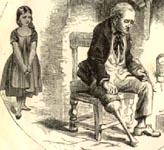
These full-text transcriptions and page images of 163 "Sunday school books" address religious instruction for youth published in the U.S. between 1815 and 1865. Materials include texts used by Methodists, Baptists, Mormons, and other denominations and are searchable by subject, author, title, and keyword.

Books are categorized according to nine types: "Advice Books, Moral Tales"; "Animals, Natural History"; "Child Labor, Orphans, Poverty"; "Death, Dying, Illness"; "Holidays"; "Immigrants"; "Slavery, African Americans, Native Americans"; "Temperance, Tobacco"; and "Travel, Missionaries." There are 67 author biographies and an essay on Sunday school books. This collection offers valuable materials for studying antebellum culture, American religious history, print culture, and education.

Uncle Tom's Cabin and American Culture

Image
Annotation

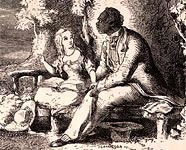
This well-designed, comprehensive website explores Harriet Beecher Stowe's Uncle Tom's Cabin as an American cultural phenomenon. "Pre-Texts, 1830–1852" provides dozens of texts, songs, and images from the various genres Stowe drew upon, including Christian texts, sentimental culture, anti-slavery texts, and minstrel shows. The section on the novel includes Stowe's preface, multiple versions of the text, playable songs from the novel, and Stowe's defense against criticism.

A third section focuses on responses from 1852 to 1930, including 25 reviews, more than 400 articles and notes, as well as nearly 100 responses from African Americans and almost 70 from pro-slavery adherents. "Other Media" explores theatrical and film versions, children's books, songs, poetry, and games. Fifteen interpretive exhibits challenge users to investigate how slavery and race were defined and redefined as well as analyze how various characters assumed a range of political and social meanings.

Lester S. Levy Collection of Sheet Music

Image
Annotation

Scanned images of more than 18,000 pieces of sheet music, including covers, published prior to 1923 are presented on this website. The collection, compiled by an American musicologist, covers the period 1780–1980 but focuses on 19th-century popular music, especially songs relating to military conflicts, presidents, romance, transportation, and songs from the minstrel stage.

Users may search for songs on hundreds of topics such as drinking, smoking, fraternal orders, the circus, and death, or look for composers, song titles, or other catalog record data. Descriptions by the collector of significant songs in 38 topical categories are also available. These materials are useful for studying 19th- and early 20th-century popular culture, especially depictions of ethnicity, gender, and race.

Valley of the Shadow: Two Communities in the American Civil War

Image
Annotation

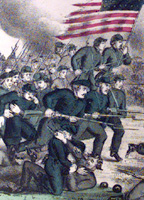
This massive, searchable archive compares two Shenandoah Valley counties during the Civil War period—Augusta County, VA and Franklin County, PA. These two counties were divided by 200 miles and the institution of slavery. Thousands of pages of maps, images, letters, diaries, and newspapers, in addition to church, agricultural, military, and public records provide data, experiences, and perspectives from the eve of the war until its aftermath. The site furnishes timelines, bibliographies, and other materials intended to foster research into the Civil War and the lives of those affected by it. The website includes a section on John Brown and one entitled "Memory of the War," presenting postwar writings on battles, the lives of soldiers, reunions, obituaries and tributes, and politics.

Atlantic Slave Trade and Slave Life in the Americas: A Visual Record

Image
Annotation

This collection of more than 1,230 images depicts the enslavement of Africans, the Atlantic Slave Trade, and slave life in the New World. Images are arranged in 18 categories, including pre-Colonial Africa, capture of slaves, maps, slave ships, plantation scenes, physical punishment, music, free people of color, family life, religion, marketing, and emancipation.

Many of the images are from 17th- and 18th-century books and travel accounts, but some are taken from sketches within slave narratives, Harper's Weekly, and Monthly Magazine. Reference information and brief comments, often an excerpt from original captions, accompany each image. Although there is no interpretation or discussion of historical relevance, these images are valuable for learning about representations of slavery in American slave societies, especially in the Caribbean and Latin America.