Folkstreams

Image
Introductory graphic, The Angel that Stands by Me. . ., Folkstreams
Annotation

The declared mission of this film archive "is to build a national preserve of documentary films about American folk or roots culture." The archive contains more than 50 independent films and videos "depicting American folk, traditional, regional, and vernacular culture." Films include Dry Wood, a "glimpse into the life, food, and Mardi Gras celebrations of black Creoles in French Louisiana, featuring the stories and music of 'Bois Sec' Ardoin and Canray Fontenot" and New England Fiddles, presenting seven "traditional musicians as they play in their homes and at dances and contests, passing their styles to younger fiddlers, and commenting on their music."

All films are available in streaming video and can viewed with Quicktime or Realplayer. The site also provides background material on each film, explaining the subject and aesthetic importance. Transcripts are available for some films. Visitors can browse the collection by title, filmmaker, subject, region, or people. They can also search for films or search the available transcripts of films as well as essays about the films. This site should be of interest to those studying the history of American folk culture or the history of documentary film.

Florida Folklife Collection

Image
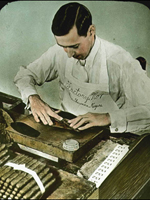
Photo, Tampa tobacco industry, 1920s, Florida Folklife Collection
Annotation

This extensive archive offers more than 10,300 photographs of Florida folklife from the 1930s through 2001. The archive can be browsed or searched by keyword. The site also makes available 17 interviews with folklorists and folk artists and 24 recordings of performances by Florida blues, gospel, shape-note, and folk singers. Additionally there are also 10 "voices of Florida" collections that include recordings of performances by or interviews with folk musicians, crafters, storytellers, and folklife interpreters on subjects such as children's lore, religious traditions, Seminole culture, maritime traditions, ethnic folk culture, material culture, and occupational lore. There are also 29 brief profiles of prominent Florida folklorists.

For teachers, the site offers five educational units that offer a history section with an interview, documents and audio, photographs, and lesson plans. Unit subjects include Zora Neale Hurston's 1939 recording expedition to the turpentine camps in Cross City, the history and practices of the net-making trade, the tradition of white oak basket making, and Seminole doll making. The visitor can also search the full catalog of photos and audio recordings (46,000 photographs and 5,000 audio recordings). Also available are five film clips from early Florida Folk Festivals and the Florida Folk Arts Conference. And the website provides 30 links to related websites on folklife programs and collections.

Medicine in the Americas, 1619-1914

Image
Logo, Medicine in the Americas 1610-1914: a Digital Library
Annotation

This small "digital library" offers a collection of eight historical medical books related to the development of medicine in the U.S. PDF files of the original documents are accompanied by a transcription and a brief description. Additionally, most of the documents have a link to a "historical note" with a more detailed description of the document. The text of the documents is searchable. The eight medical works are Clara Barton's 1878 pamphlet on the Red Cross; Thomas N. Chase's 1903 Atlanta University conference report on the mortality of African Americans in cities; Benjamin Coleman's observations on smallpox inoculation, written during the 1721 Boston smallpox epidemic; an 1825 description by Robert Waln, Jr., of the Friends Asylum near Philadelphia, the first private hospital in the United States entirely dedicated to the treatment of mental illness; William T. G. Morton's 1847 work on producing anesthesia by the inhalation of sulphuric ether; L. Emmett Holt's 1894 book on the care and feeding of children; Benjamin Rush's 1808 pamphlet on medical care for U.S. Army soldiers; and the text of the 1906 Pure Food and Drug Act that led to the creation of the Food and Drug Administration.

The Lives and Writings of Antebellum Students at UNC

Image
Letter, John and Ebenezer Pettigrew. . . , May 4, 1795, page 1, True and. . .
Annotation

This site offers 121 edited documents written by students at the University of North Carolina between 1795 and 1868. Documents include letters, speeches, diary excerpts, compositions, and poems. Annotated transcriptions and images of handwritten pages are provided. The collection can be explored through 15 essays divided into six chapters, each covering a different period with links to the associated primary documents. Essay titles include "Early Student Rebellions," "Slaves and Servants," "Writing in the Academy," and "The Debating Societies."

The collection can also be browsed in its entirety or by name, topic, events, organizations, places, publications, genres, or authors. The collection can be searched by keyword or advanced search. Four introductory essays offer an overview of the collection as well as short essays on the value of documentary histories and possibilities for future research. Links to 20 published sources are provided as well as a bibliography of source materials. See also Documenting the American South.

Silicon Valley History Online

Image
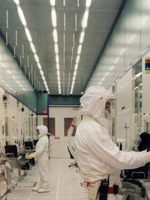
Photo, Thin film, Intel Corporation, 2003, Silicon Valley History Online
Annotation

This small archive provides more than 850 images from the mid-18th century to the present of the Santa Clara Valley in California. Browse the archive or view images through six thematic groupings: agriculture (91 images); education (147 images); people (467 images); technology (182 items); transportation (125 items); and urban life (78 items). There is some overlap between the collections. Keyword and advanced searches are also available. There are seven lesson plans on the history of the Santa Clara Valley, primarily for high school. Topics include the 1906 earthquake, the history of technology, urban development, the Ohlone Indians, women in Santa Clara County, and transportation.

Tennessee Documentary History Collection, 1796-1850

Image
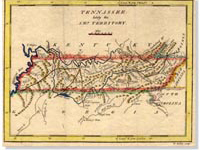
Map, Introductory graphic, 1796-1850, Tennessee Documentary History. . . site
Annotation

This archive assembles more than 1,600 primary sources, including letters, family papers, reports, and images, relating to the history of antebellum Tennessee. Visitors can browse the archive by collection or author, or they can use the simple keyword search or a variety of advanced searches to locate specific documents. Included in the collections are 142 letters, reports, and other documents, including the correspondence of Cherokee chiefs and officials such as John Ross. The archive also includes letters of such antebellum Tennessee figures as Sam Houston, James K. Polk, John Sevier, and Andrew Jackson, as well as letters to and from 12 antebellum Tennessee governors. The archive offers 79 images, many of various aspects of Cherokee village life in the mid-18th century. Though primarily focused on an audience of K-12 teachers of Tennessee history, academic historians and researchers in antebellum political and social history will also find this material useful.

Automobile in American Life and Society

Image
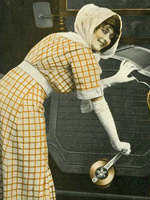
Hartford Auto-Jack advertisement, 1911, Automobile in American. . . site
Annotation

This website was designed as an academic resource for courses focused on the automobile and the automobile industry. Each section—design, environment, gender, labor, and race—has a short introduction and two illustrated scholarly essays (often including annotated bibliographies). The complete text of each essay can be viewed in a separate window and each essay is accompanied by a student and teacher resources section with one or more questions for reading, discussion, writing, and research, as well as questions making connections between the essays. "Design" also offers a list of 110 "automotive oral histories" available in the Benson Ford research center, but only 17 are available on the site. Visitors can search the site by keyword but no advanced search is available. This site is a useful resource for students and educators studying the role of the automobile in American culture and society.

New York Public Library Picture Collection Online

Image
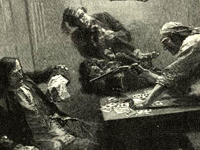
Engraving, "Capture of the Galleon," Howard Pyle, 1887
Annotation

This image resource site contains 30,000 digitized images from books and periodicals, as well as original photographs, prints, and postcards, mostly dated before 1923. There are cartoons and illustrations from the well known Harper's Weekly and Century Magazine, as well as images from the Library of Congress Prints and Photograph division. In addition many of the vibrant images of Native Americans were collected from the Department of War Indian Gallery. Covering more than 12,000 subjects, the site features images of Jamestown settlers, Pocahontas and John Smith, American presidents, 19th-century New York architecture, slave life, American and European women's costumes, streetcars and trains, and even insects and snakes.

Bibliographical information accompanies each image, and users may also save images of interest in their own "gallery" for viewing or purchase. Thumbnail sketches enlarge for full-page viewing. Searchable by keyword or by browsing a variety of indexes, the collection is a useful visual resource for teachers and researchers.

First Century of the First State University: The Creation of UNC

Image
Image, Original Seal of the University of North Carolina, 1893-94
Annotation

The University of North Carolina at Chapel Hill opened its doors to students in 1789, becoming the first public university in the U.S. Part of the larger Documenting the American South website, this collection illuminates the first century of UNC's operation. Close to 500 primary source documents—letters, speeches, architectural drawings, account ledgers, meeting minutes, sermons, and General Assembly acts—are available, including previously unpublished materials. Topics include: Buildings, Campus, Creation and Governance, Curriculum, Faculty, Student Life, Town and Gown, The University During the Civil War and Reconstruction, and The University in the Life of the State. These broad topics, in turn, shed light on smaller dramas within the history of the university, such as the 1856 dismissal of a professor for expressing anti-slavery views to students. Contextual essays and an extensive timeline accompany these materials, rendering them accessible to specialists and generalists alike interested in the histories of the Civil War, North Carolina, and higher education in the United States.

Daguerreotype Portraits and Views, 1839-1864

Image
library of congress title image
Annotation

Produced at the Mathew Brady studio, this collection contains more than 725 early photographs, most of them daguerreotypes. The Brady images include portraits of prominent public figures, such as President James K. Polk, Thomas Hart Benton, Thomas Cole, Horace Greeley, and the earliest known images of President Abraham Lincoln and his wife Mary Todd Lincoln.

In addition, the site presents daguerreotypes by African American photographers; architectural views taken around Washington, DC and Baltimore, MD; street scenes of Philadelphia, PA; early portraits by Robert Cornelius; and copies of painted portraits. A short introduction to the daguerreotype medium and a "Timeline of the Daguerrian Era" provide context for the images. A special presentation, "Mirror Images: Daguerreotypes at the Library of Congress," includes photographs from the American Colonization Society, occupational daguerreotypes, portraits, and architectural views. Useful for studying 19th-century photography and visual culture, as well as for viewing some of the earliest American photographs.